

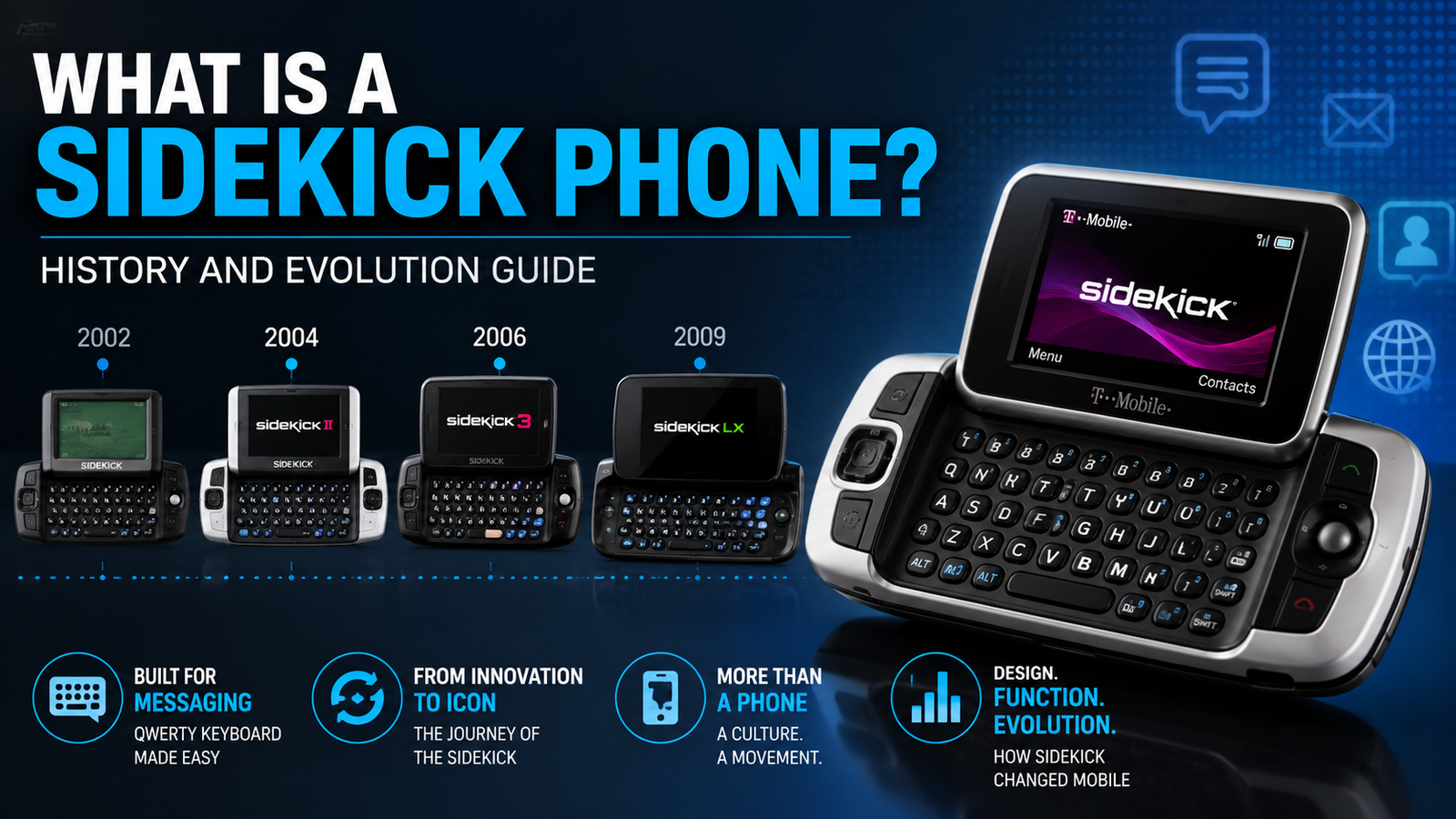
What Is a Sidekick Phone? History and Evolution Guide
Before smartphones dominated everyday life, one device changed how people communicated, worked, and interacted online: the Sidekick Phone. Known for its unique swivel screen, physical keyboard, and strong connection to messaging culture, the Sidekick became one of the most recognizable mobile devices of the early 2000s.
The Sidekick Phone was more than just a phone. It represented a new era of mobile communication where instant messaging, web browsing, and personal expression became central to the user experience. Popular among young users, professionals, and early technology enthusiasts, the device helped introduce features that later became standard in modern smartphones.
This complete guide explores what a Sidekick Phone was, its history, key features, different models, cultural impact, and how it influenced today’s mobile technology. Whether you remember using one or are discovering it for the first time, this article explains why the Sidekick remains an important part of smartphone history.
Key Takeaways
- The Sidekick Phone was one of the first devices designed around messaging, internet access, and mobile productivity.
- It became famous for its rotating screen, full QWERTY keyboard, and strong integration with online services.
- The device gained major popularity through T-Mobile and its connection with youth culture in the 2000s.
- Sidekick models helped shape expectations for modern smartphones with features like cloud services and instant communication.
- Although discontinued, the Sidekick remains a significant milestone in mobile technology history.
What Is a Sidekick Phone?
A Sidekick Phone was a series of mobile devices originally developed by Danger, Inc. and later marketed through T-Mobile. Unlike traditional mobile phones of its time, the Sidekick focused heavily on messaging, internet browsing, and online communication.
The device featured a distinctive design with a screen that rotated upward to reveal a full physical keyboard underneath. This “hiptop” design allowed users to type messages faster and more comfortably than standard phone keypads.
During the early 2000s, when texting and instant messaging were becoming increasingly popular, the Sidekick offered an experience that felt ahead of its time.
Key features included:
- Full QWERTY keyboard
- Rotating display design
- Mobile web browsing
- Instant messaging support
- Email access
- Built-in applications
- Contact management tools
- Cloud-based data synchronization
For many users, the Sidekick was one of the first devices that felt like a true mobile internet communicator.
The History of the Sidekick Phone
The Beginning: Danger and the Hiptop
The story of the Sidekick Phone began with Danger, Inc., a technology company founded in 2000 by engineers who wanted to create a different type of mobile device.
Instead of designing a traditional phone, Danger focused on creating a handheld communication device that combined:
- Phone capabilities
- Internet access
- Messaging services
- Personal information management
The original device was called the Danger Hiptop. It was later released in the United States under the Sidekick name through T-Mobile.
The concept was innovative because smartphones at the time were often complicated, expensive, and mainly targeted at business users. The Sidekick introduced a more approachable and social-focused mobile experience.
The Rise of the Sidekick in the Early 2000s
The Sidekick Phone quickly became popular after its launch because it matched the communication habits of a new generation of mobile users.
At the time, texting, instant messaging, and online communities were growing rapidly. The Sidekick’s keyboard made conversations easier, while its internet features allowed users to stay connected wherever they went.
Several factors contributed to its popularity:
- Easy messaging experience
- Unique and recognizable design
- Affordable mobile internet access
- Strong appeal among younger users
- Integration with popular communication services
The device became especially associated with celebrities, musicians, and entertainment culture during the mid-2000s.
Sidekick Phone Design and Features
The Famous Swivel Screen
One of the most memorable features of the Sidekick Phone was its rotating display.
Instead of sliding open like many later phones, the screen rotated upward to expose the keyboard. This design became the signature feature that made the Sidekick instantly recognizable.
Benefits of the swivel design included:
- Faster typing
- Better screen protection when closed
- A larger display area compared with traditional phones
- A unique user experience
The design also created a sense of personality. Unlike many phones that looked similar, the Sidekick had a style of its own.
Physical QWERTY Keyboard
The built-in keyboard was one of the biggest reasons people loved the Sidekick.
Before touchscreen keyboards became common, typing long messages on small phone keypads was difficult. The Sidekick solved this problem by offering a full keyboard similar to a small computer.
Users could easily:
- Send long text messages
- Write emails
- Chat online
- Browse websites
- Manage contacts
This feature helped establish the idea that mobile devices could be used for productivity as well as communication.
Internet and Messaging Capabilities
The Sidekick Phone was designed around staying connected.
Users could access:
- Email accounts
- Instant messaging platforms
- Web pages
- Address books
- Online services
The device also used cloud-based synchronization, which was unusual for consumer phones at the time. This allowed information to be stored online rather than only on the device.
Popular Sidekick Phone Models
Over the years, several Sidekick models were released, each improving the design and features.
| Model | Release Period | Key Features |
|---|---|---|
| Danger Hiptop | Early 2000s | Original Sidekick design with swivel display and keyboard |
| Sidekick II | 2004 | Improved design, better screen, enhanced usability |
| Sidekick 3 | 2006 | Music features, memory expansion, improved hardware |
| Sidekick LX | 2007 | Larger display, better design, upgraded features |
| Sidekick Slide | 2007 | Smaller design with sliding keyboard |
| Sidekick 2008 | 2008 | Updated software and hardware improvements |
| T-Mobile Sidekick 4G | 2011 | Android-based device with modern smartphone features |
Each generation attempted to balance messaging, entertainment, and mobile productivity.
Why Was the Sidekick Phone So Popular?
It Changed Mobile Communication
The Sidekick Phone arrived during a period when people were beginning to expect more from mobile devices.
Before smartphones became mainstream, many phones were mainly used for:
- Calls
- Basic texting
- Simple games
The Sidekick introduced a more connected lifestyle where users could communicate online from almost anywhere.
It Became a Cultural Icon
The Sidekick was not only a technology product; it became part of popular culture.
Many celebrities and public figures used Sidekicks, increasing its visibility among younger audiences. The device became associated with creativity, social networking, and digital expression.
It Made Mobile Internet More Accessible
The Sidekick helped introduce many consumers to mobile internet services before modern smartphones such as iPhones and Android devices became dominant.
It showed that people wanted:
- Always-connected devices
- Better messaging tools
- Mobile entertainment
- Personalized technology experiences
Sidekick Phone vs Modern Smartphones
Modern smartphones are far more advanced than the Sidekick, but many ideas introduced by the device remain relevant.
| Feature | Sidekick Phone | Modern Smartphones |
|---|---|---|
| Keyboard | Physical QWERTY keyboard | Mostly touchscreen keyboards |
| Internet | Basic mobile browsing | High-speed apps and streaming |
| Design | Swivel screen | Touchscreen glass design |
| Apps | Limited applications | Millions of apps |
| Cloud Services | Early synchronization | Advanced cloud ecosystems |
| Communication | Messaging-focused | Calls, video, social media, AI tools |
While today’s phones offer significantly more power, the Sidekick helped create demand for many features users now consider essential.
What Happened to the Sidekick Phone?
The popularity of the Sidekick declined as touchscreen smartphones became more advanced.
The release of devices like the iPhone and Android smartphones changed consumer expectations. Touchscreens, app stores, and advanced mobile operating systems quickly became the new standard.
T-Mobile later released the Android-powered Sidekick 4G, but it did not achieve the same cultural impact as the original models.
Eventually, the Sidekick brand disappeared from the mainstream mobile market.
The Legacy of the Sidekick Phone
Although the Sidekick is no longer widely available, its influence remains visible.
The device helped popularize several concepts that became important in modern smartphones:
- Mobile messaging as a primary communication tool
- Cloud-connected devices
- Mobile internet access
- Hardware designs focused on user experience
- Smartphones as lifestyle devices
The Sidekick Phone showed that users wanted technology designed around communication and personality, not just technical specifications.
Frequently Asked Questions
What was the Sidekick Phone?
The Sidekick Phone was a mobile communication device known for its swivel screen, physical keyboard, messaging features, and early mobile internet capabilities.
Who made the Sidekick Phone?
The original Sidekick was developed by Danger, Inc. and later sold through T-Mobile under the Sidekick brand.
Why was the Sidekick Phone popular?
The Sidekick became popular because it offered an excellent messaging experience, a unique design, and easy access to internet services during the early smartphone era.
Is the Sidekick Phone still available?
Original Sidekick models are no longer produced. Some devices may be available through collectors or used electronics markets.
Was the Sidekick Phone a smartphone?
The Sidekick had many smartphone-like features, including internet access, email, and applications, although it used a different operating system from modern smartphones.
What replaced the Sidekick Phone?
Modern touchscreen smartphones from Apple, Samsung, Google, and other manufacturers replaced devices like the Sidekick by offering more advanced operating systems and app ecosystems.
Why do people remember the Sidekick Phone?
People remember the Sidekick because it introduced a unique combination of messaging, design, and internet features during an important period in mobile technology development.
Conclusion
The Sidekick Phone was more than an old mobile device; it was a turning point in the history of personal communication technology. With its innovative swivel screen, physical keyboard, and focus on messaging, it helped redefine what people expected from their phones.
Although modern smartphones have replaced the Sidekick with faster processors, advanced cameras, and powerful apps, the device’s influence can still be seen today. Features such as constant connectivity, cloud services, and communication-focused design all reflect ideas that the Sidekick helped popularize.
For technology enthusiasts and mobile history fans, the Sidekick remains a fascinating example of how one device can shape the future of an entire industry.









Leave a Reply