

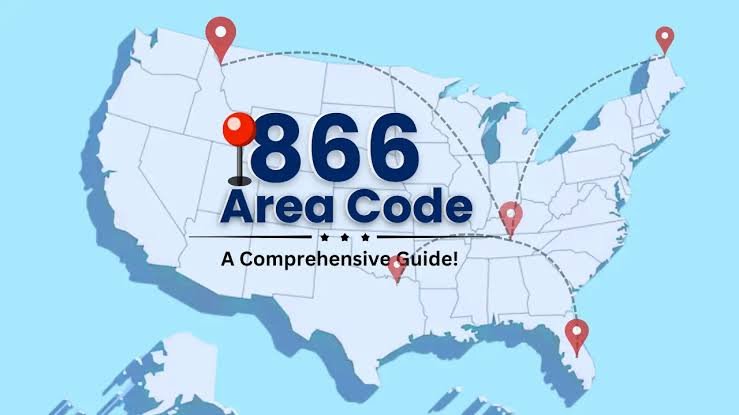
Is the 866 Area Code Toll-Free? A Complete Guide
If you receive a call from an 866 area code, you may wonder where the number comes from, whether you will be charged for answering it, or whether the caller is legitimate.
The short answer is that 866 is a toll-free telephone code used across the United States and Canada, rather than a geographic area code tied to a particular city or state. Businesses, customer-service departments, organizations, and individuals can use 866 numbers without being associated with a specific location.
However, a toll-free number does not automatically mean that every call from it is trustworthy. Scammers can also use or spoof toll-free numbers, making it important to understand how these numbers work and what precautions to take.
This guide explains what the 866 area code means, how toll-free calling works, whether 866 calls cost money, how 866 compares with other toll-free codes, and what to do when you receive an unexpected call.
Key Takeaways
- 866 is a toll-free code, not a geographic area code assigned to a specific location.
- 866 numbers can be used throughout the United States and Canada.
- The person calling a toll-free number generally does not pay the traditional long-distance charge associated with calling a geographic number, although mobile or service-plan charges can vary.
- Businesses commonly use 866 numbers for customer service, sales, support, reservations, and other nationwide communications.
- An 866 number can be legitimate, but the number alone does not prove that a caller is genuine.
- Caller ID spoofing can make a fraudulent call appear to come from a familiar or trustworthy toll-free number.
Main Article
What Is the 866 Area Code?
The 866 area code is actually a toll-free telephone code rather than a traditional geographic area code.
Unlike geographic codes such as 212 for New York City or 305 for parts of Florida, 866 does not identify where the caller or business is physically located. An organization can have an 866 number while operating from another state, province, or even a different location within the North American Numbering Plan.
The 866 code belongs to the North American Numbering Plan, which covers the United States, Canada, and several other participating regions.
The important distinction is simple:
| Type | What It Identifies |
|---|---|
| Geographic area code | A specific geographic calling area |
| 866 toll-free code | A non-geographic toll-free service |
| 800 toll-free code | A non-geographic toll-free service |
| 888 toll-free code | A non-geographic toll-free service |
| 877 toll-free code | A non-geographic toll-free service |
| 855 toll-free code | A non-geographic toll-free service |
So, if you see a number beginning with 866, you cannot determine the caller’s physical location simply from the first three digits.
Is the 866 Area Code Toll-Free?
Yes. 866 is a toll-free code.
Historically, toll-free numbers were designed so that the person making the call would not have to pay the conventional long-distance telephone charge. Instead, the organization or subscriber associated with the toll-free number generally pays for incoming calls under its service arrangement.
Today, telephone pricing is more complicated because many people use mobile phones and bundled calling plans. As a result, the exact cost of calling an 866 number can depend on your carrier, plan, location, and circumstances.
For most users with ordinary U.S. or Canadian calling plans, calling a domestic 866 number is generally included or treated as a toll-free call. However, it is still wise to check your carrier’s terms if you are using an international service, prepaid plan, or a specialized calling arrangement.
Where Is the 866 Area Code Used?
The 866 code is not restricted to one city, state, or province.
It is part of the toll-free numbering system used within the North American Numbering Plan. That means an 866 number may belong to a company headquartered in California, a government-related organization operating elsewhere, a national retailer, or a customer-service center serving customers across North America.
This is why searching for an “866 area code location” can be misleading.
There is no single city associated with 866.
Why 866 Numbers Are Not Geographic
Traditional area codes were designed to help identify geographic telephone regions. Toll-free codes serve a different purpose.
A business can use one toll-free number to make it easier for customers across a large geographic area to contact it without having to remember a local number.
For example, a company might advertise:
866-XXX-XXXX
rather than publishing different customer-service numbers for every state.
This makes toll-free numbers particularly useful for organizations with nationwide or regional customers.
Who Uses 866 Numbers?
A wide variety of organizations can use 866 numbers.
Common users include:
- Banks and financial institutions
- Insurance companies
- Retailers
- Airlines and travel companies
- Hotels and reservation services
- Technology companies
- Telecommunications providers
- Healthcare organizations
- Government-related services
- Delivery and logistics companies
- Subscription services
- Customer-support centers
- Small businesses with customers in multiple regions
An 866 number can therefore be completely ordinary. Its presence does not necessarily indicate that the call is from a large corporation.
Small businesses can also obtain toll-free numbers through telephone service providers.
How Do 866 Numbers Work?
When someone calls an 866 number, the telephone network uses the toll-free system to route the call to the subscriber associated with that number.
The number itself does not necessarily reveal the physical location of the receiving organization.
A simplified example looks like this:
- A customer sees an organization’s 866 number.
- The customer dials the number.
- The telecommunications network recognizes it as a toll-free number.
- The call is routed according to the number’s service configuration.
- The organization receives the call through its designated telephone system.
Modern toll-free services can support sophisticated routing, including call centers, automated menus, departments, and different destinations depending on the organization’s configuration.
Do You Have to Pay to Call an 866 Number?
Generally, domestic calls to 866 numbers are toll-free for the caller under standard qualifying telephone arrangements.
However, “toll-free” does not necessarily mean free under every possible circumstance.
Potential exceptions can include:
- International calls
- Certain prepaid calling services
- Some specialized telephone plans
- Calls made through particular telecommunications services
- Carrier-specific charges or restrictions
If you are calling from outside the United States or Canada, do not assume that an 866 number will be free.
The safest approach is to check your telephone provider’s international and toll-free calling policies.
Is It Free to Receive an 866 Call?
Receiving a call from an 866 number generally does not create a conventional long-distance charge for the person answering the call.
However, your normal mobile-service terms still apply. For example, a carrier may have particular rules for international roaming or unusual service conditions.
The important point is that the 866 designation itself is not a geographic location and does not by itself create a special charge simply because the number appears on your caller ID.
Is an 866 Number Safe?
An 866 number can be legitimate, but the 866 prefix alone does not establish that a caller is trustworthy.
This distinction is important.
Legitimate organizations frequently use toll-free numbers. At the same time, scammers may use caller-ID spoofing or other techniques to make an incoming call appear to come from a toll-free number.
Therefore, you should evaluate the caller rather than relying solely on the number’s prefix.
Signs That an 866 Call May Be Suspicious
Be especially cautious if the caller:
- Demands immediate payment
- Threatens arrest or legal action without credible documentation
- Requests your password
- Asks for a one-time verification code
- Requests your full banking credentials
- Pressures you to transfer money
- Asks for cryptocurrency payments
- Tells you to install unfamiliar software
- Claims you have won a prize you never entered
- Creates an unusual sense of urgency
- Refuses to let you independently verify the organization
A legitimate organization may need to verify your identity, but unexpected requests for highly sensitive information deserve careful scrutiny.
What Is Caller ID Spoofing?
Caller ID spoofing occurs when the displayed caller-ID information is manipulated so that the incoming call appears to come from a different number.
That means a scammer could potentially make a call appear to originate from an 866 number.
Consequently, even if a caller gives you a familiar company name and the displayed number looks plausible, you should not automatically trust it.
If someone claims to represent your bank, insurance provider, delivery company, or another organization, consider ending the call and contacting the organization through a verified phone number from its official website, account statement, card, or other trusted source.
Should You Answer an 866 Number?
There is no universal rule that says you should always answer or always ignore an 866 number.
If you are expecting a call from a business or organization that uses a toll-free number, answering may make sense.
If the call is unexpected, you can let it go to voicemail.
A legitimate caller with an important reason to contact you may provide identifying information or another way to follow up.
If You Answer an Unexpected 866 Call
Use these basic precautions:
- Do not provide sensitive information immediately.
- Ask who is calling and why.
- Do not rely solely on caller ID.
- If the caller claims to represent an organization, verify the claim independently.
- Hang up if the caller becomes threatening or unusually aggressive.
- Contact the organization using a trusted number if necessary.
You do not have to stay on a suspicious call simply because the person on the other end claims to represent a legitimate company.
How Does 866 Compare With Other Toll-Free Codes?
The 866 code is one of several toll-free codes used in the North American Numbering Plan.
| Toll-Free Code | Geographic Location? | General Purpose |
|---|---|---|
| 800 | No | Toll-free calling |
| 833 | No | Toll-free calling |
| 844 | No | Toll-free calling |
| 855 | No | Toll-free calling |
| 866 | No | Toll-free calling |
| 877 | No | Toll-free calling |
| 888 | No | Toll-free calling |
From a consumer’s perspective, these codes serve broadly similar purposes.
The main difference is the actual telephone number assigned to the subscriber.
For example, two companies might have nearly identical services but use different toll-free prefixes because the number they wanted was unavailable under another code.
866 vs. 800: What’s the Difference?
Both 866 and 800 are toll-free codes, but they are not interchangeable as numbers.
A company that owns an 866 number does not automatically own the equivalent number beginning with 800.
For example:
- 800-555-1234
- 866-555-1234
These are separate telephone numbers and can potentially belong to different subscribers.
This is one reason you should use the exact phone number provided by a company rather than assuming that changing the prefix will reach the same organization.
Can You Text an 866 Number?
Whether you can send a text message to an 866 number depends on how that particular number has been configured.
Some modern business telephone systems support texting or business messaging, while others are voice-only.
Therefore, the 866 prefix itself does not guarantee that text messaging is available.
If a company advertises text support, follow the company’s published instructions rather than assuming every toll-free number accepts SMS messages.
Can You Call an 866 Number From Outside the United States?
Not necessarily in the same way as a domestic toll-free call.
Toll-free services are closely tied to the telephone numbering and service arrangements in which they operate. International callers may encounter different dialing procedures, charges, or restrictions.
If you are outside the United States or Canada and need to contact an organization with an 866 number, look for an international contact number or another officially provided method of communication.
Do not assume that dialing the 866 number internationally will be free.
How Businesses Benefit From 866 Numbers
For businesses, toll-free numbers can make customer communication more convenient.
Nationwide Accessibility
A business can publish one recognizable number for customers in many locations.
Professional Customer Service
A toll-free number can provide a centralized contact point for sales and support.
Flexible Call Routing
Businesses can route calls to call centers, offices, departments, or other destinations.
Easier Marketing
A memorable toll-free number can be easier to include in advertising, packaging, websites, and other marketing materials.
Geographic Independence
Because an 866 number is non-geographic, a company can maintain the same customer-facing number even when its physical operations change.
What Should You Do If You Receive Repeated 866 Calls?
Repeated calls from an unknown 866 number can be frustrating.
If you do not recognize the caller, consider allowing the call to go to voicemail. You can then assess whether the message provides enough information to identify the caller.
If the calls appear unwanted or suspicious, you can:
- Block the number on your device.
- Use your carrier’s available call-blocking tools.
- Avoid returning suspicious missed calls without verification.
- Keep records of repeated unwanted communications.
- Report suspected fraud through the appropriate consumer-protection or law-enforcement channels in your jurisdiction.
Blocking a particular number may not stop all unwanted calls if the caller uses different numbers or spoofing techniques.
How to Verify an 866 Caller
If someone claims to represent a company, verification is the most useful step.
A Safer Verification Process
Step 1: Ask for the caller’s identity.
Find out the person’s name, department, and organization.
Step 2: Do not rely on caller ID.
The displayed number can potentially be manipulated.
Step 3: End the call if necessary.
You are not required to verify an unexpected caller while remaining on the line.
Step 4: Find the organization’s contact information independently.
Use an official website, account statement, bank card, contract, or another trusted source.
Step 5: Contact the organization yourself.
Ask whether the original call was legitimate.
This approach reduces the risk of giving sensitive information to someone impersonating a legitimate organization.
Common Misconceptions About the 866 Area Code
“866 tells me where the caller is located.”
Not necessarily. It is a non-geographic toll-free code.
“Every 866 number belongs to a major company.”
No. Businesses and other organizations of different sizes can use toll-free numbers.
“Every call from 866 is safe.”
No. Legitimate businesses use 866 numbers, but scammers can also make calls appear to come from toll-free numbers.
“An 866 call is always free under every circumstance.”
Not necessarily. Domestic calling is generally toll-free under qualifying arrangements, but international and specialized services can have different rules.
“866 and 800 numbers are the same.”
They are both toll-free codes, but each specific telephone number is separate.
Frequently Asked Questions
Is 866 a real area code?
866 is a real telephone code, but it is technically a toll-free code rather than a geographic area code. It is not assigned to a particular city or state.
Is the 866 area code toll-free?
Yes. 866 is designated for toll-free calling. However, charges can vary in unusual circumstances, particularly for international callers or specialized telephone plans.
Where is the 866 area code located?
The 866 code does not correspond to one geographic location. It is a non-geographic toll-free code used within the North American Numbering Plan.
Are calls from 866 numbers scams?
Not necessarily. Many legitimate companies and organizations use 866 numbers. However, scammers can also spoof toll-free caller IDs, so the prefix alone cannot establish whether a call is legitimate.
Should I call back an unknown 866 number?
If you do not recognize the number, consider checking the voicemail or independently identifying the organization before calling back. Avoid providing sensitive information until you have verified the caller.
Can I block an 866 number?
Yes. Most smartphones allow you to block individual numbers. Your carrier may also provide additional call-filtering or blocking features.
Can I text an 866 number?
It depends on the specific number and how its owner has configured the service. Some toll-free numbers support messaging, while others are intended only for voice calls.
Does an 866 number reveal the caller’s location?
No. Unlike a geographic area code, 866 does not identify a particular city, state, or province.
Conclusion
The 866 area code is best understood as a toll-free telephone code, not a geographic area code. It allows businesses and other organizations to provide a convenient contact number without tying that number to a particular physical location.
For most domestic callers using standard qualifying telephone services, calls to 866 numbers are toll-free. Nevertheless, international callers and users of specialized plans should check their provider’s rules.
Most importantly, an 866 number should not automatically be considered either trustworthy or suspicious. Legitimate businesses frequently use toll-free numbers, but caller ID can be spoofed. If an unexpected caller asks for passwords, financial information, verification codes, or immediate payment, take a step back and verify the organization independently.
Understanding how toll-free numbers work makes it easier to recognize legitimate customer-service calls, identify potential warning signs, and make safer decisions when an unfamiliar 866 number appears on your phone.









Leave a Reply