

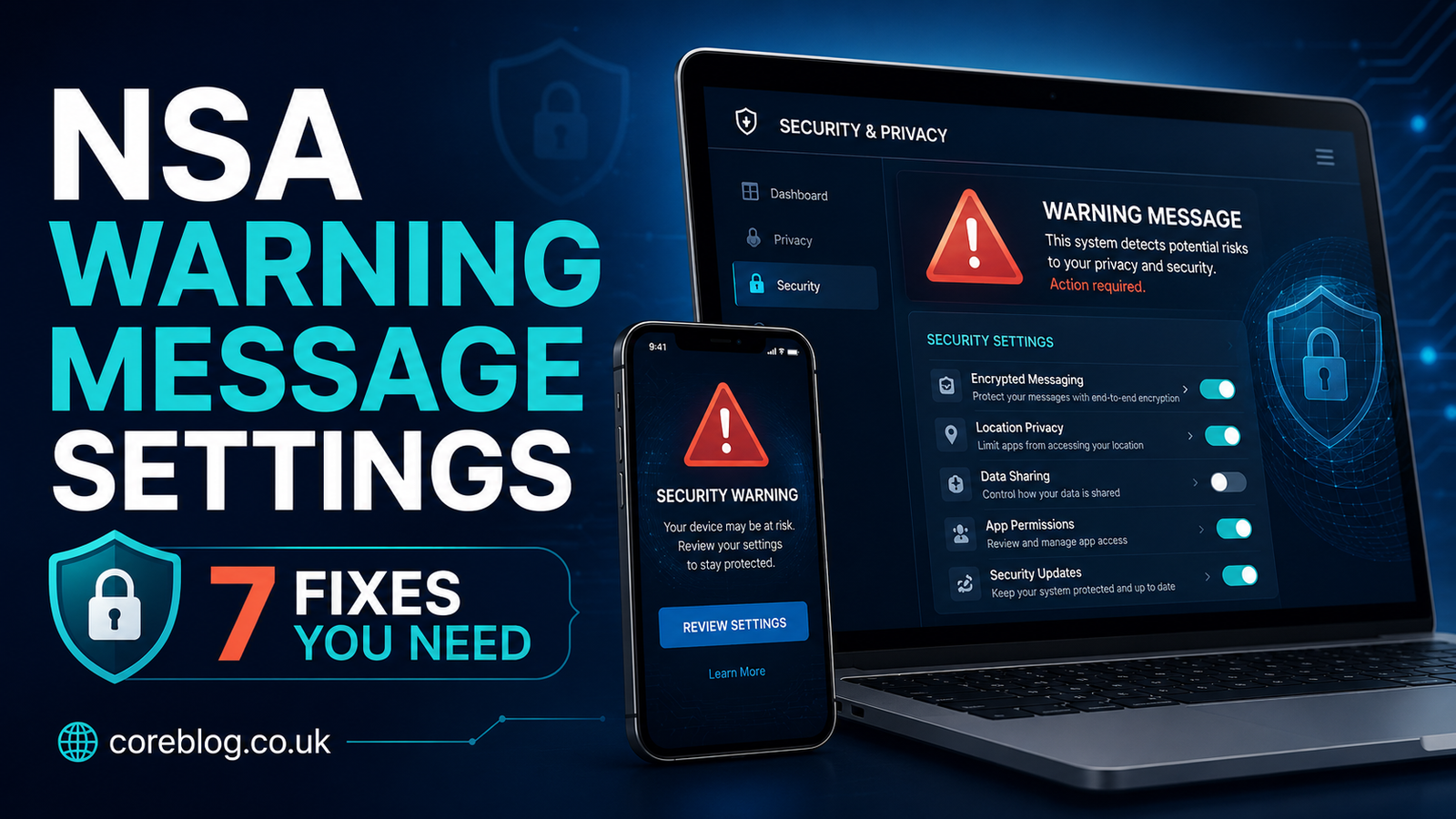
NSA Warning Message Settings: 7 Fixes You Need
Few things feel more confusing than seeing a serious warning message pop up on your phone, browser, or device settings screen. One minute you are checking your messages, opening an app, or browsing a website. The next moment, a security alert appears and suddenly you are wondering, “Is my phone hacked? Did I click something wrong? Should I change my settings?”
That is exactly why understanding NSA Warning Message Settings matters.
Now, let’s be clear from the start. Most users are not dealing directly with the National Security Agency. In many cases, people search for NSA Warning Message Settings because they see a security warning, government-style alert, privacy notice, suspicious pop-up, browser warning, device management message, or scam alert that uses strong wording. Some warnings are real. Some are system alerts. Some are fake scare tactics designed to make you panic.
The good news is that you do not need to be a cybersecurity expert to handle this. You only need to know where to look, what to change, and what not to click.
In this guide, we will break down NSA Warning Message Settings in simple English. You will learn what these warning messages can mean, why they appear, and the 7 fixes you need to make your device safer. Whether you use Android, iPhone, Windows, Chrome, Safari, or another browser, the goal is the same: protect your privacy, reduce risky alerts, and stop suspicious messages from controlling your screen.
What Are NSA Warning Message Settings?
NSA Warning Message Settings usually refers to the security, privacy, notification, browser, and device settings connected to warning alerts that appear on your screen. These alerts may include security warnings, suspicious login notices, unsafe website warnings, malware alerts, certificate errors, privacy warnings, or pop-ups claiming your device is at risk.
The phrase can sound official, but in everyday use, it often points to one of these situations:
- A browser warning about an unsafe website
- A phone alert about suspicious app behavior
- A fake pop-up using government-style language
- A notification from antivirus or security software
- A device management warning on a work or school phone
- A privacy notice about tracking, permissions, or data access
- A scam message pretending to be from an authority
That is why you should never treat every warning the same way. Some alerts are useful. Others are fake. The real skill is knowing the difference.
Why Do These Warning Messages Appear?
Warning messages appear when your device, browser, app, or security software detects something unusual. Sometimes the issue is small, such as a website with an expired security certificate. Other times, it may be more serious, like a suspicious download or an app asking for too many permissions.
Here are common reasons you may see warning messages:
- You visited an unsafe or untrusted website
- Your browser blocked a dangerous page
- An app tried to access sensitive data
- Your device detected suspicious network activity
- A website certificate was invalid or expired
- Your phone has outdated security patches
- A pop-up ad is trying to scare you
- A fake virus warning is trying to make you install something
- Your notification settings allow spammy websites to send alerts
In many cases, NSA Warning Message Settings are not one single menu. Instead, they involve several settings across your device, browser, apps, and privacy controls.
NSA Warning Message Settings: Quick Checklist
| Area to Check | What to Review | Why It Matters |
|---|---|---|
| Browser security | Safe browsing, pop-up blocker, site permissions | Blocks risky websites and scam alerts |
| App permissions | Camera, microphone, location, contacts | Stops apps from accessing private data |
| Notifications | Website alerts, app alerts, lock screen previews | Reduces spam and suspicious warnings |
| Software updates | System, browser, apps | Fixes security weaknesses |
| Antivirus or security app | Scan results, threat alerts | Helps detect malware or unsafe files |
| VPN and network settings | Public Wi-Fi, DNS, unknown profiles | Protects data on risky networks |
| Account security | Passwords, 2FA, login alerts | Prevents unauthorized access |
Fix 1: Check If the Warning Is Real or Fake
The first fix is not technical. It is mental. Do not panic.
Fake warning messages often use fear. They may say your device is infected, your personal data has been stolen, or your account will be blocked in a few minutes. Some even use official-looking names to make the message feel serious.
A real system warning usually appears inside your browser, device settings, antivirus software, or operating system. A fake warning often appears inside a random website, pop-up window, ad, or notification you never allowed.
Signs the Warning May Be Fake
Look carefully before tapping anything. A fake alert may:
- Use urgent wording like “Act now” or “Your phone is infected”
- Ask you to call a phone number
- Push you to download an unknown app
- Show spelling or grammar mistakes
- Use a strange web address
- Lock your browser with repeated pop-ups
- Claim to be from a government agency but appear inside a normal website
- Ask for payment, login details, or remote access
If you see any of these signs, close the page. Do not click the buttons inside the warning. Do not install anything from that pop-up. Do not call the number shown on the screen.
What to Do Instead
Close the browser tab, clear the site data, and run a normal security scan from a trusted app already installed on your device. This simple step solves many scary warning message problems.
This is one of the most important parts of managing NSA Warning Message Settings, because many people make the problem worse by clicking fake alerts.
Fix 2: Turn On Safe Browsing in Your Browser
Your browser is your first shield against unsafe websites. If safe browsing is off, you may see more dangerous pages, scam warnings, and suspicious redirects.
Most modern browsers include built-in protection. It can warn you before visiting harmful websites, downloading risky files, or entering passwords on fake login pages.
For Chrome Users
Open Chrome settings and look for Privacy and Security. Then check Safe Browsing. Choose the strongest protection level that suits your needs. Enhanced protection may offer better warnings, while standard protection is still useful for everyday browsing.
For Safari Users
On iPhone or Mac, check Safari settings. Make sure fraudulent website warnings are turned on. Also review pop-up blocking and cross-site tracking options.
For Edge or Firefox Users
Go to privacy and security settings. Look for protection against dangerous websites, deceptive content, phishing pages, and risky downloads.
Safe browsing does not make you invisible online, but it does reduce the chance of landing on pages that create fake warning messages. If you are adjusting NSA Warning Message Settings, browser protection should be one of the first places you check.
Fix 3: Block Pop-Ups and Suspicious Website Notifications
Many fake security alerts come from websites that trick users into allowing notifications. You may visit a page once, tap “Allow,” and then start receiving warning-style notifications again and again.
These notifications can look serious. Some may say your device has viruses. Others may claim your data is exposed. In reality, they are often just browser notifications from a spam website.
How to Fix Website Notification Spam
Go to your browser settings and find site permissions or notifications. Then remove any website you do not recognize.
Pay special attention to websites that send messages like:
- Virus detected
- Device at risk
- Security warning
- Click to clean phone
- Account locked
- Privacy alert
- Suspicious activity found
After removing these sites, turn on pop-up blocking. You can also choose to ask before allowing notifications, which gives you more control.
This is a practical fix for NSA Warning Message Settings because many users think the alert is coming from their phone, when it is actually coming from a website they allowed by mistake.
Fix 4: Review App Permissions Carefully
Apps can create warning messages when they request access to sensitive parts of your device. Sometimes the app is legitimate. For example, a camera app needs camera access. A map app needs location access. However, a flashlight app asking for contacts, microphone, and location should make you pause.
Permissions You Should Review
Check these permissions on your phone:
- Location
- Camera
- Microphone
- Contacts
- Photos
- Files
- Bluetooth
- Notifications
- Background activity
- Accessibility access
Accessibility permission is especially important. On both Android and iPhone, accessibility features can be powerful. They help people use their devices more easily, but shady apps may try to misuse them.
Simple Rule for App Permissions
Ask yourself: “Does this app really need this permission to work?”
If the answer is no, turn it off.
Reviewing permissions is a smart way to manage NSA Warning Message Settings because many alerts appear when apps behave in ways that your device considers risky.
Fix 5: Update Your Device, Browser, and Apps
Outdated software is one of the most common reasons people see repeated security warnings. Updates are not only about new features. They often include important security patches that fix known weaknesses.
If your phone, computer, or browser is behind on updates, you may face:
- More unsafe website warnings
- App compatibility errors
- Security certificate problems
- Malware risk
- Browser crashes
- Privacy setting issues
- Suspicious login alerts
What You Should Update
Make sure these are updated:
- Phone operating system
- Computer operating system
- Web browser
- Banking apps
- Messaging apps
- Password manager
- Antivirus or security app
- Email app
- VPN app, if you use one
In addition, remove apps you no longer use. Old apps can become a security risk if they are abandoned by developers or no longer receive updates.
When people search for NSA Warning Message Settings, they often want a hidden setting that fixes everything. In reality, a simple update can solve many warning message problems.
Fix 6: Clear Browser Cache, Cookies, and Site Data
Sometimes warning messages keep returning because your browser saved data from a suspicious website. Clearing cache and cookies can remove stored scripts, site permissions, and tracking data that may be causing repeated alerts.
This is useful when:
- A warning appears every time you open the browser
- A fake virus alert keeps coming back
- A website redirects you to scam pages
- You accidentally allowed notifications
- Your browser homepage changed
- Pop-ups open without clear reason
What to Clear
You can clear:
- Browsing history
- Cookies
- Cached images and files
- Site permissions
- Notification permissions
- Autofill data, if needed
You do not always need to clear saved passwords, but it is wise to review them. If your browser says a password was exposed in a data breach, change it quickly.
Clearing browser data is one of the easiest fixes for NSA Warning Message Settings, especially when alerts are linked to websites rather than your actual device system.
Fix 7: Strengthen Account and Privacy Settings
Warning messages do not always come from malware or unsafe websites. Sometimes they appear because someone tried to sign in to your account, your password was reused, or your privacy settings are too open.
If you receive suspicious login alerts, do not ignore them.
Account Settings to Improve
Review these settings:
- Change weak or reused passwords
- Turn on two-factor authentication
- Review trusted devices
- Remove unknown sessions
- Check recovery email and phone number
- Review connected apps
- Turn on login alerts
- Use a password manager if possible
Two-factor authentication adds another layer of safety. Even if someone knows your password, they still need the second code or approval method to get in.
This matters because NSA Warning Message Settings are not only about device alerts. They are also connected to digital privacy, account protection, and online safety.
Common Mistakes People Make With Warning Messages
A warning message can make anyone nervous. However, reacting too quickly can lead to bigger problems.
Here are common mistakes to avoid:
- Clicking “Remove virus” inside a random pop-up
- Downloading unknown cleaning apps
- Calling a phone number shown in a warning
- Giving remote access to a stranger
- Entering passwords after a suspicious alert
- Ignoring real browser security warnings
- Turning off all warnings completely
- Allowing website notifications without checking the source
The worst mistake is turning off security alerts just because they feel annoying. Some alerts are there to protect you. The better approach is to control where they come from and remove the fake ones.
Should You Turn Off Warning Messages Completely?
In most cases, no.
Turning off every alert may make your device quieter, but it can also make it less safe. A better option is to fine-tune your warning settings.
Keep important alerts on, such as:
- Suspicious login alerts
- Banking app notifications
- Password breach warnings
- Device security alerts
- Browser unsafe site warnings
- Antivirus threat alerts
- Operating system security notices
Turn off or remove:
- Spam website notifications
- Unknown app alerts
- Promotional pop-ups
- Fake cleaner warnings
- Suspicious browser permissions
- Notifications from apps you do not trust
Good NSA Warning Message Settings are about balance. You want fewer useless alerts, but you still want real protection.
NSA Warning Message Settings for Android Users
Android gives users a lot of control, but that also means you need to check more settings.
Android Settings to Review
Open settings and check:
- Security and privacy
- App permissions
- Notification settings
- Install unknown apps
- Device admin apps
- Accessibility access
- Browser site settings
- Google Play Protect
- System update
Be careful with the “Install unknown apps” option. If this is enabled for random browsers or file managers, you may accidentally install unsafe apps from outside trusted app stores.
Also check device admin apps. If an unknown app has admin access, remove that access before uninstalling it.
For Android users, NSA Warning Message Settings often involve browser permissions, app access, and notification control.
NSA Warning Message Settings for iPhone Users
iPhones are known for strong security, but users can still run into warning messages, scam pop-ups, and suspicious notifications.
iPhone Settings to Review
Check these areas:
- Safari settings
- Privacy and Security
- Location Services
- App Tracking Transparency
- Notifications
- VPN and Device Management
- Passwords
- Software Update
- Calendar subscriptions
One common issue on iPhone is a fake calendar subscription. It can create scary alerts that look like system warnings. If you see strange calendar events saying your phone is infected, check your calendar accounts and remove unknown subscriptions.
Also check VPN and Device Management. If you see an unknown profile, do not ignore it. Profiles can control important settings on your device.
For iPhone users, NSA Warning Message Settings usually means reviewing Safari, notifications, profiles, and privacy permissions.
NSA Warning Message Settings for Windows Users
Windows users may see warning messages from the browser, Windows Security, antivirus tools, or suspicious websites.
Windows Settings to Check
Review these areas:
- Windows Security
- Virus and threat protection
- Firewall settings
- Browser protection
- Startup apps
- Installed programs
- Windows Update
- Account sign-in options
- Notification settings
If a warning appears only inside your browser, it may be a scam pop-up. If it appears in Windows Security, take it more seriously. Run a full scan, update Windows, and check installed programs for anything unfamiliar.
Windows users should also avoid downloading “PC cleaner” tools from random warning pages. Many fake alerts push these tools as a quick fix, but they often create more trouble.
NSA Warning Message Settings for Browser Safety
Your browser is where many warning messages begin. Whether you use Chrome, Safari, Edge, Firefox, Opera, or another browser, the same basic safety steps apply.
Browser Safety Settings to Use
Make sure you check:
- Safe browsing protection
- Pop-up blocker
- Notification permissions
- Download protection
- Password leak alerts
- Site permissions
- Camera and microphone access
- Location access
- Extensions or add-ons
Browser extensions deserve special attention. Some extensions can track browsing, change search results, inject ads, or redirect pages. Remove any extension you do not recognize or no longer use.
If your homepage or search engine changed without your permission, reset your browser settings.
How to Tell a Real Alert From a Scam Alert
This is where common sense helps a lot.
A real alert usually tells you what happened and gives you a safe option inside your system settings. A scam alert usually tries to rush you.
Real Alerts Usually:
- Appear in device settings or trusted apps
- Use clear language
- Do not ask for payment through a pop-up
- Do not ask you to call random numbers
- Do not force unknown downloads
- Let you close or review the issue safely
Scam Alerts Usually:
- Use fear and pressure
- Flash bright warnings
- Repeat again and again
- Claim your data is already stolen
- Ask for immediate action
- Push unknown apps or services
- Pretend to be official without proof
When in doubt, close the message and open your security settings manually. Never use the button inside a suspicious pop-up.
Best Practices to Prevent Future Warning Messages
You cannot avoid every alert, and you should not try to. But you can reduce fake and risky messages by building better habits.
Here are simple best practices:
- Keep your device updated
- Use trusted app stores
- Avoid unknown downloads
- Do not allow random website notifications
- Use strong passwords
- Turn on two-factor authentication
- Remove unused apps
- Review browser extensions
- Avoid public Wi-Fi for sensitive accounts
- Use a trusted VPN when needed
- Check app permissions monthly
- Do not click urgent pop-up warnings
These habits help keep NSA Warning Message Settings under control and make your device safer in daily use.
Helpful Security Terms You Should Know
Understanding a few simple terms can make warning messages less scary.
Malware
Malware is harmful software designed to damage, spy, steal, or control your device.
Phishing
Phishing is a fake message or page that tries to steal your login details or personal information.
Pop-Up Scam
A pop-up scam is a fake alert that appears in your browser and tries to scare you into clicking, calling, or downloading something.
Site Permissions
Site permissions control what a website can access, such as notifications, location, camera, and microphone.
Two-Factor Authentication
Two-factor authentication adds an extra step when signing in, such as a code, app approval, or security key.
Security Certificate
A security certificate helps prove that a website connection is secure. If there is a certificate warning, be careful before entering private information.
When Should You Get Professional Help?
Most warning message issues can be fixed with basic settings changes. However, some situations need extra help.
You should get professional support if:
- Your device keeps installing unknown apps
- Money was taken from your account
- Someone accessed your email or banking app
- You gave remote access to a stranger
- Your phone or computer is locked
- Your browser redirects constantly
- Security scans find serious threats
- You cannot remove an unknown device profile
If the issue involves financial accounts, contact your bank quickly. If your email is compromised, change the password and secure recovery options first.
Final Thoughts
NSA Warning Message Settings may sound complicated, but the real idea is simple: understand your warning alerts, control your settings, and stop fake messages before they trick you.
You do not need to be a tech expert. Start with the basics. Check whether the warning is real. Turn on safe browsing. Block pop-ups. Remove suspicious site notifications. Review app permissions. Update your device. Clear browser data. Strengthen your account security.
These seven fixes can make a big difference.
The internet is full of alerts, warnings, and scary pop-ups, but you are not powerless. With the right settings and a calm approach, you can protect your device, your privacy, and your peace of mind.
If this guide helped you understand NSA Warning Message Settings, share it with someone who keeps getting strange alerts on their phone or browser. A small settings change today can prevent a much bigger problem tomorrow.










Leave a Reply