

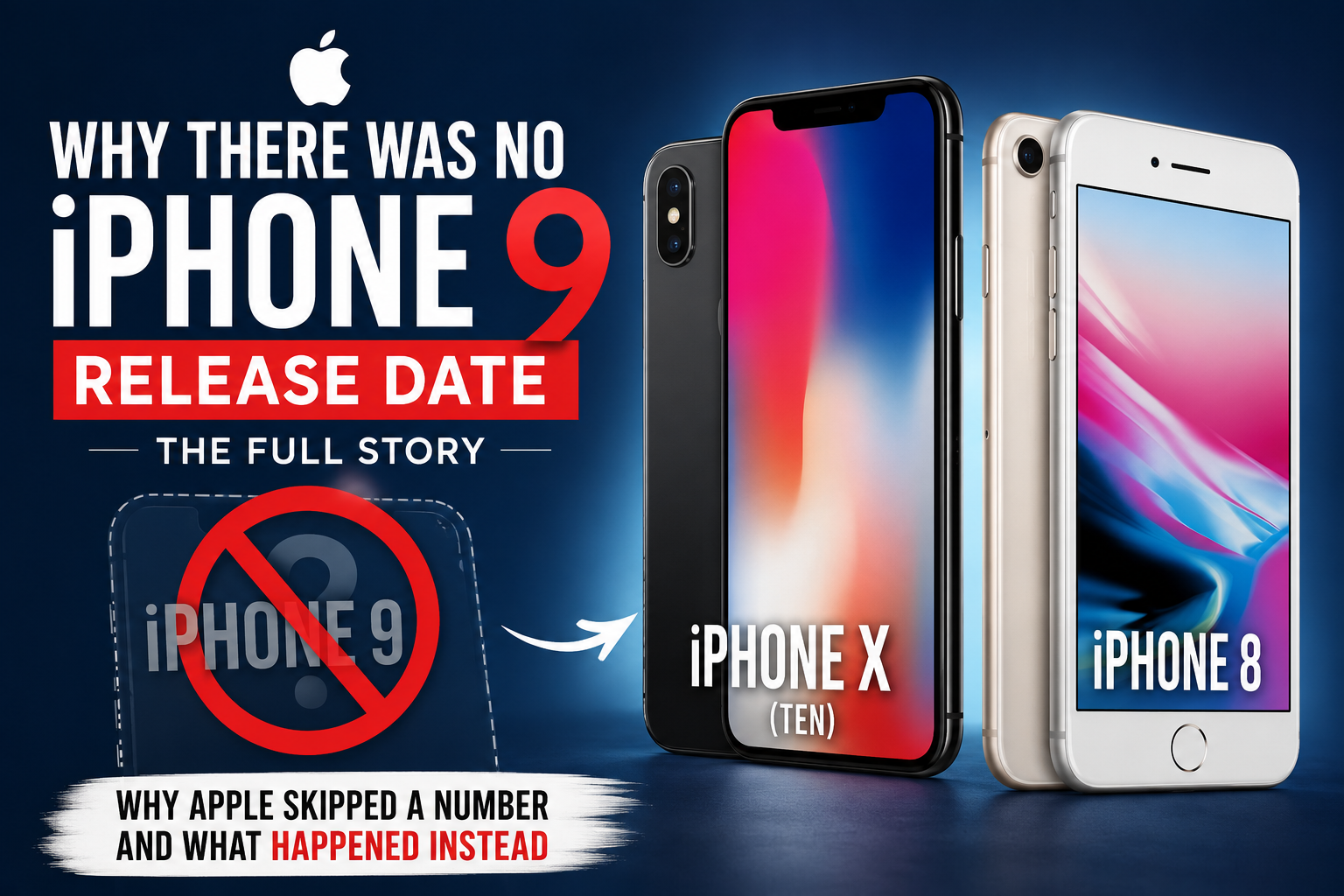
Why There Was No iPhone 9 Release Date: The Full Story
If you’ve searched for the iPhone 9 Release Date, you’ve probably noticed something unusual: there was never an iPhone officially called the iPhone 9. That raises an obvious question—why did Apple skip an entire number in one of the world’s most recognizable smartphone lineups?
The answer lies in Apple’s product strategy, branding decisions, and the timing of one of its most important smartphone launches. While many people expected an iPhone 9 to follow the iPhone 8, Apple surprised the technology world by introducing the iPhone X alongside the iPhone 8 series in 2017.
In this guide, you’ll discover why there was no iPhone 9 release date, how Apple arrived at that decision, what happened to the expected successor, and why the missing number continues to confuse buyers years later.
Key Takeaways
- Apple never announced or released a smartphone called the iPhone 9.
- The company skipped directly from the iPhone 8 to the iPhone X in 2017.
- The iPhone X celebrated the iPhone’s 10th anniversary and introduced a major redesign.
- The 2020 iPhone SE is often considered the spiritual successor to what many expected an iPhone 9 to be.
- Apple’s naming strategy was driven by branding and product positioning rather than numerical sequence.
Main Article
Was There Ever an iPhone 9 Release Date?
The short answer is no.
Apple has never announced an official iPhone 9 release date because the device simply never existed as a commercial product.
Instead of releasing an iPhone 9 after the iPhone 8, Apple launched two separate product families in September 2017:
- iPhone 8
- iPhone 8 Plus
- iPhone X (“Ten”)
This surprised consumers because Apple had followed a fairly predictable numbering system for years.
Apple’s iPhone Numbering Timeline
The following table shows how Apple’s smartphone lineup evolved.
| Year | iPhone Model |
|---|---|
| 2007 | Original iPhone |
| 2008 | iPhone 3G |
| 2009 | iPhone 3GS |
| 2010 | iPhone 4 |
| 2011 | iPhone 4S |
| 2012 | iPhone 5 |
| 2013 | iPhone 5S |
| 2014 | iPhone 6 |
| 2015 | iPhone 6S |
| 2016 | iPhone 7 |
| 2017 | iPhone 8 and iPhone X |
| 2018 | iPhone XS and XR |
| 2019 | iPhone 11 |
| 2020 | iPhone 12 |
| 2021 | iPhone 13 |
| 2022 | iPhone 14 |
| 2023 | iPhone 15 |
| 2024 | iPhone 16 |
Notice that iPhone 9 never appears in Apple’s official lineup.
Why Did Apple Skip the iPhone 9?
Several factors influenced Apple’s decision.
Celebrating the iPhone’s 10th Anniversary
The original iPhone debuted in 2007.
When Apple prepared its 2017 lineup, it wanted to mark ten years of the iPhone with something significantly different rather than another incremental upgrade.
Instead of naming the premium model “iPhone 9,” Apple introduced the iPhone X, where the “X” represents the Roman numeral for ten.
The new name emphasized that the device represented a major milestone rather than a routine yearly update.
A Revolutionary Design
The iPhone X introduced several groundbreaking changes compared with earlier models.
These included:
- Edge-to-edge OLED display
- Face ID facial recognition
- Removal of the Home button
- Gesture-based navigation
- Improved cameras
- Glass front and back design
- Wireless charging
Apple believed these innovations justified a distinct identity separate from the traditional numbering sequence.
Differentiating Premium and Standard Models
Apple released two different categories of smartphones simultaneously.
The iPhone 8 appealed to users who preferred the familiar design with a Home button.
The iPhone X targeted customers seeking Apple’s newest technology.
Using different names helped Apple distinguish these product lines without implying that one simply replaced the other.
What Happened to the Expected iPhone 9?
Although no iPhone 9 was released, many technology observers later referred to the 2020 iPhone SE (2nd generation) as the unofficial iPhone 9.
There are several reasons for this comparison.
The device featured:
- A design nearly identical to the iPhone 8
- A 4.7-inch Retina HD display
- Touch ID
- Home button
- Apple’s A13 Bionic processor
- Affordable pricing
Because it combined the familiar iPhone 8 design with modern internal hardware, many people considered it the closest thing Apple ever made to an iPhone 9.
However, Apple has never officially used that name.
Comparing the iPhone 8, iPhone X, and iPhone SE (2020)
| Feature | iPhone 8 | iPhone X | iPhone SE (2020) |
|---|---|---|---|
| Release Year | 2017 | 2017 | 2020 |
| Display | 4.7-inch LCD | 5.8-inch OLED | 4.7-inch LCD |
| Home Button | Yes | No | Yes |
| Face ID | No | Yes | No |
| Touch ID | Yes | No | Yes |
| Processor | A11 Bionic | A11 Bionic | A13 Bionic |
| Wireless Charging | Yes | Yes | Yes |
This comparison explains why many people associate the iPhone SE with the missing iPhone 9.
Was Apple the First Company to Skip Product Numbers?
No.
Many technology companies have skipped product numbers for branding or marketing purposes.
Examples include:
- Microsoft skipped Windows 9 and released Windows 10.
- Samsung has adjusted naming conventions across several product lines.
- Automobile manufacturers frequently skip model names or numbering for marketing reasons.
Skipping a number can create a stronger brand story or align products with important milestones.
Apple’s decision fits within this broader industry trend.
Common Misconceptions About the iPhone 9
“Apple Secretly Released an iPhone 9”
False.
No official Apple product has ever carried the iPhone 9 name.
“The iPhone X Is Actually the iPhone 9”
Not exactly.
The iPhone X launched alongside the iPhone 8 rather than replacing it directly.
It represented a premium product designed to celebrate the iPhone’s tenth anniversary.
“The iPhone SE Is Really the iPhone 9”
This is a common opinion but not an official fact.
Apple has always marketed the device as the iPhone SE.
Why Do People Still Search for the iPhone 9 Release Date?
The phrase iPhone 9 Release Date continues to receive significant search interest because many consumers naturally expect numbered products to follow a sequential order.
Common reasons include:
- Curiosity about the missing model
- Buying older iPhones
- Comparing historical Apple devices
- Confusion after seeing references online
- Looking for discontinued smartphones
This demonstrates how powerful expectations around product naming can be.
Apple’s Naming Strategy Explained
Apple has never committed to a strict numbering formula.
Instead, the company names products based on several factors:
- Marketing impact
- Product differentiation
- Brand identity
- Major technological changes
- Long-term product positioning
Examples include:
- iPhone SE
- iPhone XR
- iPhone XS
- iPhone Pro
- iPhone Pro Max
- iPhone mini
- iPhone Plus
These names help customers understand each product’s place within the lineup rather than simply indicating chronological order.
Does the Missing iPhone 9 Matter Today?
From a practical standpoint, no.
Modern iPhone buyers typically choose devices based on features, performance, battery life, camera quality, and software support rather than model numbering.
However, the missing iPhone 9 remains an interesting chapter in Apple’s history because it reflects a strategic branding decision rather than a gap caused by development problems.
It also marked the beginning of a new era for the iPhone, introducing design changes that continue to influence Apple’s smartphones today.
Lessons From Apple’s Decision
Apple’s choice to skip the iPhone 9 demonstrates several broader business principles.
- Branding can be more important than numerical order.
- Major innovations often deserve distinctive positioning.
- Product names influence customer perception.
- Milestone anniversaries can shape marketing strategies.
- Consistent messaging strengthens long-term brand recognition.
These lessons extend beyond smartphones and apply to many industries where branding plays a central role.
Frequently Asked Questions
1. Was there ever an official iPhone 9?
No. Apple has never announced, released, or sold a smartphone called the iPhone 9.
2. Why did Apple skip the iPhone 9?
Apple skipped the name to celebrate the iPhone’s 10th anniversary with the iPhone X and to highlight its major redesign and new technologies.
3. What replaced the iPhone 9?
There was no direct replacement. However, the iPhone X represented Apple’s flagship innovation, while the 2020 iPhone SE is often viewed as the closest equivalent to what many expected an iPhone 9 to be.
4. Is the iPhone X the same as the iPhone 10?
Yes. The “X” is the Roman numeral for ten, so iPhone X is pronounced “iPhone Ten.”
5. Why do people still search for the iPhone 9 release date?
Many people expect smartphone model numbers to follow a continuous sequence. Since Apple skipped from iPhone 8 to iPhone X, the missing number continues to generate curiosity.
6. Is the iPhone SE (2020) officially called the iPhone 9?
No. Although some technology enthusiasts refer to it as the unofficial iPhone 9, Apple has always marketed it as the second-generation iPhone SE.
Conclusion
The mystery surrounding the iPhone 9 Release Date has a simple explanation: there was never an iPhone 9. Instead, Apple chose to celebrate the iPhone’s tenth anniversary with the groundbreaking iPhone X while continuing to sell the iPhone 8 as its mainstream model.
This decision reflected Apple’s focus on innovation, branding, and product positioning rather than maintaining a strict numerical sequence. Although the missing model still sparks curiosity, understanding the company’s strategy makes the transition from iPhone 8 to iPhone X much easier to follow.
Whether you’re researching Apple’s history, shopping for an older iPhone, or simply wondering why the numbering skipped ahead, the answer is clear: the iPhone 9 was never part of Apple’s official product lineup, and its absence remains one of the most memorable branding decisions in smartphone history.










Leave a Reply