

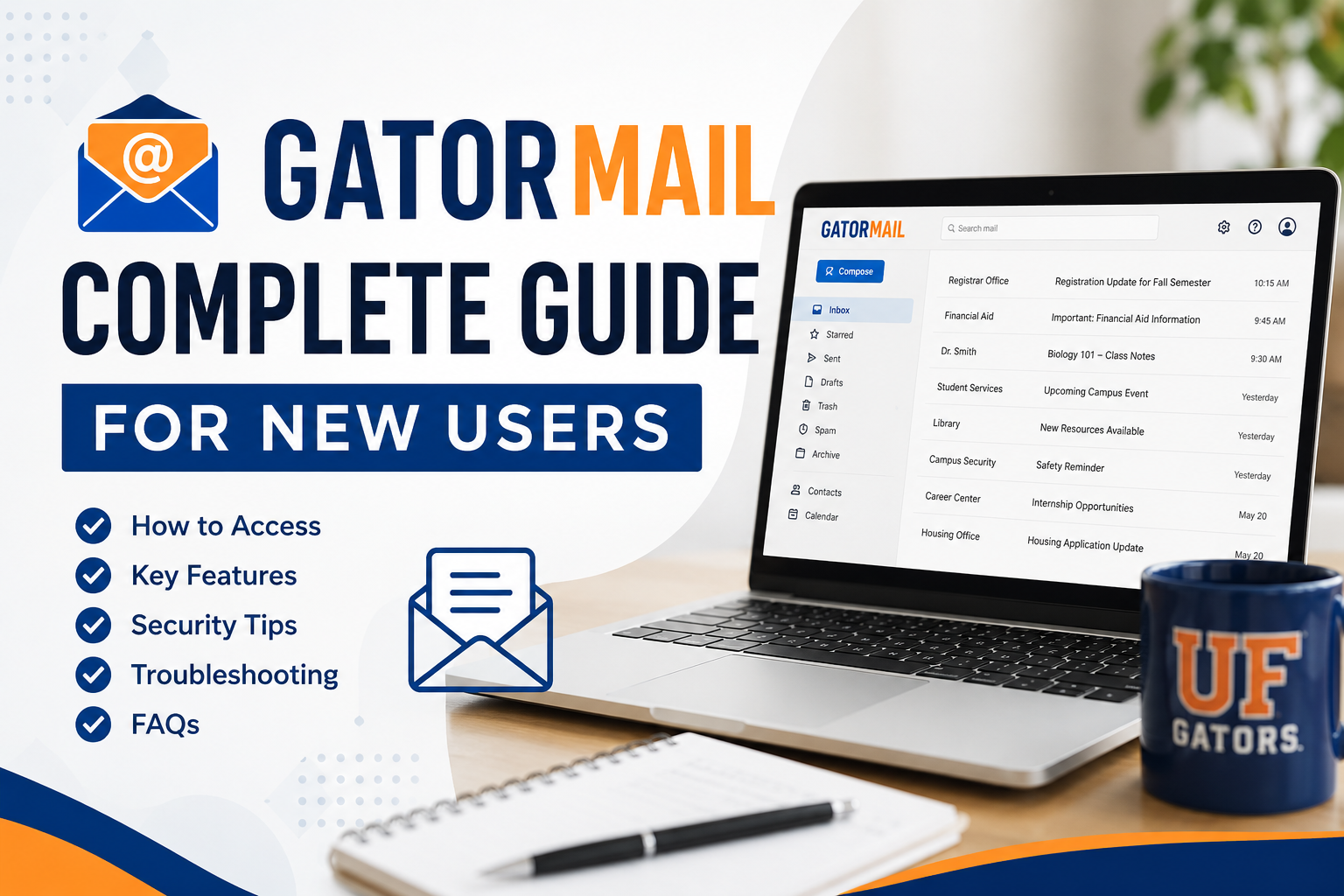
GatorMail: Complete Guide for New Users
If you’re a new student, faculty member, or staff member using GatorMail, getting started can feel overwhelming. From accessing your inbox for the first time to understanding storage limits and account security, there are several important details to know.
This complete guide explains everything you need to understand about GatorMail, including how it works, how to log in, common features, security best practices, and solutions to common problems. Whether you’re checking class announcements, communicating with instructors, or managing important university information, this guide will help you use GatorMail confidently and efficiently.
Key Takeaways
- GatorMail is the official email service used by many educational institutions.
- Your GatorMail account is essential for receiving academic and administrative communications.
- Strong passwords and multi-factor authentication help protect your account.
- Most login issues can be resolved with simple troubleshooting steps.
- Learning GatorMail’s features can improve organization and productivity.
Main Article
What Is GatorMail?
GatorMail is an official email platform provided by certain universities and colleges for students, faculty, and staff. It serves as the primary communication channel for academic announcements, registration updates, financial aid notifications, course information, and campus events.
Depending on the institution, GatorMail may be powered by cloud-based email services such as Microsoft 365 or Google Workspace while using the institution’s own email domain.
Instead of relying on personal email accounts, universities use GatorMail to ensure that official communications are delivered securely and consistently.
Why GatorMail Matters
Your GatorMail account is much more than an email address.
It is often required for:
- Class announcements
- Assignment notifications
- Financial aid updates
- Registration reminders
- Campus event information
- Library notices
- Student support services
- Communication with professors
- Collaboration with classmates
Missing an important GatorMail message could mean missing important deadlines or opportunities.
Who Uses GatorMail?
GatorMail is commonly assigned to:
- Undergraduate students
- Graduate students
- Faculty members
- University staff
- Researchers
- Administrative departments
Access policies vary by institution, but the email account is generally issued after enrollment or employment.
How to Access GatorMail
Logging into GatorMail is usually straightforward.
Step 1: Visit Your University’s Email Portal
Go to your institution’s official GatorMail login page.
Step 2: Enter Your Credentials
Typically, you’ll need:
- University email address
- Student or employee username
- Password
Step 3: Complete Multi-Factor Authentication
Many schools require an additional verification step to protect accounts.
Step 4: Access Your Inbox
After successful authentication, you’ll have access to your email, calendar, contacts, and other available services.
Common GatorMail Features
Most GatorMail accounts include much more than basic email.
| Feature | Purpose |
|---|---|
| Send and receive messages | |
| Calendar | Schedule classes and meetings |
| Contacts | Store important contacts |
| Cloud Storage | Save documents online (institution dependent) |
| Mobile Access | Check email from smartphones and tablets |
| Spam Protection | Filter unwanted emails |
| Search Tools | Quickly locate messages |
| Attachment Support | Share assignments and files |
Available features may vary depending on your institution.
How to Set Up GatorMail on Mobile Devices
Most users prefer checking email on their phones.
The general setup process includes:
- Download the recommended email app.
- Enter your university email address.
- Sign in using your institutional credentials.
- Complete any required authentication.
- Allow the app to synchronize your mailbox.
Once configured, you’ll receive notifications whenever new messages arrive.
Organizing Your Inbox
A well-organized inbox saves time throughout the semester.
Helpful strategies include:
- Create folders for each course.
- Archive completed conversations.
- Flag important emails.
- Delete unnecessary messages regularly.
- Use search filters instead of scrolling.
- Mark unread messages that require follow-up.
These habits make it easier to locate important information later.
GatorMail Security Best Practices
Because GatorMail often contains personal and academic information, account security is extremely important.
Use a Strong Password
Create a password that:
- Is long and unique
- Contains letters, numbers, and symbols
- Is not reused on other websites
Enable Multi-Factor Authentication
If available, always enable MFA. It provides an additional layer of protection if your password is compromised.
Watch for Phishing Emails
Be cautious of messages that:
- Request passwords
- Ask for financial information
- Include suspicious attachments
- Contain unexpected links
- Create unnecessary urgency
If something seems unusual, verify the sender before responding.
Keep Devices Updated
Regular software updates improve security and reduce vulnerabilities.
Common GatorMail Login Problems
Even experienced users occasionally experience login issues.
Forgotten Password
Reset your password through your institution’s account recovery system.
Incorrect Username
Double-check your email address and username format.
Browser Problems
Try:
- Clearing browser cache
- Using private browsing
- Trying another browser
- Updating your browser
Multi-Factor Authentication Errors
Ensure:
- Your authentication app is working
- Your phone has internet access
- Your registered device is available
Temporary Service Outages
Sometimes the email service may experience maintenance or temporary interruptions. Waiting a short time before trying again often resolves the issue.
GatorMail Storage Management
Many institutions provide generous storage, but it’s still wise to manage your mailbox.
Free up space by:
- Deleting large attachments
- Emptying the trash folder
- Removing unnecessary newsletters
- Archiving older emails
- Cleaning spam folders
Routine maintenance helps your account run smoothly.
Email Etiquette When Using GatorMail
Professional communication is an important academic skill.
Keep these best practices in mind:
Use Clear Subject Lines
Example:
- Biology Assignment Question
- Meeting Request
- Financial Aid Inquiry
Be Professional
Start with a greeting.
Use respectful language.
Avoid excessive abbreviations or slang.
Proofread Before Sending
Check:
- Spelling
- Grammar
- Attachments
- Recipient addresses
Respond Promptly
Timely replies demonstrate professionalism and help avoid communication delays.
Benefits of Using GatorMail
Using your university email offers several advantages.
Official Communication
Receive trusted information directly from your institution.
Better Organization
Separate academic emails from personal correspondence.
Enhanced Security
Institution-managed accounts often include stronger security measures than standard personal email.
Collaboration
Many GatorMail systems integrate with calendars, cloud storage, and productivity tools.
Access to Campus Resources
Some online services require your official university email for authentication.
GatorMail vs Personal Email
| Feature | GatorMail | Personal Email |
|---|---|---|
| Official University Communication | Yes | No |
| Academic Announcements | Yes | No |
| Student Authentication | Yes | No |
| Campus Service Integration | Yes | Limited |
| Personal Use | Limited | Yes |
| Institutional Security Policies | Yes | Depends on Provider |
Tips for New GatorMail Users
If you’re just getting started, these tips can help:
- Log in regularly.
- Check your inbox every day during the semester.
- Enable notifications.
- Update recovery information.
- Organize folders early.
- Learn keyboard shortcuts.
- Keep your password secure.
- Never ignore official university emails.
Developing these habits early makes managing academic communication much easier.
When to Contact IT Support
Some problems require assistance from your institution’s technical support team.
Reach out if:
- Your account is locked.
- Password recovery fails.
- Multi-factor authentication cannot be completed.
- You suspect unauthorized access.
- Email delivery consistently fails.
- Your account has been disabled unexpectedly.
Providing screenshots and error messages can help support staff resolve issues more quickly.
Frequently Asked Questions
1. What is GatorMail used for?
GatorMail is the official email system used by many educational institutions for academic, administrative, and campus communications.
2. Can I access GatorMail on my phone?
Yes. Most institutions allow access through mobile email apps or supported productivity applications.
3. Why can’t I log into GatorMail?
Common reasons include incorrect passwords, expired credentials, browser issues, multi-factor authentication problems, or temporary service outages.
4. Is GatorMail secure?
Yes. Most institutions implement strong security measures such as encrypted connections, spam filtering, and multi-factor authentication.
5. How often should I check GatorMail?
Students should check their inbox daily during the academic term to avoid missing important announcements and deadlines.
6. Can I forward GatorMail to another email account?
Some institutions allow email forwarding, while others restrict it for security or compliance reasons. Check your institution’s email policy.
7. What happens to my GatorMail account after graduation?
Policies vary by institution. Some universities allow graduates to retain their accounts for a limited period, while others deactivate access after graduation.
Conclusion
GatorMail is an essential communication tool for many students, faculty members, and university staff. It centralizes academic communication, supports collaboration, and provides a secure environment for handling important university information.
By learning how to access your account, organize your inbox, protect your credentials, and troubleshoot common issues, you can make the most of your GatorMail experience. Checking your email regularly and following good security practices will help ensure you never miss important updates throughout your academic journey.













Leave a Reply