

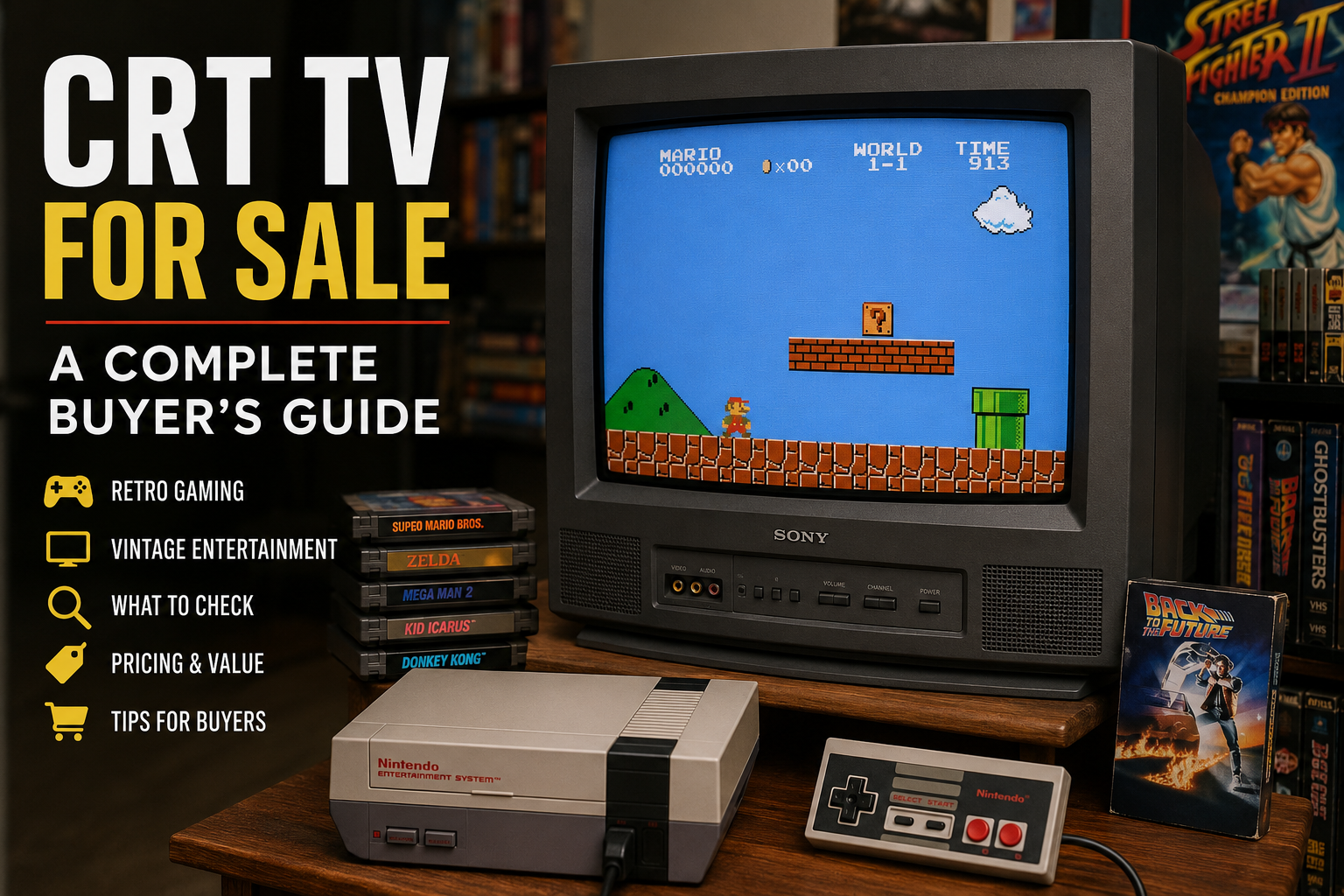
CRT TV for Sale: A Complete Buyer’s Guide
Cathode Ray Tube (CRT) televisions may no longer dominate living rooms, but demand for them has grown again among collectors, retro gamers, and vintage electronics enthusiasts. If you’re searching for a CRT TV for Sale, you’ll quickly discover that not all models offer the same quality, features, or value.
Whether you’re buying your first CRT television, building a retro gaming setup, or restoring vintage electronics, understanding what to look for can save you money and help you find a reliable model.
This comprehensive guide explains everything you need to know before purchasing a CRT TV, including sizes, pricing, condition checks, compatibility, and tips for getting the best value.
Key Takeaways
- CRT TVs remain popular for retro gaming, classic media, and collectors.
- Screen condition and overall functionality are more important than age.
- Popular brands often command higher prices due to reliability and image quality.
- Input options vary between models, affecting compatibility with older consoles.
- Buying locally allows you to inspect the television before making a purchase.
Why CRT TVs Are Still Popular
Although flat-screen displays have replaced CRT technology in modern homes, these televisions continue to attract buyers for several reasons.
Superior Experience for Retro Gaming
Many classic gaming consoles—including the Nintendo Entertainment System (NES), Super Nintendo (SNES), Sega Genesis, PlayStation, Nintendo 64, and GameCube—were designed specifically for CRT displays.
Benefits include:
- Virtually no input lag
- Natural motion clarity
- Authentic scanline appearance
- Proper display of classic game graphics
- Better compatibility with older hardware
Vintage Entertainment
Collectors often enjoy watching:
- VHS tapes
- Retro cartoons
- Classic movies
- Older television broadcasts
- DVD collections
These formats often look more natural on CRT screens than on modern high-resolution televisions.
Collectible Value
Certain CRT televisions have become desirable collector’s items because of their build quality, picture performance, and rarity.
Popular models can appreciate in value over time, especially when they remain in excellent working condition.
Who Should Buy a CRT TV?
A CRT television is ideal for several types of buyers.
| Buyer | Why a CRT TV Makes Sense |
|---|---|
| Retro gamers | Authentic gaming experience |
| Collectors | Vintage technology preservation |
| VHS enthusiasts | Better playback quality for analog media |
| Hobbyists | Restoration and electronics projects |
| Film enthusiasts | Classic viewing experience |
Types of CRT TVs
Not every CRT television is the same. Understanding the different categories helps narrow your search.
Standard CRT TVs
These are the most common models.
Features include:
- 4:3 aspect ratio
- Composite video input
- RF antenna input
- Stereo audio (on many models)
Best for:
- NES
- SNES
- Sega Genesis
- PlayStation
- Nintendo 64
Flat Screen CRT TVs
Unlike modern LCD displays, these still use CRT technology but feature a flatter glass surface.
Advantages include:
- Reduced screen glare
- Improved image sharpness
- Less geometric distortion
- Better viewing angles
HD CRT TVs
Some later CRT televisions support:
- 480p
- 720p
- 1080i
These models work well with:
- Xbox
- PlayStation 2
- PlayStation 3
- Xbox 360
- Nintendo Wii
However, some introduce processing delays that may not appeal to competitive retro gamers.
Popular CRT TV Brands
Certain manufacturers built a reputation for excellent picture quality and durability.
Sony
Often considered the premium choice.
Known for:
- Trinitron technology
- Bright colors
- Sharp images
- Excellent build quality
Panasonic
Panasonic models offer:
- Reliable performance
- Strong color accuracy
- Long lifespan
- Good component video support
JVC
Popular for:
- Retro gaming
- High-quality picture tubes
- Professional broadcast models
Toshiba
Toshiba CRT televisions are appreciated for:
- Solid reliability
- Competitive pricing
- Good image quality
- Wide availability
Philips
Philips models are known for:
- Easy setup
- Quality audio
- Good everyday performance
What to Check Before Buying
Buying a used CRT television requires careful inspection.
Picture Quality
Turn on the television and check for:
- Brightness
- Sharpness
- Even colors
- No flickering
- No permanent discoloration
Screen Condition
Inspect the glass for:
- Cracks
- Deep scratches
- Burn-in
- Chips
Minor cosmetic marks are usually acceptable, but structural damage is a reason to avoid the purchase.
Inputs
Different models include different connection options.
Common inputs include:
- RF
- Composite (RCA)
- S-Video
- Component
- SCART (common in Europe)
- VGA (rare)
The available inputs determine which devices you can connect without additional adapters.
Sound Quality
Listen for:
- Buzzing
- Distortion
- Crackling
- Weak speakers
Clean audio is a good indicator that the television has been well maintained.
Physical Condition
Look for:
- Missing buttons
- Broken casing
- Loose knobs
- Damaged power cord
- Signs of water damage
Average CRT TV Prices
Prices vary depending on condition, brand, size, and demand.
| Condition | Typical Price Range |
|---|---|
| Small working CRT | $20–$80 |
| Medium-sized CRT | $75–$200 |
| Premium gaming CRT | $200–$600+ |
| Professional broadcast monitor | $800–$5,000+ |
Rare models in exceptional condition can sell for significantly more.
Best Screen Sizes
Choosing the right screen size depends on available space and intended use.
13–20 Inches
Ideal for:
- Bedrooms
- Retro gaming desks
- Small collections
24–27 Inches
A balanced option offering:
- Larger viewing area
- Comfortable gaming
- Better family viewing
32 Inches and Above
These large CRT televisions provide an immersive experience but come with trade-offs:
- Extremely heavy
- Difficult to transport
- Require sturdy furniture
Where to Find a CRT TV for Sale
Many buyers locate CRT televisions through local and online marketplaces.
Common sources include:
- Local classified listings
- Estate sales
- Garage sales
- Thrift stores
- Electronics recycling centers
- Vintage electronics shops
- Community marketplaces
Buying locally is often the safest option because you can inspect the television before purchasing.
Tips for Buying a Used CRT TV
Before making a purchase, follow these practical tips:
- Test the television whenever possible.
- Ask how long it has been stored.
- Check every input connection.
- Verify that the remote control works, if included.
- Transport the TV upright to reduce stress on internal components.
- Bring blankets or padding during transport.
- Avoid lifting large CRTs alone due to their weight.
Common Problems to Watch For
Older televisions naturally develop wear over time.
Some common issues include:
- Dim picture
- Image burn-in
- Color convergence problems
- Geometry distortion
- Faulty speakers
- Loose input ports
- Power supply issues
Minor cosmetic flaws are usually manageable, but electrical faults may require specialized repair.
CRT TV vs. Modern Flat-Screen TVs
| Feature | CRT TV | Modern LED/LCD TV |
|---|---|---|
| Input Lag | Extremely low | Low to moderate |
| Retro Gaming | Excellent | Often requires scaling |
| Weight | Very heavy | Lightweight |
| Power Consumption | Higher | Lower |
| Resolution | Lower | High-definition and 4K |
| Durability | Long-lasting with care | Generally reliable but more complex repairs |
Each technology has strengths, but CRTs remain unmatched for many classic gaming experiences.
Is Buying a CRT TV Worth It?
For many buyers, the answer is yes.
A CRT television is worth considering if you:
- Enjoy retro gaming
- Collect vintage electronics
- Watch VHS tapes
- Appreciate classic display technology
- Want an authentic experience with older media
If your primary goal is streaming movies, watching 4K content, or using smart TV features, a modern television will better suit your needs.
Frequently Asked Questions
1. Why are CRT TVs becoming popular again?
Retro gamers and collectors appreciate CRT televisions for their authentic display quality, minimal input lag, and compatibility with classic gaming consoles.
2. How long can a CRT TV last?
A well-maintained CRT television can operate for decades. Lifespan depends on usage, storage conditions, and overall maintenance.
3. Are CRT TVs expensive?
Prices vary widely. Smaller models are often affordable, while premium gaming or professional broadcast CRTs can be significantly more expensive.
4. Can I connect modern devices to a CRT TV?
Yes, although you may need adapters or converters depending on the available inputs and the device you want to connect.
5. What is the best CRT TV brand?
Sony, Panasonic, JVC, Toshiba, and Philips are among the most respected manufacturers due to their picture quality and long-term reliability.
6. Are CRT TVs safe to use today?
Yes, provided they are in good working condition and have no significant electrical damage. Avoid opening or repairing a CRT yourself unless you have the proper expertise, as internal components can retain high voltages.
7. Why are some CRT TVs so expensive?
Rare models, professional monitors, and well-preserved premium televisions are highly sought after by collectors and retro gaming enthusiasts, increasing their market value.
Conclusion
Finding the right CRT TV for Sale requires more than simply choosing the first listing you see. Screen condition, picture quality, input options, brand reputation, and intended use all play a major role in determining whether a television is worth buying.
For retro gamers, collectors, and fans of vintage media, a quality CRT television delivers an experience that modern displays often cannot fully replicate. By carefully inspecting each unit, understanding fair pricing, and choosing a model that matches your needs, you can confidently invest in a CRT TV that provides years of enjoyable use.












Leave a Reply