

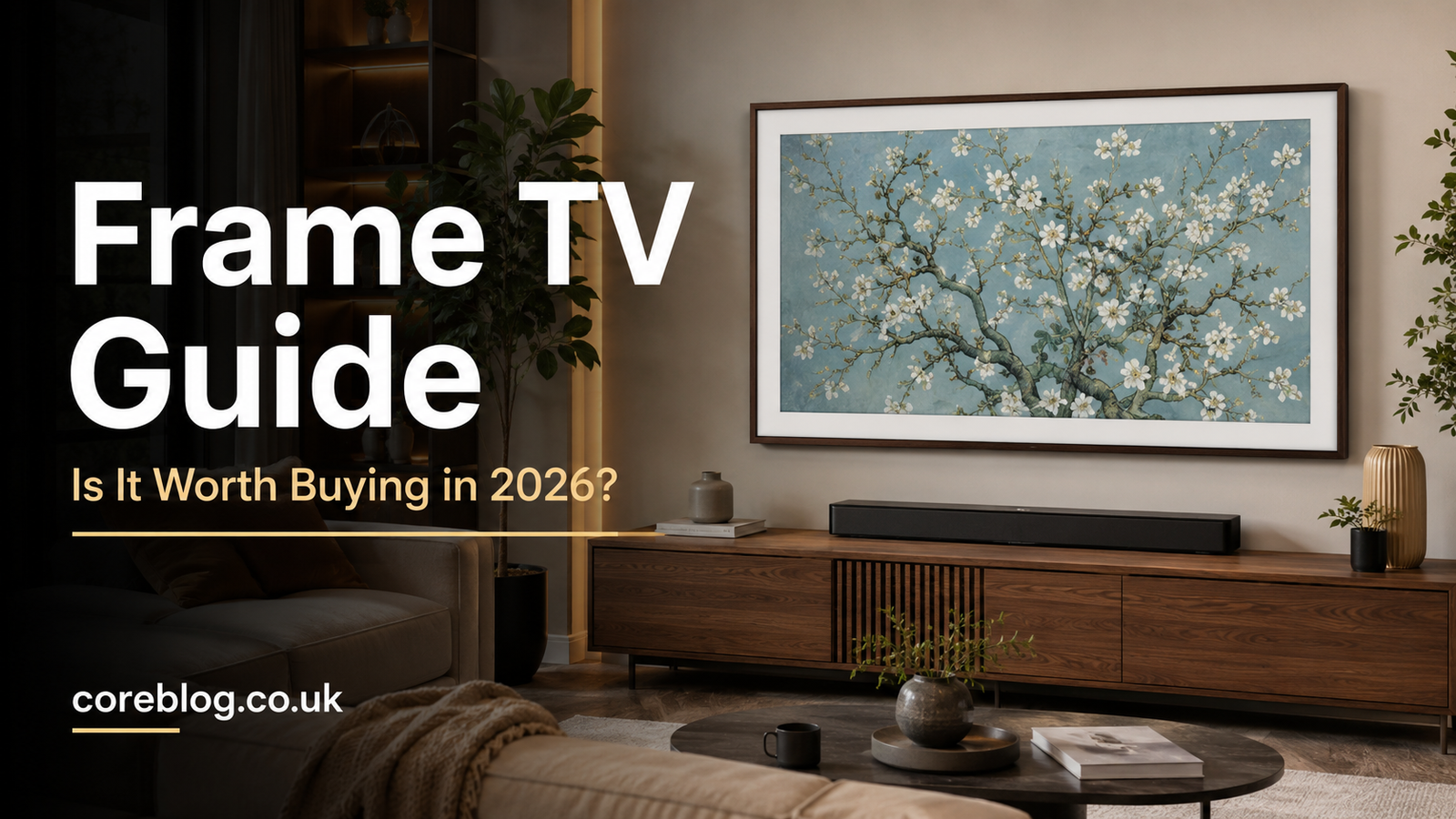
The TV That Doesn’t Look Like a TV
Most TVs look great when they are turned on. The problem starts when they are off. A big black rectangle on the wall can make even a carefully designed living room feel a little unfinished. That is exactly why the idea of a frame-style television has become so popular.
A Frame TV is designed to blend into your home like wall art. Instead of sitting there like a blank screen, it can display paintings, family photos, digital artwork, or soft lifestyle images when you are not watching shows. For homeowners, renters, interior design lovers, and anyone tired of bulky entertainment setups, it feels like a smart solution.
But here is the real question: is it actually worth the money?
This Frame TV Guide will walk you through everything in a simple, honest way. We will look at how a Frame TV works, what makes it different from a regular smart TV, where it shines, where it falls short, and whether buying one in 2026 makes sense for your home.
What Is a Frame TV?
A Frame TV is a smart television made to look like a framed piece of artwork. It usually has a slim body, a flush wall-mount design, customizable bezels, a matte-style display, and an art mode that shows images when the TV is not being used for normal viewing.
In simple words, it is part television and part home decor.
Unlike a normal flat-screen TV, a Frame TV focuses heavily on design. It is not only about watching movies, sports, or Netflix. It is also about how the screen looks when it becomes part of your wall.
This is why many people use a Frame TV in:
- Living rooms
- Bedrooms
- Home offices
- Dining areas
- Luxury apartments
- Media walls
- Minimalist homes
- Gallery-style interiors
A good Frame TV Guide should make one thing clear from the start: this type of TV is not for everyone. If you only care about the brightest display, deepest blacks, or the best gaming performance, you may find better value in a traditional OLED or premium QLED TV. However, if you care about style, clean design, and a screen that does not ruin your interior, a Frame TV becomes much more attractive.
Why Frame TVs Are So Popular in 2026
Frame TVs are popular because modern homes have changed. People no longer want a living room that looks like a small cinema all the time. They want flexible spaces that feel warm, stylish, and personal.
In 2026, home design is moving toward cleaner walls, hidden cables, soft lighting, and furniture that serves more than one purpose. A Frame TV fits perfectly into that lifestyle.
The Biggest Reasons People Love Frame TVs
People are drawn to Frame TVs because they offer:
- A stylish art-like appearance
- A slim wall-mounted look
- Customizable frame bezels
- Digital artwork display
- Smart TV features
- Less visual clutter
- A premium home decor feel
- Better room styling when the TV is off
For many buyers, the biggest appeal is simple: the TV no longer dominates the room. Instead, it becomes part of the design.
How a Frame TV Works
A Frame TV works like a normal smart TV when you are watching content. You can stream movies, watch live channels, connect apps, play games, and use voice features depending on the model.
The difference appears when the TV is not in active use. Instead of turning into a black screen, it can switch into Art Mode or a similar display mode. This allows the screen to show artwork, photography, or personal images.
Art Mode Explained
Art Mode is the feature that makes a Frame TV special. It displays selected artwork or photos in a way that looks closer to a real framed print than a glowing television screen.
Many Frame TVs use matte display technology to reduce reflections. This helps the art look softer and more natural, especially in bright rooms. Some models also adjust brightness based on the lighting in the room, so the image does not look too harsh.
This Frame TV Guide would not be complete without saying this clearly: Art Mode is the main reason to buy this kind of TV. If you do not plan to use it, you may not get the full value.
Frame TV Guide: Key Features to Look For
Before buying, you need to know which features matter. Not every frame-style TV offers the same quality, and small details can make a big difference.
1. Matte Display
A matte display helps reduce glare and reflections. This is important because a shiny screen can ruin the artwork effect. If your room has big windows or strong lights, a matte screen is a major benefit.
A glossy TV may look sharper for movies, but it often struggles to look like real wall art. So, for a frame-style setup, matte display quality is one of the first things to check.
2. Slim Wall Mount
The best Frame TV setups sit almost flat against the wall. This creates the illusion of a real picture frame. If the TV sticks out too much, the effect becomes less convincing.
Look for a model that supports a slim wall mount or comes with one included.
3. Customizable Bezels
Bezels are the frame pieces around the TV. Many Frame TVs allow you to choose different colors or finishes, such as white, black, beige, brown, or wood-style designs.
This matters because the bezel should match your room. A light wood frame may suit a cozy home, while a black frame may look better in a modern apartment.
4. Art Store or Artwork Library
Some Frame TVs offer access to a digital art library. Others allow you to upload your own photos. Ideally, you want both options.
If you enjoy changing your room’s mood often, artwork variety becomes a huge plus.
5. Picture Quality
A Frame TV should still be a good TV. Look at resolution, color, brightness, contrast, refresh rate, and processor quality. A beautiful design is nice, but weak picture performance can become frustrating over time.
For most homes in 2026, a 4K Frame TV is the practical choice.
6. Cable Management
One of the main reasons people choose a Frame TV is the clean look. Messy cables can ruin that instantly.
A good setup should include hidden cable options, a connection box, or in-wall cable management. Even the best-looking TV loses its charm if wires are hanging below it.
Frame TV vs Regular Smart TV
A regular smart TV is usually made for performance first. A Frame TV is made for design and lifestyle first. Both can be great, but they serve slightly different buyers.
| Feature | Frame TV | Regular Smart TV |
|---|---|---|
| Design | Looks like wall art | Looks like a normal TV |
| Best For | Decor-focused homes | Pure entertainment |
| Display Style | Often matte and art-friendly | Usually glossy or semi-gloss |
| Wall Look | Slim and gallery-like | Varies by model |
| Custom Frames | Often available | Usually not available |
| Price | Often higher | More budget options |
| Art Mode | Main feature | Usually not included |
| Gaming | Good on some models | Better options available |
A regular TV may give you better performance for the same price. However, a Frame TV gives you something a normal TV usually cannot: a cleaner and more elegant room.
That is why this Frame TV Guide is not just about specs. It is also about lifestyle.
Is a Frame TV Worth Buying in 2026?
Yes, a Frame TV is worth buying in 2026 if you care about interior design as much as entertainment. It is especially worth it if your TV is placed in a visible area where appearance matters.
However, it may not be worth it if your main goal is maximum picture performance for the lowest price.
A Frame TV Is Worth It If You:
- Want your TV to look like artwork
- Hate the look of a blank black screen
- Prefer a clean wall-mounted setup
- Care about home decor
- Enjoy digital art or photography
- Want a stylish living room centerpiece
- Need a TV for a modern apartment or luxury space
- Are willing to pay extra for design
A Frame TV May Not Be Worth It If You:
- Only care about gaming performance
- Want the deepest OLED-style blacks
- Are shopping on a tight budget
- Do not plan to use Art Mode
- Prefer a traditional TV stand setup
- Need the brightest possible screen for daytime viewing
This is where many buyers make a mistake. They buy a Frame TV expecting it to beat every premium display in pure performance. That is not really its purpose. It is a design-first smart TV with strong everyday features.
Picture Quality: Good, But Not Always the Best
Frame TVs usually offer solid picture quality. Most modern models have 4K resolution, smart image processing, rich colors, and enough brightness for normal living rooms.
For movies, dramas, YouTube, sports, and casual streaming, most people will be happy. The image is sharp, colorful, and pleasant.
However, if you compare it directly with a high-end OLED TV in a dark room, you may notice differences. OLED screens usually deliver deeper blacks and stronger contrast. Some premium mini-LED TVs may also offer better brightness and local dimming.
So, the honest answer is this: a Frame TV looks good, but its biggest strength is how it looks in your room, not only how it performs on screen.
Design and Decor: Where the Frame TV Wins
This is the area where a Frame TV truly stands out.
Imagine walking into a living room where the TV is showing a calm landscape painting, a black-and-white city photo, or a soft abstract design. It feels more intentional. It feels less like a tech product and more like part of the home.
That small change can make a room feel more expensive.
Best Decor Styles for a Frame TV
A Frame TV works beautifully with:
- Modern interiors
- Scandinavian design
- Japandi style
- Minimalist rooms
- Farmhouse decor
- Luxury apartments
- Neutral color palettes
- Gallery walls
- Open-plan living rooms
You can also pair it with floating shelves, wall sconces, wooden panels, indoor plants, or a media console to make it look even more natural.
Best Rooms for a Frame TV
A Frame TV can work almost anywhere, but some rooms benefit more than others.
Living Room
This is the most popular place for a Frame TV. Since the living room is where guests usually sit, the art mode makes a strong impression. It also helps the TV blend with sofas, tables, wall art, rugs, and lighting.
Bedroom
In a bedroom, a Frame TV can feel softer than a regular screen. Instead of a cold black panel facing the bed, you can display peaceful artwork or personal photos.
Home Office
A Frame TV in a home office can double as a display, presentation screen, or stylish background feature. It is especially useful if you record videos, take meetings, or want your workspace to look polished.
Dining Area
A regular TV may feel awkward in a dining space. A Frame TV, however, can look like art when not in use, making it a better fit.
Frame TV Setup Tips for a Premium Look
Even a great Frame TV can look average if it is installed poorly. Setup matters a lot.
Choose the Right Wall
Pick a wall where the TV can sit naturally at eye level. Avoid placing it too high unless it is above a fireplace and there is no better option.
Hide the Cables
Visible cables can destroy the whole frame illusion. Use cable covers, in-wall cable kits, or professional installation if needed.
Match the Bezel to the Room
Do not choose a frame color randomly. Match it with your furniture, wall color, flooring, or other frames in the room.
Use High-Quality Artwork
Low-quality images can look cheap on a large screen. Choose high-resolution artwork or clean photography for the best result.
Adjust Brightness
If the screen looks too bright in Art Mode, it will not feel natural. Lower the brightness so it looks more like a real print.
Common Mistakes Buyers Make
A good Frame TV Guide should also warn you about the mistakes people often make.
Buying Only for the Trend
Frame TVs are stylish, but they are not magic. Buy one because it fits your lifestyle, not because it looks popular on social media.
Ignoring Extra Costs
Custom bezels, artwork subscriptions, wall mounting, and cable management may cost extra. Always check the full cost before buying.
Choosing the Wrong Size
A Frame TV should feel balanced on your wall. Too small, and it may look lost. Too large, and it may overpower the room.
Forgetting About Viewing Distance
Even though design matters, comfort still matters too. Make sure the screen size works for how far you sit from it.
Not Planning the Wall Layout
A Frame TV looks best when the surrounding wall is styled properly. Think about shelves, lighting, furniture, and spacing before installation.
What Size Frame TV Should You Buy?
The right size depends on your room, wall space, and viewing distance.
| Room Type | Suggested Size |
|---|---|
| Small bedroom | 32 to 43 inches |
| Medium bedroom | 43 to 55 inches |
| Small living room | 50 to 55 inches |
| Medium living room | 55 to 65 inches |
| Large living room | 65 to 75 inches |
| Luxury media wall | 75 inches or larger |
For most homes, 55 inches or 65 inches is the sweet spot. These sizes feel large enough for entertainment but still work well as wall art.
Frame TV Guide for Buyers on a Budget
Frame TVs can be expensive compared with regular smart TVs. However, you can still buy smartly.
Here are a few practical tips:
- Wait for seasonal sales
- Compare older and newer models
- Check if the wall mount is included
- See whether bezels cost extra
- Avoid paying for features you will not use
- Choose the right size instead of the biggest size
- Consider total setup cost, not just TV price
In addition, remember that a Frame TV is partly a decor purchase. If it improves the look of your main living space every day, the value may feel higher than the spec sheet suggests.
Is a Frame TV Good for Gaming?
A Frame TV can be good for casual gaming, especially if it has low input lag, HDMI 2.1 support, 4K resolution, and a higher refresh rate. Many modern models are perfectly fine for console gaming.
However, serious gamers may still prefer a dedicated gaming TV or monitor. If you play fast competitive games, check refresh rate, response time, variable refresh rate support, and game mode features before buying.
For family gaming, sports games, adventure titles, and casual console use, a Frame TV is usually more than enough.
Is a Frame TV Good for Movies and Sports?
Yes, a Frame TV is good for everyday movies and sports. It gives you a clean viewing experience, smart apps, sharp resolution, and nice color. Sports fans will enjoy the large-screen feel, especially in bright living rooms.
However, if you are building a dark home theater, you may prefer a premium OLED or mini-LED model. Those TVs can offer stronger cinematic contrast.
Again, this Frame TV Guide comes back to the same point: buy a Frame TV because you want both style and entertainment, not because you want only the highest technical performance.
Pros and Cons of a Frame TV
Pros
- Looks beautiful on the wall
- Doubles as digital artwork
- Great for modern home decor
- Helps reduce visual clutter
- Customizable frame options
- Strong smart TV features
- Good everyday picture quality
- Works well in living rooms and bedrooms
- Makes the room feel more polished
Cons
- Usually costs more than regular TVs
- Some accessories may be extra
- Not always the best choice for pure picture quality
- Art features may require subscriptions or setup
- Needs careful installation
- Not ideal if you never use Art Mode
Who Should Buy a Frame TV?
A Frame TV is best for someone who sees a TV as part of the room, not just a device.
You should consider one if you:
- Spend time decorating your home
- Want a premium-looking wall setup
- Dislike bulky electronics
- Use your living room for guests
- Want your TV to feel less distracting
- Like displaying art or family photos
- Prefer a clean, modern lifestyle
This makes it ideal for homeowners, apartment renters, interior designers, content creators, and anyone building a stylish media wall.
Who Should Skip It?
You may want to skip a Frame TV if you:
- Want the cheapest large TV possible
- Do not care how your TV looks when off
- Prefer a TV stand over wall mounting
- Want top-tier home cinema performance
- Need a screen mainly for competitive gaming
- Do not want to pay for design-focused features
There is nothing wrong with choosing a regular smart TV. In many cases, it gives better value. But it will not give the same art-like effect.
Final Buying Checklist
Before you buy, ask yourself these questions:
- Will I use Art Mode often?
- Does the TV match my room style?
- Is the screen size right for my wall?
- Can I hide the cables properly?
- Do I need custom bezels?
- Is picture quality good enough for my use?
- Am I paying for design because I truly value it?
- Will this TV improve the look of my room?
If most answers are yes, then a Frame TV is likely a smart purchase.
Frame TV Guide: Final Verdict
So, is a Frame TV worth buying in 2026?
For the right person, absolutely. It is not just another television. It is a design piece, a digital art display, and a smart entertainment screen in one. It makes your wall look cleaner, your room feel more polished, and your TV less distracting when it is not in use.
However, it is not the perfect choice for everyone. If your only goal is the best picture quality per dollar, you may find better options elsewhere. But if you want a TV that blends into your home, adds style, and still performs well for everyday viewing, a Frame TV makes a lot of sense.
This Frame TV Guide comes down to one simple idea: buy it for the experience, not just the specs. A regular TV entertains you when it is on. A Frame TV improves your space even when it is off.
If you are planning a living room upgrade, a bedroom refresh, or a cleaner media wall in 2026, a Frame TV is worth serious consideration. And if you already own one, share your experience, styling ideas, or setup tips with others. Your real-world advice may help someone make a smarter buying decision.















Leave a Reply