

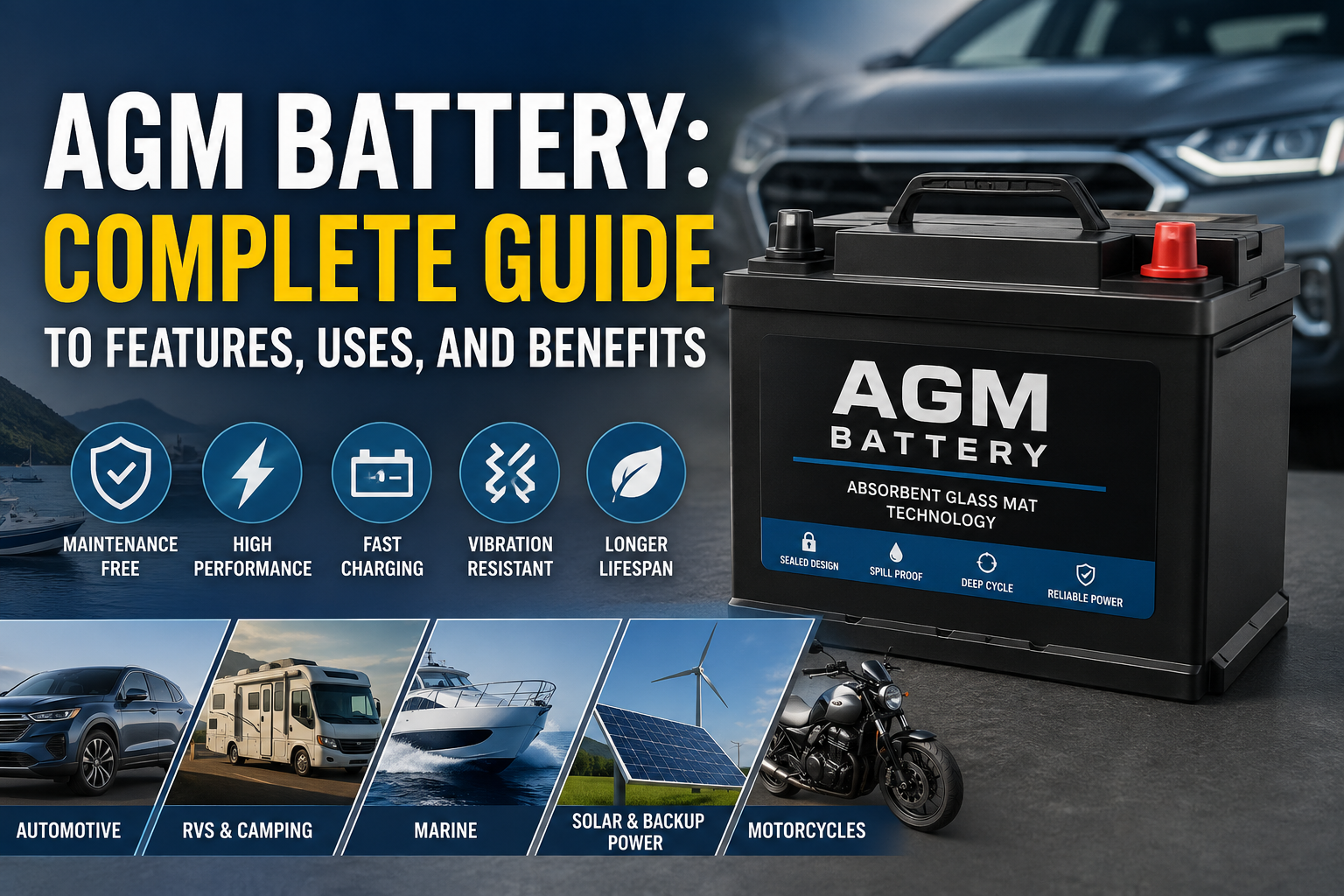
AGM Battery: Complete Guide to Features, Uses, and Benefits
An AGM Battery is one of the most reliable and maintenance-free battery technologies available today. Whether you drive a modern vehicle with start-stop technology, own an RV, power a boat, or rely on backup energy systems, understanding AGM batteries can help you choose the right power source and extend its lifespan.
Unlike traditional flooded lead-acid batteries, AGM (Absorbent Glass Mat) batteries are designed to deliver consistent performance, faster charging, improved durability, and greater resistance to vibration. These advantages have made them a popular choice for automotive, marine, recreational, and industrial applications.
This guide explains everything you need to know about AGM batteries, including how they work, their advantages and disadvantages, common uses, maintenance tips, charging best practices, lifespan, and how they compare with other battery types.
Key Takeaways
- AGM batteries are sealed, maintenance-free lead-acid batteries designed for reliable performance.
- They charge faster and withstand vibration better than traditional flooded batteries.
- AGM batteries are commonly used in modern vehicles, RVs, boats, motorcycles, and backup power systems.
- Proper charging and storage significantly extend an AGM battery’s lifespan.
- Although they cost more upfront, their durability and performance often provide better long-term value.
Main Article
What Is an AGM Battery?
An AGM Battery, short for Absorbent Glass Mat Battery, is a type of Valve-Regulated Lead-Acid (VRLA) battery. Instead of using free-flowing liquid electrolyte like conventional flooded batteries, an AGM battery stores the electrolyte inside highly absorbent fiberglass mats placed between the lead plates.
This sealed design minimizes leakage, reduces maintenance, and improves overall battery performance.
Because the battery is sealed, there is no need to add distilled water during its service life, making it a convenient choice for many users.
How Does an AGM Battery Work?
The operating principle remains similar to other lead-acid batteries.
Inside the battery:
- Positive and negative lead plates store electrical energy.
- Fiberglass mats absorb and hold the electrolyte.
- Chemical reactions between the lead plates and electrolyte generate electricity.
- During charging, the chemical reactions reverse, restoring stored energy.
The absorbed electrolyte keeps the internal components tightly packed, allowing the battery to resist vibration while delivering high current when needed.
Key Features of AGM Batteries
AGM batteries offer several features that distinguish them from traditional batteries.
| Feature | AGM Battery |
|---|---|
| Maintenance | Maintenance-free |
| Electrolyte | Absorbed in fiberglass mats |
| Spill Resistance | Excellent |
| Charging Speed | Fast |
| Vibration Resistance | High |
| Deep Cycle Capability | Good |
| Self-Discharge | Low |
| Mounting Position | Flexible (except upside down for some models) |
These characteristics make AGM batteries suitable for demanding environments.
Benefits of AGM Batteries
Maintenance-Free Design
One of the biggest advantages is convenience. Since AGM batteries are sealed, users never need to refill electrolyte levels.
Faster Charging
AGM batteries generally accept higher charging currents than flooded batteries, allowing them to recharge more quickly when paired with a compatible charger.
Better Vibration Resistance
Because the electrolyte is held inside fiberglass mats, internal components move less during vibration.
This makes AGM batteries ideal for:
- Off-road vehicles
- Boats
- Motorcycles
- Construction equipment
High Starting Power
AGM batteries deliver high cold-cranking amps (CCA), making engine starts more reliable in cold weather.
Improved Safety
The sealed construction significantly reduces:
- Acid spills
- Corrosion
- Gas emissions under normal operating conditions
Longer Service Life
With proper charging and maintenance, many AGM batteries last longer than conventional flooded batteries.
Common Uses of AGM Batteries
AGM batteries are used in many industries due to their versatility.
Automotive
Modern vehicles often require AGM batteries because they support:
- Start-stop systems
- Multiple electronic accessories
- Higher electrical loads
Recreational Vehicles (RVs)
RV owners appreciate AGM batteries because they provide dependable power while requiring minimal maintenance.
Marine Applications
Boats frequently experience vibration and movement, making AGM batteries an excellent choice.
They power:
- Navigation equipment
- Fish finders
- Trolling motors
- Cabin lighting
Motorcycles
Motorcycle manufacturers often install AGM batteries due to their compact size and vibration resistance.
Solar Energy Systems
Some off-grid and backup solar installations use AGM batteries for energy storage.
Backup Power Systems
AGM batteries are commonly found in:
- UPS (Uninterruptible Power Supply) systems
- Emergency lighting
- Security systems
- Medical equipment backups
AGM Battery vs Flooded Battery
| Feature | AGM Battery | Flooded Battery |
|---|---|---|
| Maintenance | None | Regular watering required |
| Charging Speed | Faster | Slower |
| Lifespan | Longer (with proper care) | Moderate |
| Vibration Resistance | Excellent | Average |
| Spill Risk | Very Low | Higher |
| Initial Cost | Higher | Lower |
| Performance in Cold Weather | Better | Moderate |
If your vehicle or equipment originally came with an AGM battery, replacing it with the same type is generally recommended unless the manufacturer specifies otherwise.
AGM Battery vs Lithium Battery
| Feature | AGM Battery | Lithium Battery |
|---|---|---|
| Purchase Cost | Lower | Higher |
| Weight | Heavier | Much lighter |
| Lifespan | Moderate | Longer |
| Charging Speed | Fast | Very Fast |
| Maintenance | None | None |
| Deep Cycling | Good | Excellent |
Lithium batteries outperform AGM batteries in weight and cycle life but often cost significantly more.
How Long Does an AGM Battery Last?
Battery lifespan depends on several factors.
Typical service life:
| Application | Expected Lifespan |
|---|---|
| Passenger Vehicles | 3–7 years |
| RV and Marine Use | 4–8 years |
| Backup Systems | 5–10 years |
Factors affecting lifespan include:
- Charging habits
- Climate
- Frequency of deep discharge
- Storage conditions
- Charger quality
Proper maintenance can significantly extend battery life.
How to Charge an AGM Battery Correctly
Charging an AGM battery properly is essential for maximizing performance.
Best Practices
- Use a charger with an AGM mode.
- Follow the manufacturer’s recommended charging voltage.
- Avoid overcharging.
- Recharge promptly after heavy use.
- Keep battery terminals clean.
Using an incompatible charger may shorten battery life.
AGM Battery Maintenance Tips
Although AGM batteries require very little maintenance, a few simple practices help preserve performance.
- Inspect terminals for corrosion.
- Tighten loose connections.
- Keep the battery clean and dry.
- Avoid prolonged deep discharges.
- Store in a cool, dry location.
- Recharge periodically during long-term storage.
These steps help reduce premature battery failure.
Signs Your AGM Battery Needs Replacement
Watch for these warning signs:
- Slow engine cranking
- Frequent jump starts
- Reduced accessory power
- Battery warning light
- Difficulty holding a charge
- Swollen battery case
- Battery older than its expected lifespan
If several symptoms appear together, testing the battery with appropriate equipment is recommended before replacing it.
Choosing the Right AGM Battery
Before purchasing an AGM battery, consider the following:
Battery Size
Always choose the correct battery group size specified by your vehicle or equipment manufacturer.
Cold Cranking Amps (CCA)
Higher CCA ratings improve cold-weather starting performance.
Reserve Capacity
Reserve capacity indicates how long the battery can provide power if the charging system fails.
Amp-Hour Rating
For RV, marine, and backup applications, choose a battery with sufficient amp-hour capacity for your expected energy usage.
Brand Reputation
A battery from a reputable manufacturer often provides better quality control, warranty support, and long-term reliability.
Advantages and Disadvantages at a Glance
| Advantages | Disadvantages |
|---|---|
| Maintenance-free | Higher purchase price |
| Spill-resistant | Sensitive to overcharging |
| Fast charging | Requires compatible charging settings |
| Excellent vibration resistance | Heavier than lithium batteries |
| Reliable cold-weather starting | Not ideal for repeated deep discharges beyond design limits |
Is an AGM Battery Worth It?
For many drivers and equipment owners, the answer is yes.
An AGM battery is often worth the additional cost if you need:
- Reliable starting power
- Maintenance-free operation
- Better durability
- Enhanced vibration resistance
- Support for modern vehicle electronics
- Improved performance in demanding environments
While conventional flooded batteries remain a budget-friendly option, AGM batteries typically offer better performance and convenience over their lifespan.
Frequently Asked Questions
1. What does AGM stand for in an AGM battery?
AGM stands for Absorbent Glass Mat, referring to the fiberglass separators that hold the electrolyte between the battery plates.
2. Can I replace a flooded battery with an AGM battery?
In many cases, yes. However, always confirm compatibility with your vehicle or equipment manufacturer and ensure the charging system supports AGM batteries.
3. Does an AGM battery require maintenance?
No. AGM batteries are sealed and do not require adding water. Basic care, such as cleaning terminals and maintaining proper charge levels, is still recommended.
4. Can an AGM battery be fully discharged?
Occasional deep discharges are possible, but repeatedly draining the battery completely can shorten its lifespan. Recharging it promptly after use is best.
5. How do I know if my charger supports AGM batteries?
Many modern battery chargers include a dedicated AGM charging mode. Check your charger’s specifications or user manual before use.
6. Are AGM batteries better for cold weather?
Yes. AGM batteries generally provide higher cold-cranking performance than traditional flooded batteries, making them more reliable in lower temperatures.
7. Are AGM batteries environmentally friendly?
Like all lead-acid batteries, AGM batteries should be recycled properly. Their sealed design reduces the risk of acid leaks during normal use, and most components can be recovered through established recycling programs.
Conclusion
An AGM Battery combines the proven reliability of lead-acid technology with modern engineering that improves safety, durability, and convenience. Its sealed, maintenance-free design, excellent vibration resistance, fast charging capability, and dependable starting power make it a preferred choice for today’s vehicles, recreational equipment, marine applications, and backup power systems.
Although AGM batteries typically cost more than conventional flooded batteries, their performance, reduced maintenance, and longer potential service life often make them a worthwhile investment. By selecting the correct battery, using a compatible charger, and following good charging and storage practices, you can maximize both performance and lifespan while ensuring dependable power whenever you need it.














Leave a Reply