

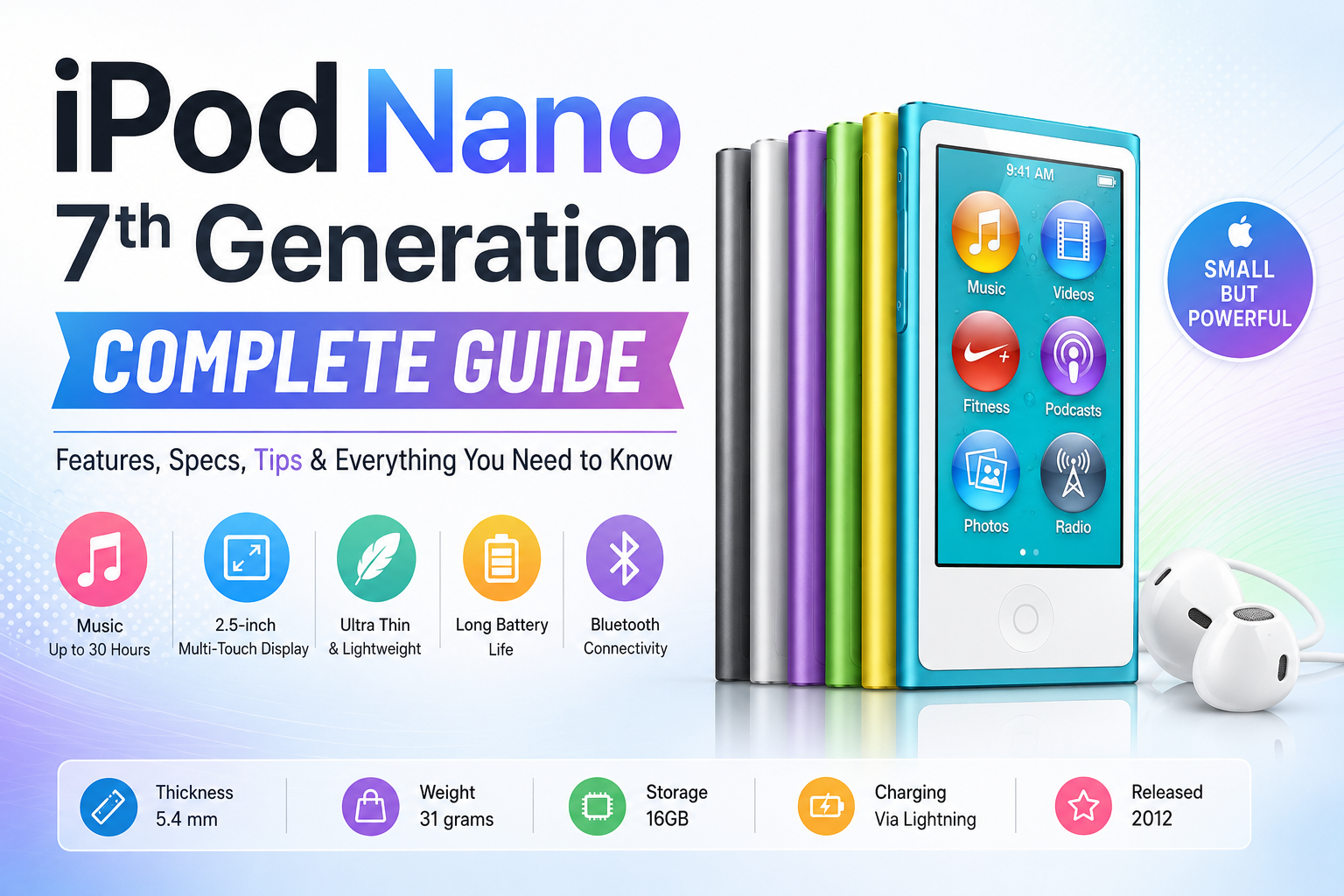
iPod Nano 7th Generation: Everything You Need to Know
The iPod Nano 7th Generation remains one of Apple’s most memorable music players, combining a compact design, touchscreen controls, and impressive portability in a device that defined an era of digital music. Released in 2012, it represented the final generation of the iPod Nano lineup before Apple discontinued the product series.
For many music lovers, the iPod Nano 7th Generation was more than just an MP3 player. It was a lightweight entertainment device designed for everyday listening, workouts, travel, and offline music enjoyment. Its sleek aluminum body, Bluetooth support, Lightning connector, and simple user experience helped it stand out among portable music devices.
Although smartphones have replaced many dedicated music players, the iPod Nano 7th Generation still attracts attention from collectors, nostalgic users, fitness enthusiasts, and people who prefer a distraction-free music experience.
This complete guide covers everything you need to know about the iPod Nano 7th Generation, including its design, specifications, features, limitations, performance, common issues, and whether it is still worth buying today.
Key Takeaways
- The iPod Nano 7th Generation was released in 2012 as the final iPod Nano model.
- It features a 2.5-inch Multi-Touch display, Bluetooth connectivity, and 16GB of storage.
- The device is known for its lightweight design, strong battery life, and simple music-focused experience.
- It does not support modern streaming apps like Apple Music or Spotify.
- It remains popular among collectors and users who prefer offline music playback.
Main Article
What Is the iPod Nano 7th Generation?
The iPod Nano 7th Generation is a portable digital music player developed by Apple and introduced in September 2012. It was designed as a successor to the sixth-generation iPod Nano, bringing back a taller design and adding several improvements, including a larger touchscreen display and Bluetooth compatibility.
Unlike the iPod Touch, the iPod Nano was not intended to function as a smartphone replacement. Instead, Apple focused on creating a simple and efficient music device that allowed users to carry thousands of songs in a small package.
The device was discontinued in 2017 when Apple ended production of the iPod Nano and iPod Shuffle, marking the end of Apple’s traditional standalone music player era.
iPod Nano 7th Generation Design and Build Quality
One of the biggest strengths of the iPod Nano 7th Generation is its compact and premium design.
Apple built the device with an anodized aluminum body, giving it a lightweight yet durable feel. The slim profile made it easy to carry in a pocket, attach to clothing, or use during physical activities.
Design Highlights
| Feature | Details |
|---|---|
| Body Material | Aluminum |
| Display | 2.5-inch Multi-Touch display |
| Weight | Approximately 31 grams |
| Thickness | Around 5.4 mm |
| Connector | Lightning connector |
| Storage | 16GB |
The seventh-generation model was noticeably different from the previous generation because Apple moved away from the square design and returned to a taller rectangular shape.
Its physical Home button, similar to early iPhone models, made navigation familiar for Apple users.
Display and User Interface
The iPod Nano 7th Generation introduced a 2.5-inch Multi-Touch display, making it easier to browse music libraries, view photos, and control playback.
Compared with earlier Nano models, the larger screen provided a better user experience. Users could swipe through menus, create playlists, browse albums, and adjust settings with familiar touchscreen gestures.
The interface was simple and focused:
- Music playback
- Playlists
- Podcasts
- Photos
- Videos
- Radio
- Fitness features
- Clock functions
Unlike modern smartphones, the iPod Nano avoided unnecessary apps and notifications, creating a focused listening experience.
iPod Nano 7th Generation Specifications
The hardware inside the iPod Nano 7th Generation was designed specifically for music playback and basic media functions.
| Specification | Details |
|---|---|
| Release Year | 2012 |
| Storage Capacity | 16GB |
| Display Size | 2.5 inches |
| Touchscreen | Multi-Touch |
| Connectivity | Bluetooth 4.0 |
| Charging Port | Lightning |
| Battery Life | Up to 30 hours of music playback |
| Camera | No camera |
| Operating System | iPod Nano software |
The 16GB storage capacity could hold thousands of songs depending on file quality and format.
Key Features of the iPod Nano 7th Generation
1. Music Playback
Music remains the primary reason people purchase the iPod Nano 7th Generation.
The device supports popular audio formats, including:
- AAC
- MP3
- Apple Lossless
- AIFF
- WAV
Users could sync music through iTunes and create customized playlists for different activities.
2. Bluetooth Support
A major improvement over earlier models was Bluetooth connectivity.
The iPod Nano 7th Generation could connect with:
- Wireless headphones
- Bluetooth speakers
- Car audio systems
This feature made it more convenient as wireless audio accessories became increasingly popular.
3. Fitness Tracking Features
Apple included basic fitness features, making the device appealing for runners and active users.
It included:
- Step tracking
- Distance measurement
- Workout tracking support
- Nike+ integration
While it was not a full smartwatch or advanced fitness tracker, it provided useful activity information.
4. FM Radio
The built-in FM radio feature allowed users to listen to live broadcasts without using mobile data or internet connectivity.
This was useful for:
- Sports updates
- News
- Local radio stations
- Emergency broadcasts
5. Long Battery Life
Battery performance was one of the strongest advantages of the iPod Nano 7th Generation.
Apple rated it for up to 30 hours of music playback on a full charge. Real-world battery performance depended on usage, battery health, volume levels, and Bluetooth activity.
iPod Nano 7th Generation vs iPod Touch
Many buyers compare the iPod Nano 7th Generation with the iPod Touch because both devices belong to Apple’s portable entertainment lineup.
| Feature | iPod Nano 7th Generation | iPod Touch |
|---|---|---|
| Main Purpose | Music player | Pocket computer |
| Apps | Limited | Full App Store support |
| Storage Options | 16GB | Multiple options |
| Internet | No Wi-Fi browsing | Wi-Fi support |
| Camera | No | Yes |
| Battery Focus | Music playback | Multiple functions |
The iPod Nano is better for users who want a simple music device, while the iPod Touch offers smartphone-like features.
Is the iPod Nano 7th Generation Still Worth Buying?
The answer depends on what you need from a portable music player.
Reasons to Buy
The iPod Nano 7th Generation is still appealing because it offers:
- Extremely lightweight design
- No smartphone distractions
- Excellent music playback
- Physical portability
- Long battery life
- Classic Apple design
It can be a great choice for:
- Runners
- Collectors
- Offline music listeners
- People who enjoy vintage Apple products
Reasons Not to Buy
There are also limitations.
The device lacks:
- Modern streaming apps
- Cellular connectivity
- App support
- Large storage options
- Modern software updates
Users who rely on Spotify, Apple Music streaming, or cloud-based libraries may find it outdated.
Common iPod Nano 7th Generation Problems
Like any older electronic device, the iPod Nano 7th Generation may develop issues over time.
Battery Degradation
The most common problem is reduced battery performance.
Because the battery is built-in, replacement requires technical repair skills.
Syncing Problems
Older versions of iTunes may be required for easier syncing, especially on newer computers.
Storage Limitations
The fixed 16GB storage cannot be expanded with a memory card.
Screen Issues
Some older units may experience:
- Touchscreen responsiveness problems
- Scratches
- Display damage
When buying a used model, checking the screen condition is important.
Tips for Buying a Used iPod Nano 7th Generation
If you are considering purchasing a used device, check the following:
Battery Condition
Ask about:
- Charging performance
- Playback time
- Battery replacement history
Physical Condition
Look for:
- Scratches
- Dents
- Screen damage
- Button functionality
Included Accessories
Original accessories can increase value, including:
- Lightning cable
- Earphones
- Original packaging
Software Compatibility
Make sure your computer can properly sync music with the device.
Why the iPod Nano 7th Generation Remains Popular
The continued interest in the iPod Nano 7th Generation comes from a combination of nostalgia, simplicity, and design quality.
Modern smartphones are powerful, but they also bring notifications, calls, social media, and distractions. The iPod Nano offers a focused alternative where the main purpose is simply enjoying music.
For collectors, it represents the final chapter of Apple’s iconic iPod Nano history. For everyday users, it provides a lightweight way to enjoy personal music collections without relying on internet access.
Frequently Asked Questions
What year was the iPod Nano 7th Generation released?
The iPod Nano 7th Generation was released in 2012 and was the final generation of the iPod Nano lineup.
How much storage does the iPod Nano 7th Generation have?
The iPod Nano 7th Generation comes with 16GB of internal storage.
Does the iPod Nano 7th Generation support Bluetooth?
Yes, the iPod Nano 7th Generation supports Bluetooth 4.0 for compatible headphones, speakers, and other accessories.
Can you use Spotify on the iPod Nano 7th Generation?
No. The iPod Nano 7th Generation does not support Spotify or other modern streaming applications.
How long does the iPod Nano 7th Generation battery last?
Apple rated the battery for up to 30 hours of music playback, although older devices may provide less depending on battery health.
Is the iPod Nano 7th Generation discontinued?
Yes. Apple discontinued the iPod Nano lineup in 2017.
Can the iPod Nano 7th Generation connect to wireless headphones?
Yes, Bluetooth headphones can be connected to the device.
Conclusion
The iPod Nano 7th Generation remains a fascinating piece of Apple history and one of the most refined versions of the classic iPod Nano series. Its lightweight design, touchscreen interface, Bluetooth support, and impressive battery life made it a standout portable music player when it launched.
While it cannot compete with modern smartphones in terms of apps, streaming services, or internet features, it still offers something many devices no longer provide: a simple, focused, and distraction-free music experience.
For collectors, nostalgic Apple fans, and users who prefer offline listening, the iPod Nano 7th Generation continues to hold value. It represents the final evolution of Apple’s compact music players and remains a memorable device from the golden era of portable digital music.












Leave a Reply