

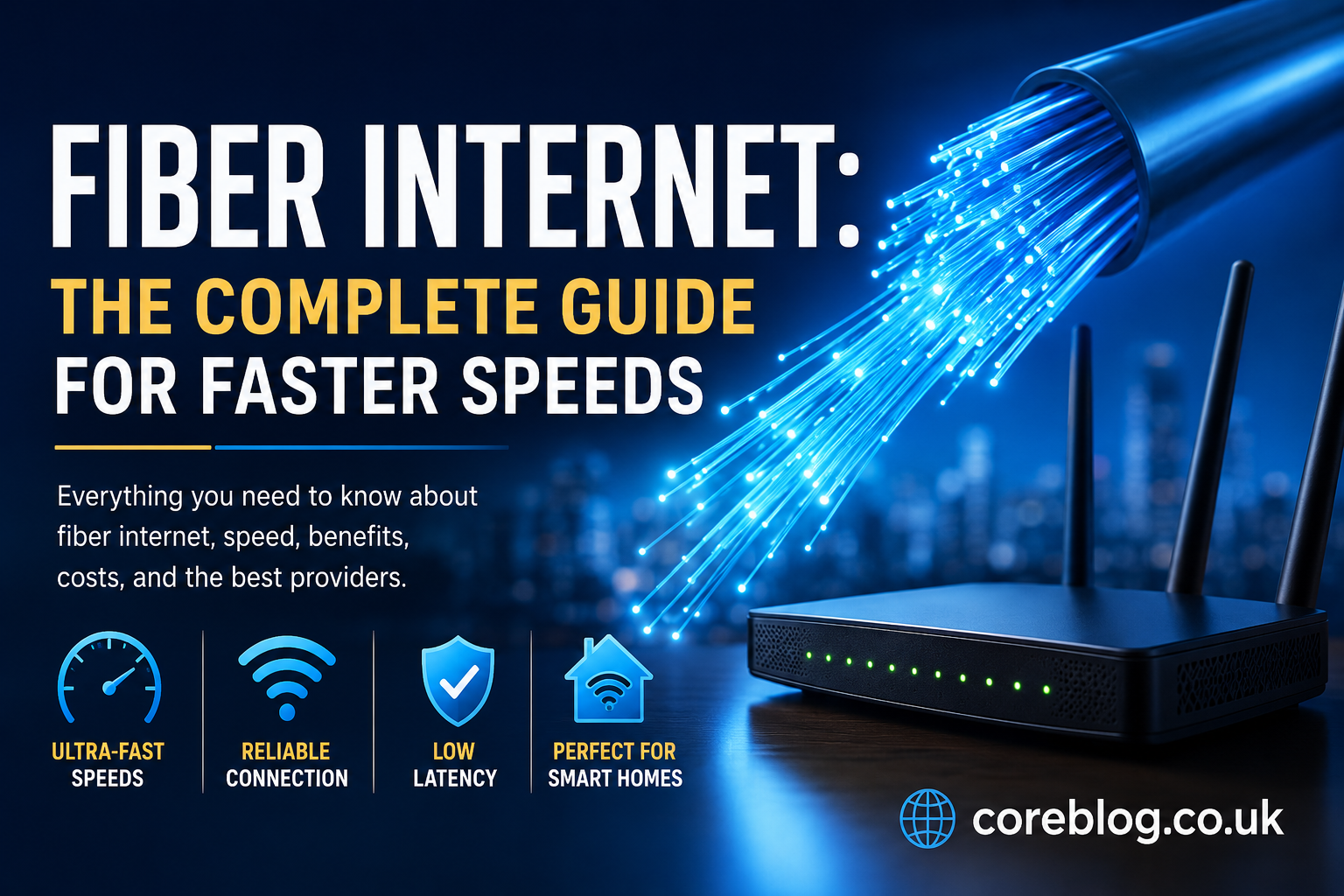
Fiber Internet: The Complete Guide for Faster Speeds
Imagine downloading a full-length 4K movie in just a few minutes, joining a video conference without lag, and streaming multiple ultra-HD videos simultaneously without buffering. That isn’t a futuristic dream anymore—it’s the reality of Fiber Internet.
As more homes rely on smart devices, remote work, online learning, cloud gaming, and streaming services, internet performance has become more important than ever. Traditional cable and DSL connections have served users for years, but today’s digital lifestyle demands something faster, more reliable, and built for the future.
That’s where Fiber Internet stands out.
Unlike older technologies that transmit data through copper cables, fiber optic technology uses light signals to deliver incredibly fast speeds with exceptional reliability. Whether you’re a casual internet user, a gamer, a business owner, or someone working from home, Fiber Internet can completely transform your online experience.
This comprehensive guide explains everything you need to know—from how Fiber Internet works to its advantages, costs, installation process, and tips for choosing the best provider.
What Is Fiber Internet?
Fiber Internet is a broadband connection that transmits data using fiber optic cables made from extremely thin strands of glass or plastic. Instead of electricity, these cables carry information using pulses of light.
This technology allows internet providers to deliver:
- Ultra-fast download speeds
- Equally fast upload speeds
- Low latency
- Stable connectivity
- High bandwidth
Because light travels much faster than electrical signals, Fiber Internet offers significantly better performance than DSL or cable connections.
How Does Fiber Internet Work?
Fiber optic cables consist of multiple microscopic strands that guide light signals across long distances.
The process works like this:
- Data is converted into light pulses.
- These light signals travel through fiber optic cables.
- A receiver converts the light back into digital data.
- Your modem and router distribute the internet throughout your home or office.
Since light experiences very little signal degradation, Fiber Internet remains fast even over long distances.
Why Fiber Internet Is Becoming So Popular
The digital world has changed dramatically over the last decade.
Today, households often have:
- Smart TVs
- Smartphones
- Gaming consoles
- Security cameras
- Voice assistants
- Tablets
- Smart appliances
- Multiple laptops
Every connected device uses bandwidth. Fiber Internet provides enough capacity to support dozens of devices without noticeable slowdowns.
Key Benefits of Fiber Internet
Incredible Speed
The biggest advantage of Fiber Internet is speed.
Many providers offer:
| Internet Type | Typical Download Speed |
|---|---|
| DSL | 10–100 Mbps |
| Cable | 100–1000 Mbps |
| Fiber Internet | 300 Mbps–10 Gbps |
Downloading large files becomes almost effortless.
Examples include:
- 4K movies
- Video games
- Software updates
- Cloud backups
- Large work projects
Symmetrical Upload and Download Speeds
Most cable internet plans provide much slower upload speeds.
Fiber Internet often offers symmetrical speeds, meaning uploads are just as fast as downloads.
This is especially useful for:
- Remote workers
- Content creators
- YouTubers
- Graphic designers
- Businesses
- Cloud storage users
Lower Latency
Latency measures how quickly data travels between devices.
Lower latency improves:
- Online gaming
- Video conferencing
- Live streaming
- Virtual meetings
- Cloud applications
Fiber Internet consistently provides some of the lowest latency available.
Better Reliability
Copper cables can suffer from:
- Electrical interference
- Weather damage
- Signal degradation
Fiber optic cables are resistant to these problems, providing a much more stable connection.
Future-Proof Technology
Internet demands continue growing every year.
Fiber infrastructure is designed to support future technologies like:
- 8K streaming
- Virtual reality
- Artificial intelligence applications
- Smart homes
- Internet of Things (IoT)
- Advanced cloud computing
Choosing Fiber Internet today prepares your home for tomorrow.
Fiber Internet vs Cable Internet
Many consumers wonder whether Fiber Internet is really worth upgrading to.
| Feature | Fiber Internet | Cable Internet |
|---|---|---|
| Download Speed | Excellent | Very Good |
| Upload Speed | Excellent | Moderate |
| Latency | Very Low | Higher |
| Reliability | Excellent | Good |
| Congestion | Minimal | Can Slow During Peak Hours |
| Future Expansion | Excellent | Limited |
Fiber Internet clearly leads in almost every performance category.
Fiber Internet vs DSL
DSL remains available in many rural areas, but the technology is much older.
DSL Advantages
- Lower installation costs
- Wider availability
Fiber Internet Advantages
- Faster speeds
- Better reliability
- Lower latency
- Higher bandwidth
- Better streaming quality
- Faster uploads
For most users, Fiber Internet delivers a dramatically better experience.
Who Should Choose Fiber Internet?
Families
Large households benefit from enough bandwidth for everyone.
Multiple family members can simultaneously:
- Watch Netflix
- Attend Zoom meetings
- Play online games
- Browse social media
- Upload school assignments
without slowing each other down.
Remote Workers
Reliable internet has become essential.
Fiber Internet supports:
- HD video calls
- Cloud collaboration
- VPN access
- Large file transfers
- Instant backups
Gamers
Gamers appreciate:
- Low ping
- Stable connections
- Faster downloads
- Reduced lag
Competitive gaming especially benefits from Fiber Internet.
Content Creators
Video editors, photographers, and designers frequently upload large files.
Fiber Internet significantly reduces upload times.
Businesses
Companies rely on dependable internet for:
- Cloud software
- Customer support
- Video meetings
- File sharing
- Online transactions
Fiber Internet helps improve productivity.
Common Fiber Internet Speeds
Most providers offer several plans.
300 Mbps
Ideal for:
- Small families
- HD streaming
- Video calls
500 Mbps
Great for:
- Multiple users
- Smart homes
- Remote work
1 Gig (1000 Mbps)
Perfect for:
- Large households
- Gamers
- Content creators
- Businesses
Multi-Gig Plans
Some providers now offer:
- 2 Gbps
- 5 Gbps
- 8 Gbps
- 10 Gbps
These plans support extremely demanding workloads.
Understanding Fiber Internet Installation
Installing Fiber Internet typically involves several steps.
Exterior Connection
A technician connects your property to the local fiber network.
Optical Network Terminal (ONT)
Instead of a traditional modem, Fiber Internet usually uses an ONT.
The ONT converts optical signals into digital internet service.
Router Setup
A Wi-Fi router distributes internet throughout your home.
Many providers now include Wi-Fi 6 or Wi-Fi 7 routers.
Factors That Affect Fiber Internet Performance
Although Fiber Internet is extremely fast, several factors still influence real-world performance.
These include:
- Router quality
- Wi-Fi interference
- Device capabilities
- Home layout
- Network congestion inside your home
- Older Ethernet cables
Upgrading your networking equipment often improves overall speeds.
Is Fiber Internet Expensive?
Pricing varies depending on location and provider.
Generally speaking:
| Plan | Typical Monthly Cost |
|---|---|
| Basic Fiber | Affordable |
| Mid-Tier Fiber | Moderate |
| Gigabit Fiber | Higher |
| Multi-Gig Fiber | Premium |
While Fiber Internet may cost slightly more than DSL, many users consider the performance improvement well worth the investment.
Availability of Fiber Internet
Although Fiber Internet coverage continues expanding, it isn’t available everywhere.
Urban and suburban areas typically have better access than rural regions.
Internet providers continue investing heavily in new fiber infrastructure, meaning availability improves every year.
Advantages of Fiber Internet
Here are the biggest reasons people upgrade:
- Lightning-fast downloads
- Ultra-fast uploads
- Low latency
- Better streaming
- Reliable performance
- Excellent video conferencing
- Future-ready technology
- Supports smart homes
- Higher bandwidth
- Minimal buffering
- Stable Wi-Fi experience
- Excellent cloud performance
Potential Drawbacks
No technology is perfect.
Possible disadvantages include:
- Limited availability in some areas
- Installation may take longer
- Slightly higher monthly cost
- Construction required in new neighborhoods
Fortunately, these limitations continue shrinking as providers expand networks.
Tips for Choosing the Best Fiber Internet Provider
Before signing up, compare:
Speed Options
Choose a plan based on your household size.
Data Limits
Many Fiber Internet providers offer unlimited data.
Reliability
Read customer reviews for uptime and service quality.
Customer Support
Responsive technical support can save frustration later.
Equipment
Look for providers offering modern Wi-Fi routers.
How Much Speed Do You Really Need?
Not every household requires a gigabit connection.
100–300 Mbps
Suitable for:
- Light browsing
- Streaming
500 Mbps
Ideal for:
- Families
- Remote workers
- Multiple devices
1 Gbps
Perfect for:
- Heavy gamers
- Professionals
- Large households
- Smart homes
Fiber Internet and Smart Homes
Today’s homes include dozens of connected devices.
Examples include:
- Smart lights
- Smart thermostats
- Security cameras
- Smart speakers
- Video doorbells
- Connected appliances
Fiber Internet provides enough bandwidth to keep everything running smoothly.
Fiber Internet for Streaming
Streaming services continue increasing video quality.
Fiber Internet easily handles:
- HD streaming
- Full HD
- 4K Ultra HD
- HDR content
- Live sports
- Multiple simultaneous streams
Buffering becomes much less common.
Fiber Internet for Online Gaming
Gamers value consistency.
Fiber Internet improves:
- Matchmaking speed
- Game downloads
- Multiplayer performance
- Voice chat quality
- Cloud gaming
- Live streaming gameplay
Fiber Internet Security
Modern Fiber Internet networks support advanced security features.
Users should still practice good cybersecurity by:
- Using strong passwords
- Updating routers
- Enabling WPA3 encryption
- Installing antivirus software
- Activating firewall protection
A secure network protects personal information and connected devices.
Frequently Asked Questions
Is Fiber Internet faster than cable?
Yes. Fiber Internet generally offers higher download speeds, much faster upload speeds, and lower latency than cable internet.
Can weather affect Fiber Internet?
Fiber optic cables are far less susceptible to weather-related interference than traditional copper-based networks, making them highly reliable.
Is Fiber Internet good for working from home?
Absolutely. Fast uploads, stable connections, and low latency make Fiber Internet ideal for video conferencing, cloud applications, and file sharing.
Do I need a special router?
Most providers recommend or supply a router that supports the speeds of your Fiber Internet plan. Using modern Wi-Fi 6 or Wi-Fi 7 equipment helps you get the best performance.
Is Fiber Internet worth the cost?
For households with multiple users, remote workers, gamers, and frequent streamers, Fiber Internet often provides excellent value due to its speed, reliability, and future-ready technology.
Final Thoughts
The internet has become the foundation of modern life, connecting us to work, entertainment, education, and loved ones. As digital demands continue to grow, choosing a connection that can keep up is more important than ever.
Fiber Internet stands out as one of the fastest, most reliable, and most future-proof broadband technologies available today. Whether you’re streaming movies, attending virtual meetings, managing a smart home, gaming competitively, or running a business, it delivers the speed and stability needed for a seamless online experience.
While availability still varies by location, expanding fiber networks mean more households can enjoy these benefits every year. Investing in Fiber Internet isn’t just about faster downloads—it’s about creating a smoother, more dependable digital lifestyle for the future.
Have you recently switched to Fiber Internet, or are you considering making the change? Share your experience or questions in the comments below, and if you found this guide helpful, consider sharing it with friends or family who are looking for a faster and more reliable internet connection.








Leave a Reply