

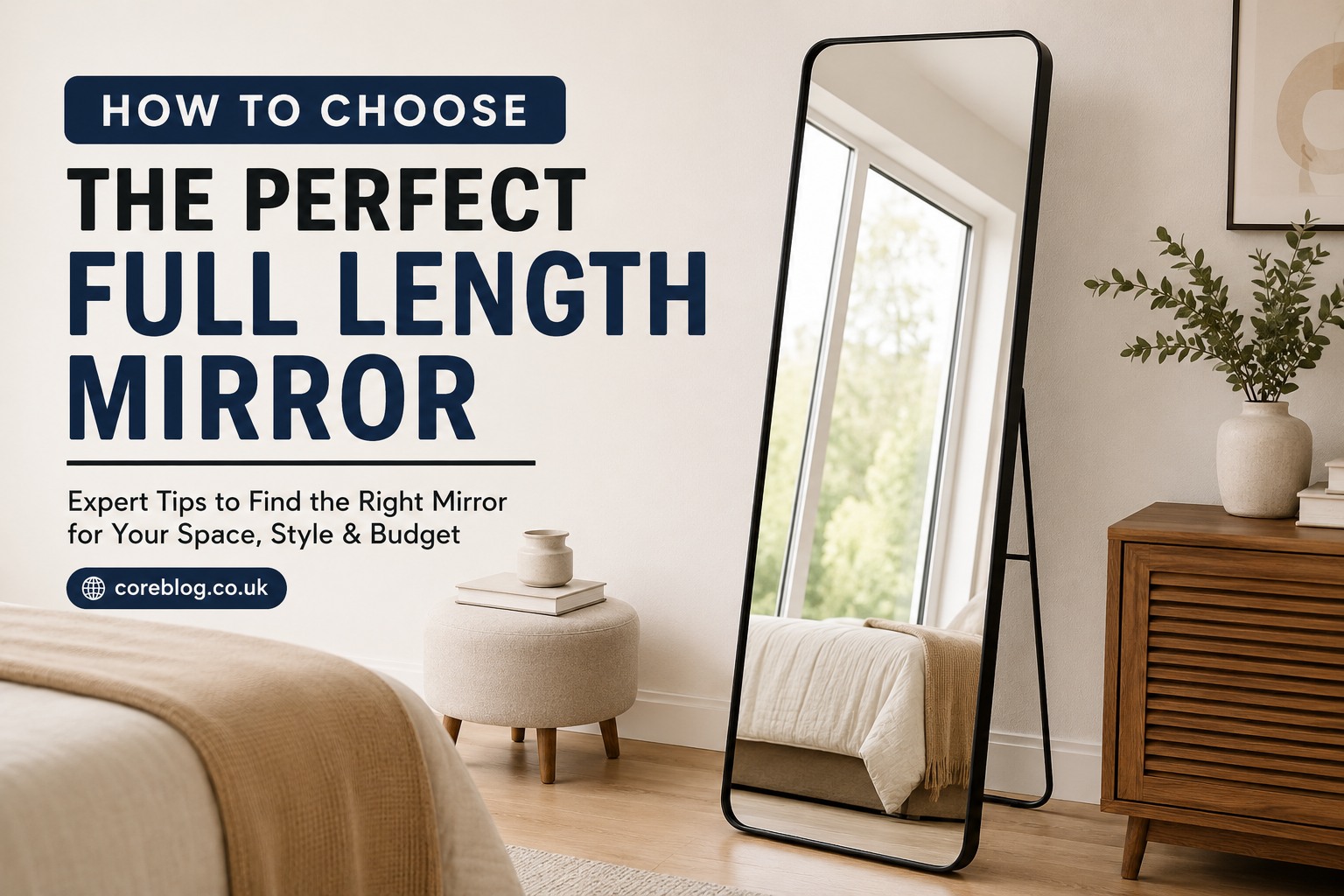
How to Choose the Perfect Full Length Mirror
A mirror may seem like a simple household item, but the right one can completely change how a room looks and feels. It can make a dark corner appear brighter, help a small bedroom feel more open, and give you a clear head-to-toe view before you leave home.
Still, choosing a Full Length Mirror is not always as easy as picking the first attractive design you see. Mirrors come in different heights, widths, frame materials, shapes, glass types, and mounting styles. Some lean against a wall, while others hang securely from brackets. Certain designs work well in modern bedrooms, but they may feel out of place in a traditional hallway.
The best choice should be practical, safe, attractive, and suitable for your available space. It should also reflect your personal style rather than looking like a random accessory added at the last minute.
This guide explains how to choose the perfect mirror for your home without making the process complicated.
What Is a Full Length Mirror?
A Full Length Mirror is a tall mirror designed to show most or all of a person’s body in a single reflection. It is commonly placed in a bedroom, dressing room, walk-in closet, hallway, or entryway.
Unlike a small wall mirror or bathroom vanity mirror, it gives you a complete view of your outfit. This makes it useful when checking clothing, shoes, accessories, posture, and overall appearance.
However, a full-size mirror does more than help you get dressed. Interior designers often use large reflective surfaces to:
- Make compact rooms feel more spacious
- Reflect natural light around a room
- Brighten dark areas
- Add visual depth
- Create a stylish focal point
- Balance empty wall space
- Improve the look of a dressing area
That combination of function and style makes it one of the most useful home décor pieces you can buy.
Why the Right Mirror Matters
A poorly chosen mirror can create several problems. It may be too narrow to provide a useful reflection, too tall for the wall, or too heavy to mount safely. A bulky frame can overwhelm a small room, while a tiny mirror may look lost on a large wall.
The right Full Length Mirror, on the other hand, should feel as though it belongs in the room. It should improve your daily routine and complement your furniture, wall color, flooring, and lighting.
Before buying one, think about three basic questions:
- Where will the mirror be placed?
- How will it be used?
- What style suits the room?
Once you know those answers, comparing different options becomes much easier.
Choose the Right Mirror Size
Size is one of the most important factors to consider. A mirror does not need to be the same height as you to show your entire body. Because of the way reflection works, a mirror measuring around half your height may technically provide a complete view when positioned correctly.
Still, most people prefer a larger mirror because it feels more comfortable and gives a wider viewing area.
Consider the Height
Most full-size mirrors are between 48 and 72 inches tall. Taller floor mirrors may reach 80 inches or more.
A mirror between 60 and 70 inches works well for many bedrooms and dressing areas. It gives a generous reflection and can usually be used by people of different heights.
Before ordering, measure the wall from the floor to the ceiling. Also check for obstacles such as:
- Light switches
- Wall sockets
- Heating vents
- Shelves
- Door frames
- Radiators
- Decorative molding
Do not rely only on product photographs. Furniture and room sizes in promotional images can make a mirror appear larger or smaller than it really is.
Think About the Width
Width affects both usefulness and appearance. A narrow mirror may be enough for quick outfit checks, while a wider model gives a more relaxed and complete view.
Common widths range from 14 to 36 inches. Oversized statement mirrors can be even wider.
A width of 18 to 24 inches is usually practical for a bedroom or closet. For a large dressing room, master bedroom, or spacious hallway, a wider mirror can create a stronger decorative effect.
Measure the Available Floor Space
A leaning Full Length Mirror needs more floor space than a wall-mounted model. The bottom sits slightly away from the wall, so it may interfere with a narrow walkway.
Measure both the wall and the surrounding floor area. Make sure drawers, closet doors, bedroom doors, and cabinet doors can still open properly.
Compare the Main Mirror Types
The way a mirror is installed affects its appearance, safety, and flexibility. Each design has clear advantages.
| Mirror Type | Best For | Main Advantage | Point to Consider |
|---|---|---|---|
| Wall-mounted mirror | Small rooms and hallways | Saves floor space | Requires secure installation |
| Leaning floor mirror | Bedrooms and dressing rooms | Stylish and easy to position | Must be secured against tipping |
| Freestanding mirror | Rental homes and flexible layouts | Can be moved easily | Takes up more floor space |
| Door-mounted mirror | Closets and compact bedrooms | Uses unused door space | May move when the door opens |
| Mirrored wardrobe | Bedrooms with limited wall space | Combines storage and reflection | Usually costs more |
| Lighted mirror | Dressing rooms and beauty areas | Improves visibility | Needs power or batteries |
Wall-Mounted Mirrors
A wall-mounted mirror is a smart option when floor space is limited. It creates a clean, uncluttered look and works especially well in narrow rooms.
It can be hung vertically, and some models can also be installed horizontally as a decorative wall feature.
Always check the weight before mounting. Heavy mirrors need suitable anchors, screws, hooks, or brackets. The correct hardware depends on whether your wall is made from brick, concrete, plasterboard, or wood.
Leaning Floor Mirrors
Leaning mirrors have become popular because they look relaxed and luxurious. They are often oversized and feature decorative wooden, metal, or arched frames.
Although they appear casual, they should not simply rest unsecured against a wall. Use anti-tip straps or brackets, especially in homes with children or pets.
Freestanding Mirrors
A freestanding mirror usually includes a support frame or adjustable stand. It can be moved from one room to another without drilling holes in the wall.
This style is useful for renters, students, dressing rooms, and temporary spaces. Some freestanding designs also rotate, making it easier to adjust the viewing angle.
Door-Mounted Mirrors
A door-mounted Full Length Mirror can be a clever space-saving solution. It may hang over the top of a door or attach directly to the surface.
Before buying, check the mirror’s weight and the thickness of the door. Also make sure it will not prevent the door from closing correctly.
Select a Frame That Matches Your Interior
The frame has a major influence on the mirror’s overall character. It can make the design look modern, rustic, glamorous, industrial, traditional, or minimalist.
Wooden Frames
Wooden mirror frames add warmth and texture. Natural oak, walnut, pine, mango wood, and reclaimed timber work well with neutral interiors and organic materials.
A light wood frame suits Scandinavian décor, while a dark stained frame creates a more formal look. Distressed wood can complement farmhouse, vintage, or rustic furniture.
Metal Frames
Slim metal frames create a clean and modern appearance. Black metal is especially versatile and works with industrial, contemporary, and minimalist interiors.
Gold, brass, bronze, and chrome finishes add a more decorative touch. A gold-framed mirror can bring warmth to a bedroom, while silver or chrome may suit a cooler color scheme.
Frameless Designs
A frameless Full Length Mirror feels simple, light, and understated. It can blend into almost any room without competing with other decorative features.
Frameless mirrors are useful in small spaces because they create less visual weight. However, their exposed edges may require careful handling during delivery and installation.
Upholstered and Decorative Frames
Some mirrors feature velvet, leather-look fabric, carved details, beading, mosaic tiles, or textured finishes. These can create a strong focal point but may not suit every room.
When choosing a bold frame, look at the surrounding décor. If the room already contains patterned wallpaper, colorful bedding, detailed furniture, and several ornaments, a simpler mirror may create better balance.
Pick a Shape That Suits the Room
Rectangular mirrors are the most common choice because they provide a wide, practical reflection. However, other shapes can give a room more personality.
Arched Mirrors
An arched mirror combines straight sides with a curved top. The soft shape can make a bedroom or hallway feel more elegant. It works particularly well with modern, classic, Mediterranean, and vintage interiors.
Oval Mirrors
Oval mirrors have a graceful look and fewer sharp corners. They are often used in dressing rooms and traditional bedrooms.
Because an oval design has a narrower viewing area near the top and bottom, check its dimensions carefully before buying.
Irregular and Asymmetrical Mirrors
An irregular mirror can work as both functional glass and wall art. These designs are popular in creative, modern, and contemporary spaces.
However, they may provide a less practical head-to-toe reflection. Choose this type when visual impact matters as much as everyday use.
Check the Glass Quality
Not all mirror glass provides the same reflection. Low-quality glass may produce distortion, waves, uneven areas, or a slightly stretched image.
When shopping in person, stand several feet away and move from side to side. Straight objects in the reflection, such as door frames or shelves, should remain straight.
For online purchases, read the product details carefully. Look for terms such as:
- High-definition glass
- Distortion-free reflection
- Silver-backed mirror
- Copper-free coating
- Shatter-resistant film
- Tempered glass
- Safety backing
- Beveled edges
A clear reflection is especially important when the Full Length Mirror will be used for dressing, tailoring, makeup, fitness, or photography.
Consider Safety-Backed Glass
Safety film helps hold broken pieces together if the glass is damaged. It does not make a mirror impossible to break, but it may reduce the risk of sharp fragments scattering across the floor.
This feature is worth considering in busy homes, children’s rooms, gyms, dressing areas, and narrow hallways.
Find the Best Place for Your Mirror
Placement affects both function and atmosphere. Even an expensive mirror can feel disappointing when positioned in a dark or awkward location.
Place It Near Natural Light
A mirror placed near a window can reflect daylight and help a room feel brighter. However, positioning it directly opposite strong sunlight may create glare at certain times of day.
Try placing it beside a window or at a slight angle. This can spread light while keeping the reflection comfortable.
Check What the Mirror Reflects
A mirror doubles whatever appears in front of it. Therefore, it is better to reflect something attractive, such as:
- A window
- A plant
- A piece of artwork
- A tidy seating area
- A stylish lamp
- An organized wardrobe
- An open part of the room
Avoid pointing the mirror toward clutter, an overflowing laundry basket, tangled wires, or an untidy storage corner.
Leave Enough Viewing Distance
You need enough space to step back and see your complete reflection. A Full Length Mirror placed at the end of a narrow gap may be difficult to use, even if it fits perfectly on the wall.
Stand in the intended location before installation. Check whether you can move back comfortably without hitting furniture.
Match the Mirror to Each Room
Different rooms have different practical needs. A mirror that looks perfect in a master bedroom may not be ideal for an entryway.
Bedroom
In a bedroom, place the mirror near a wardrobe, dresser, or clothing rail. This makes it easier to check outfits while getting ready.
A leaning mirror can add softness and depth to a large bedroom. In a compact room, a wall-mounted or door-mounted option may be more practical.
Dressing Room or Walk-In Closet
A dressing room benefits from a wide mirror and balanced lighting. Look for a design that gives you a clear view from several steps away.
A lighted mirror can be helpful, but the bulbs should provide even illumination rather than harsh shadows.
Hallway or Entryway
A hallway mirror offers a final appearance check before you leave home. It can also make a narrow entrance feel wider.
Choose a slim frame and secure installation. Since entryways receive regular foot traffic, avoid designs that extend too far into the walkway.
Living Room
In a living room, the mirror may serve more as a decorative feature than a dressing tool. Oversized floor mirrors, arched frames, and antique-inspired designs can create an impressive focal point.
Position the mirror where it reflects light, artwork, or a well-styled part of the room.
Choose the Right Color and Finish
The mirror does not need to match every item of furniture. Still, its finish should connect with at least one or two elements in the room.
For example:
- Match a black frame with black light fixtures or furniture legs
- Pair warm wood with a wooden bed, shelf, or floor
- Coordinate brass with cabinet handles or lamps
- Use white for a soft, bright, coastal look
- Choose silver for cool, elegant interiors
- Select natural finishes for earthy or bohemian rooms
Too many unrelated finishes can make a room feel unsettled. Repeating a material or color creates a more intentional appearance.
Set a Realistic Budget
The price of a Full Length Mirror depends on its size, glass quality, frame material, construction, brand, and installation method.
Basic door-mounted or frameless mirrors are usually affordable. Large wooden frames, handmade details, premium metals, built-in lighting, and oversized glass tend to cost more.
When setting your budget, consider more than the product price. You may also need to pay for:
- Delivery
- Professional installation
- Wall anchors or mounting brackets
- Anti-tip straps
- Replacement bulbs
- Cleaning supplies
- Assembly
A very cheap mirror may seem appealing, but poor glass, a weak stand, or an unstable frame can make it a poor long-term purchase. Instead of buying only by price, compare quality, safety features, customer feedback, dimensions, and warranty coverage.
Inspect the Mirror Before Keeping It
When your mirror arrives, inspect it before removing all the packaging. Large mirrors can be damaged during transport, even when the outer box looks fine.
Check for:
- Cracks
- Chips
- Scratches
- Cloudy areas
- Loose joints
- Bent frames
- Distorted reflections
- Missing mounting hardware
- Unstable stands
- Incorrect dimensions
Place the mirror on a flat surface and inspect it in good light. Report any damage quickly, since many retailers have limited return periods for glass products.
Common Mistakes to Avoid
Choosing a mirror becomes easier when you know what can go wrong.
Buying Without Measuring
A beautiful mirror is useless if it blocks a door or does not fit between two pieces of furniture. Measure the height, width, floor space, and nearby clearance before ordering.
Ignoring the Mirror’s Weight
Large glass panels can be surprisingly heavy. Do not assume that one small hook will support the mirror safely.
Placing It in Poor Lighting
A dark corner may prevent you from seeing colors and outfit details clearly. Add a floor lamp, wall light, or nearby ceiling fixture when natural light is limited.
Forgetting About Safety
Never leave a heavy leaning mirror unsecured. Use suitable anti-tip hardware and follow the manufacturer’s installation instructions.
Choosing Style Over Function
An artistic shape may look impressive but provide a narrow or incomplete reflection. Think about how often you will use the mirror and what you need to see.
Ordering the Cheapest Option
A low price does not always mean good value. Check the frame strength, stand design, glass clarity, protective backing, and return policy before making a decision.
How to Clean and Maintain Your Mirror
Regular cleaning keeps the glass bright and prevents dust from collecting around the frame.
Use a clean microfiber cloth rather than a rough paper towel. Spray glass cleaner onto the cloth instead of directly onto the mirror. Too much liquid can run behind the glass and damage the backing or frame.
For light marks, a small amount of diluted white vinegar can work well. Wipe in smooth motions and dry the surface with a second cloth.
Simple Maintenance Tips
- Dust the frame once a week
- Remove fingerprints as soon as possible
- Keep moisture away from wooden frames
- Check mounting hardware every few months
- Tighten loose screws on freestanding models
- Avoid placing heavy objects against the glass
- Move large mirrors with help from another person
- Lift the mirror instead of dragging it
Good care can help a quality mirror remain attractive for many years.
Frequently Asked Questions
What size should a full-length mirror be?
A practical mirror is often between 60 and 70 inches tall and 18 to 24 inches wide. However, the best size depends on the user’s height, room dimensions, viewing distance, and preferred style.
Can a full-length mirror make a small room look bigger?
Yes. A large reflective surface can create a sense of depth and spread light around the room. For the best effect, place it near a window or where it reflects an open, uncluttered area.
Should a full-length mirror touch the floor?
It does not have to touch the floor. Wall-mounted mirrors can be installed several inches above it, provided the height and angle still show a complete reflection.
Is it safe to lean a heavy mirror against a wall?
A heavy leaning mirror should be attached with anti-tip straps, brackets, or another suitable restraint. This is especially important in homes with children, pets, or busy walkways.
Where should I avoid placing a mirror?
Avoid placing it where it causes strong glare, blocks movement, reflects constant clutter, or creates a safety risk. It should not interfere with doors, drawers, heating units, or electrical fixtures.
Is a framed or frameless mirror better?
Neither option is automatically better. A framed mirror adds style, color, and protection around the edges. A frameless mirror feels clean and light, making it useful in minimalist or compact rooms.
Final Thoughts
Choosing the perfect Full Length Mirror is about finding the right balance between appearance and everyday use. Begin by measuring your available space. Then decide whether a wall-mounted, leaning, freestanding, or door-mounted design works best.
Pay attention to the frame material, glass clarity, shape, safety backing, lighting, and installation method. Most importantly, think about what the mirror will reflect and how it will fit into your daily routine.
A well-chosen Full Length Mirror can brighten a room, create a stronger sense of space, improve your dressing area, and add character to an empty wall. It is a practical purchase, but it can also become one of the most noticeable design features in your home.
Take your time, compare your options, and measure twice before ordering. Once you find a mirror that suits your space and style, it can transform both the room and the way you use it.
Have you found a mirror style that works especially well in your home? Share your experience and pass this guide along to anyone planning a bedroom, hallway, or dressing-room update.















Leave a Reply