

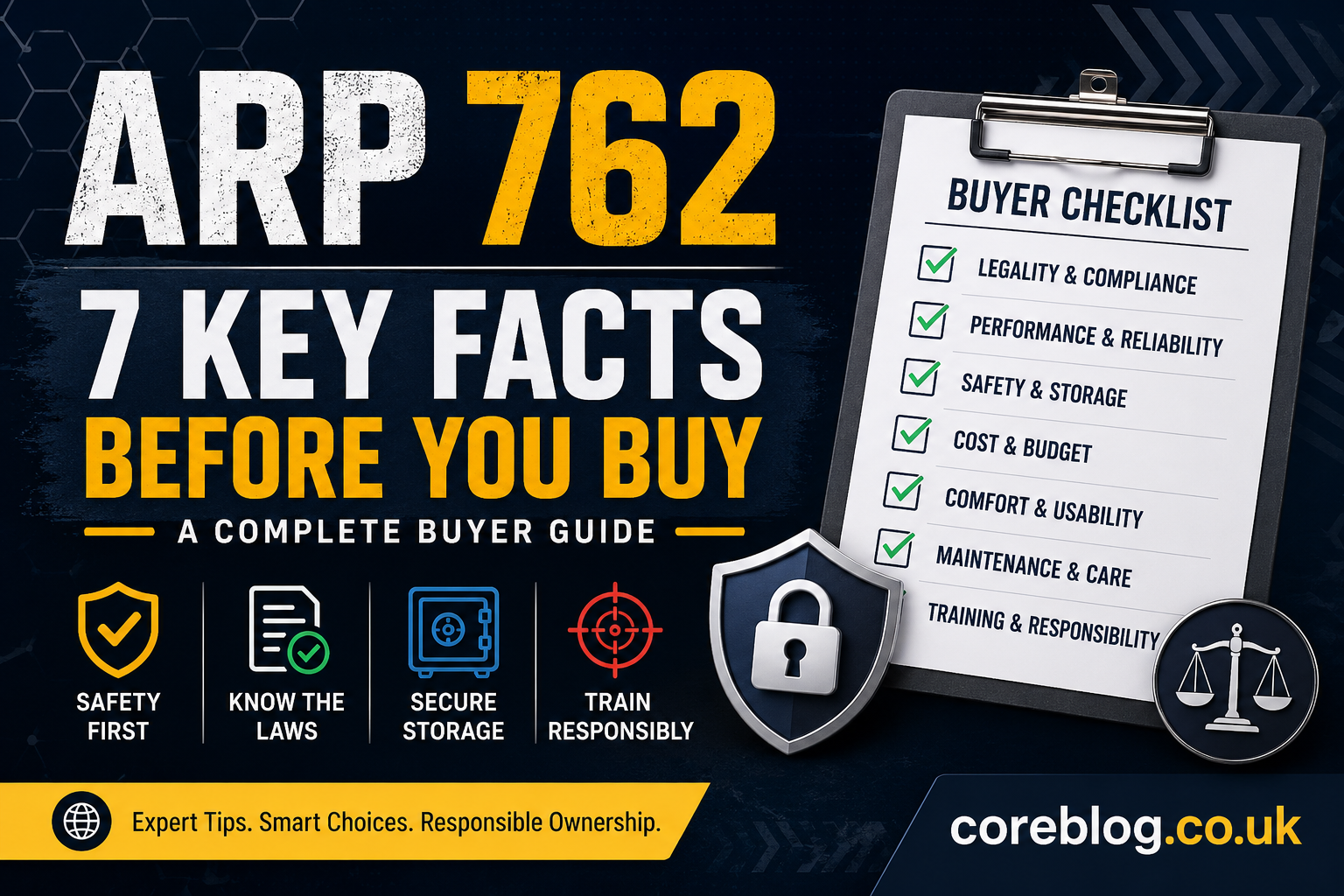
ARP 762: 7 Key Facts Before You Buy
Buying any firearm is not something you should rush. It is not like picking a phone, a jacket, or a new pair of shoes. A firearm comes with legal duties, safety responsibilities, storage needs, training costs, and long-term care. That is why the ARP 762 gets so much attention from people who want a compact AR-style platform with a 7.62-related setup, but it also raises many questions.
Is the ARP 762 practical? Is it beginner-friendly? Is it legal where you live? What should you check before spending money? And most importantly, is it the right fit for your actual needs?
The term ARP 762 is commonly used online for an AR pistol-style firearm chambered around the 7.62x39mm category, blending AR-style controls with a caliber often linked to AK-pattern firearms. Since “ARP” is also widely used to mean AR pistol, buyers should understand that the exact meaning may vary by seller, brand, and local classification.
This guide breaks everything down in plain English. No hype. No confusing gun-shop talk. Just 7 key facts you should know before you buy an ARP 762.
What Is an ARP 762?
An ARP 762 is generally understood as a compact AR-style pistol platform connected with the 7.62 caliber family, most often 7.62x39mm. In simple terms, it aims to bring together the familiar AR-style layout and the heavier feel of a 7.62-type round.
That sounds attractive on paper. However, the real-world ownership experience depends on many things, including:
- Local firearm laws
- Barrel length and classification
- Magazine compatibility
- Ammunition availability
- Recoil comfort
- Storage setup
- Training level
- Maintenance habits
- Intended legal use
- Overall budget
The ARP 762 is not something to buy only because it looks good in photos or sounds powerful in online discussions. A smart buyer looks beyond the name and studies the full picture.
Quick Overview of ARP 762 Before Buying
| Factor | What It Means for Buyers |
|---|---|
| Platform type | Usually AR pistol-style |
| Common caliber association | 7.62x39mm category |
| Best for | Legal sport shooting, range use, collection, responsible ownership |
| Not ideal for | Buyers who ignore laws, safety, or training |
| Main concern | Legal classification and responsible storage |
| Skill level | Better for informed buyers, not impulse buyers |
| Ongoing cost | Ammo, accessories, cleaning, safe storage, training |
1. The ARP 762 Is Compact, But That Does Not Mean Simple
One reason people search for the ARP 762 is size. Compact AR-style firearms often look easier to handle, easier to store, and easier to transport where legal. However, compact does not always mean beginner-friendly.
A shorter platform can feel different from a full-size rifle. It may have a louder report, sharper feel, more noticeable blast, and a different balance. That matters if you are new to firearms.
Why Size Can Be Misleading
A compact design may look convenient, but it can also bring trade-offs:
- Less front-end weight can change handling
- Shorter platforms may feel louder at indoor ranges
- Recoil may feel more direct to some users
- Accessories can add weight quickly
- Storage laws may still be strict
- Transport rules may still apply
So, while the ARP 762 may look handy, you should not judge it only by size. Hold it legally at a licensed store or range if possible. Ask questions. Compare it with other legal options. Comfort matters more than appearance.
2. Legal Rules Should Be Your First Priority
Before buying an ARP 762, the first question is not “How does it perform?” The first question is “Is it legal for me to own this where I live?”
Firearm laws can change by country, state, province, city, or region. Rules may also differ based on barrel length, brace use, stock configuration, magazine capacity, caliber, registration, licensing, and transport. In the United States, stabilizing brace rules have also seen legal and regulatory disputes in recent years, which is why buyers should verify the latest local and federal status before making any decision.
Legal Points to Check
Before buying an ARP 762, check:
- Minimum age requirements
- Permit or license rules
- Background check rules
- Registration requirements
- Magazine capacity limits
- Transport restrictions
- Storage laws
- Range rules
- State or local bans
- Rules around braces, stocks, and barrel length
Do not rely on random comments online. Do not trust a short social media post. Speak with a licensed dealer, local authority, or qualified legal professional. The wrong assumption can create serious legal trouble.
3. The 7.62 Platform Has a Different Feel
The ARP 762 attracts attention because 7.62-style ammunition has a reputation for strong performance. Many buyers like the idea of pairing that caliber family with AR-style controls. Some sellers describe 7.62 AR pistols as compact options for sport shooting, plinking, or certain lawful hunting contexts depending on local rules.
However, feel matters. A firearm that looks perfect in a product photo may not feel right in your hands.
Things That Affect Shooting Comfort
Several details can change how an ARP 762 feels:
- Overall weight
- Grip angle
- Trigger feel
- Barrel length
- Handguard size
- Recoil management
- Muzzle blast
- Ammunition type
- Range environment
- Shooter experience
If you are used to smaller calibers, the ARP 762 may feel stronger. Some people enjoy that. Others find it tiring. Neither reaction is wrong. The best firearm is not the one with the loudest reputation. It is the one you can handle safely, legally, and responsibly.
4. Reliability Depends on Quality, Not Just the Name
Here is a common mistake: people assume every ARP 762 is the same. It is not.
Two firearms can share a similar label but perform very differently. Build quality, manufacturer standards, magazine design, ammunition choice, and proper maintenance all affect reliability.
What to Inspect Before Buying
When comparing an ARP 762, look at:
- Brand reputation
- Warranty policy
- Customer support
- Material quality
- Fit and finish
- Magazine compatibility
- User reviews from serious owners
- Dealer reputation
- Return policy
- Availability of replacement parts
A cheaper model may look tempting, but low price should not be the only reason you buy. On the other hand, expensive does not always mean perfect. Look for balanced value.
Red Flags to Avoid
Be careful if you notice:
- No clear manufacturer details
- Poor warranty information
- Overhyped marketing claims
- No safety documentation
- Unclear legal classification
- Bad reviews about reliability
- Difficult-to-find parts
- Pushy sellers
- Unrealistic performance promises
A responsible buyer slows down. With something like the ARP 762, patience is part of safety.
5. The Real Cost Is More Than the Price Tag
The listed price of an ARP 762 is only one part of ownership. Many first-time buyers forget the extra costs that come after purchase.
A firearm needs safe storage, proper cleaning supplies, legal accessories, eye and ear protection, range time, training, and ammunition. If you only budget for the firearm itself, you may end up cutting corners on safety. That is never smart.
Common Ownership Costs
| Cost Area | Why It Matters |
|---|---|
| Safe storage | Helps prevent unauthorized access |
| Ammunition | Needed for lawful range practice |
| Cleaning kit | Supports proper maintenance |
| Eye protection | Basic safety requirement |
| Hearing protection | Very important, especially indoors |
| Training | Builds safe handling habits |
| Range fees | Adds to long-term cost |
| Legal compliance | May require permits or paperwork |
Safe storage deserves special attention. Firearms should be stored locked, unloaded, and away from unauthorized users, while ammunition should be stored separately when not in use.
6. Safe Storage Is Not Optional
If you buy an ARP 762, you also need a storage plan. This is not just about protecting the firearm from theft. It is about protecting people.
A responsible owner thinks about children, visitors, roommates, guests, mental health risks, theft, and accidents. The safest firearm is one that cannot be accessed by the wrong person.
Smart Storage Habits
Responsible storage often includes:
- A locked gun safe or secure lockbox
- Ammunition stored separately
- Limited access to keys or combinations
- Regular checks of storage condition
- Clear household safety rules
- No casual handling by guests
- Compliance with local storage laws
The ARP 762 should never be left unsecured. Even if you live alone, storage matters. Theft can happen. Guests can visit. Circumstances can change.
Why Storage Affects Ownership Quality
Good storage gives peace of mind. It also protects your investment. More importantly, it reduces risk. Many experienced owners will tell you that buying the firearm is the easy part. Building safe habits is the real responsibility.
7. Training Matters More Than Accessories
Some buyers get excited about accessories before learning the basics. They think about optics, grips, slings, lights, colors, rails, cases, and upgrades. Accessories may have legal and practical roles, but they should never replace training.
The ARP 762 is not something you should treat like a fashion item. If you own it legally, you should know how to handle it safely, store it correctly, clean it properly, and follow range rules.
Training Topics Worth Learning
A good beginner-friendly safety course may cover:
- Basic firearm safety rules
- Safe loading and unloading concepts
- Range commands
- Storage responsibility
- Transport rules
- Legal awareness
- Maintenance basics
- Emergency procedures
- Respectful handling
- Situational responsibility
Notice that none of this is about showing off. Responsible ownership is quiet, careful, and mature.
ARP 762 Pros and Cons
| Pros | Cons |
|---|---|
| Compact AR-style design | May be legally complex |
| Familiar controls for AR users | Not always ideal for beginners |
| Strong interest among enthusiasts | Can be loud and sharp-feeling |
| Customization options may exist | Accessories can affect legality |
| Often discussed for range use | Ongoing costs can add up |
| Distinct 7.62-style appeal | Requires serious storage planning |
Who Should Consider an ARP 762?
The ARP 762 may suit someone who already understands firearm safety, has checked local laws, can afford proper storage, and wants a compact AR-style platform for lawful use.
It may be a poor fit for someone who:
- Has not studied local firearm laws
- Does not want training
- Cannot afford secure storage
- Wants a firearm only for looks
- Ignores safety rules
- Wants the cheapest possible option
- Plans to modify without legal knowledge
A smart buyer asks honest questions. Do you have a safe? Do you understand local rules? Can you handle the recoil? Will you train? Can you afford long-term ownership? If not, pause before buying.
Important Questions to Ask Before You Buy
Before purchasing an ARP 762, ask yourself:
- Is this legal in my area?
- Do I understand how it is classified?
- Have I spoken with a licensed dealer?
- Do I have secure storage ready?
- Can I afford ammunition and training?
- Have I handled similar platforms safely?
- Is the brand trustworthy?
- Are replacement parts available?
- Does the warranty look fair?
- Am I buying for practical reasons or impulse?
These questions may seem basic, but they can save you from regret.
Common Mistakes Buyers Make
Many people make the same mistakes when buying an ARP 762.
Buying Based on Looks Alone
A firearm can look impressive online but feel uncomfortable in real life. Always think beyond appearance.
Ignoring Local Laws
This is the biggest mistake. Laws are not optional. They also change. Always verify before buying.
Underestimating Storage Needs
A secure storage setup should be part of your budget from the beginning.
Skipping Training
Confidence without training is risky. Training builds discipline and calm handling.
Chasing Cheap Deals
Low prices can be attractive, but quality, warranty, and safety matter more.
ARP 762 vs Other AR-Style Options
The ARP 762 is not the only compact AR-style choice. Other platforms may use different calibers, sizes, and configurations. Some may be softer to shoot. Others may have cheaper ammunition or simpler parts availability. The right choice depends on your legal situation, comfort level, budget, and intended lawful use.
| Option Type | General Buyer Consideration |
|---|---|
| ARP 762 | Stronger 7.62-style appeal, check compatibility |
| 5.56 AR pistol | Common AR platform option, laws still matter |
| 9mm AR pistol | Often softer-feeling, different purpose |
| Full-size rifle | Longer platform, may feel steadier |
| Traditional handgun | Different training and legal considerations |
Do not buy the ARP 762 just because it is trending. Buy only if it fits your needs, laws, budget, and safety plan.
Maintenance and Long-Term Care
Every firearm needs care. The ARP 762 is no different. Good maintenance supports reliability and long-term value.
Basic care usually includes safe inspection, cleaning after use, proper lubrication, correct storage, and routine checks by a qualified professional when needed. If something feels wrong, do not guess. Ask a trained gunsmith or licensed expert.
Maintenance Mindset
Think of ownership like owning a serious tool. You do not abuse it. You do not neglect it. You do not hand it to untrained people. You respect it.
That mindset separates responsible owners from careless ones.
Is the ARP 762 Worth Buying?
The honest answer is: it depends.
The ARP 762 can be interesting for the right person. It offers a compact AR-style experience with 7.62-related character. It may appeal to collectors, range users, and enthusiasts who understand the platform.
However, it is not automatically the best choice for every buyer. If you are new to firearms, unsure about local laws, or not ready for safe storage and training, you may want to slow down. There is no shame in learning first.
A firearm purchase should feel informed, not rushed.
Final Buyer Checklist
Before buying an ARP 762, make sure you have:
- Confirmed local and federal laws
- Checked the firearm’s exact classification
- Compared brands and reviews
- Budgeted for secure storage
- Planned for training
- Understood ammunition costs
- Considered comfort and recoil
- Reviewed warranty terms
- Avoided questionable sellers
- Prepared for long-term responsibility
If you cannot check most of these boxes, wait. A good decision today is better than a regret tomorrow.
Conclusion: Buy Smart, Stay Safe, and Think Long Term
The ARP 762 is a serious purchase, not a casual trend. It may look compact, powerful, and appealing, but the real value depends on legality, safety, comfort, reliability, storage, and training.
Before you buy an ARP 762, take your time. Learn the rules. Ask qualified people. Compare your options. Think about your budget beyond the price tag. Most importantly, be honest about your level of responsibility.
A responsible buyer does not just ask, “Can I buy this?” A responsible buyer asks, “Can I own this safely, legally, and wisely?”
That is the mindset that matters.
If this guide helped you understand the ARP 762 better, share it with someone who is researching the same topic or leave a comment with the key question you think every buyer should ask before making a firearm purchase.













Leave a Reply