

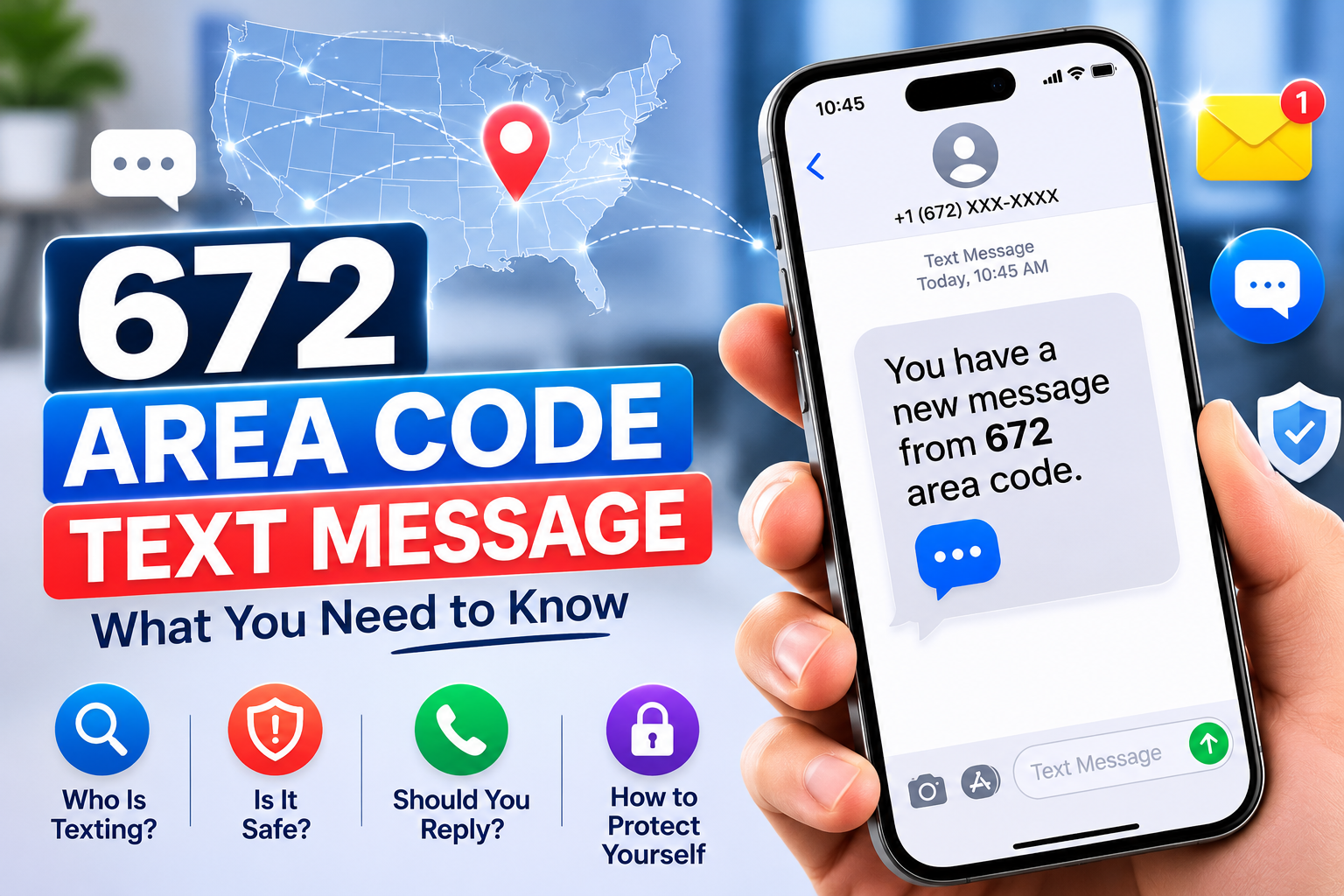
672 Area Code Text Message: Common Scams & Warning Signs
Receiving an unexpected 672 Area Code Text Message can be confusing, especially if you don’t recognize the number or the message seems unusual. Many people immediately wonder whether the text is legitimate, a marketing message, or part of a scam.
With text message scams becoming increasingly common, it’s important to understand that an unfamiliar area code alone does not determine whether a message is safe. Scammers often use spoofed numbers, while legitimate organizations may also send texts from unfamiliar phone numbers.
This guide explains what a 672 Area Code Text Message is, whether you should be concerned, how to identify common scams, and what steps to take if you receive a suspicious message. By the end, you’ll know how to protect your personal information and avoid becoming a victim of SMS fraud.
Key Takeaways
- A 672 Area Code Text Message is not automatically a scam.
- Scammers frequently spoof phone numbers to appear trustworthy.
- Never click unexpected links or share sensitive personal information by text.
- Verify suspicious messages directly with the company or organization they claim to represent.
- Blocking and reporting suspicious messages helps reduce future scam attempts.
Main Article
What Is a 672 Area Code Text Message?
A 672 Area Code Text Message is simply a text message sent from a phone number that appears to use the 672 area code. The area code itself does not indicate whether the sender is trustworthy or fraudulent.
Many businesses, government agencies, delivery companies, and individuals send legitimate text messages every day. Unfortunately, scammers also use text messaging because it is fast, inexpensive, and reaches millions of people.
For this reason, you should evaluate the content of the message—not just the area code.
Where Is the 672 Area Code?
The 672 area code serves British Columbia, Canada, as an overlay for the existing 236, 250, 604, and 778 area codes. Because it is an overlay, people and businesses throughout the region may receive phone numbers beginning with 672.
Receiving a message from this area code does not necessarily mean someone is physically located there. Modern communication systems and caller ID spoofing make it possible for phone numbers to appear from locations different from the sender’s actual location.
Should You Be Concerned?
Not necessarily.
There are many legitimate reasons you might receive a text from an unfamiliar number, including:
- Appointment reminders
- Delivery notifications
- Two-factor authentication codes
- Customer service updates
- Business promotions
- Messages from someone using a new phone number
However, you should be cautious if the message attempts to create urgency, requests personal information, or asks you to click an unfamiliar link.
Common Scams Associated With Unexpected Text Messages
While the area code itself isn’t suspicious, scammers commonly use text messages in several ways.
Fake Delivery Notifications
You may receive a message claiming that a package cannot be delivered unless you click a link.
These messages often impersonate:
- Postal services
- Courier companies
- Online retailers
The provided link usually leads to a fake website designed to steal personal information.
Bank Account Alerts
Scammers frequently pretend to represent banks or financial institutions.
Common examples include:
- Suspicious account activity
- Locked accounts
- Verification requests
- Fraud alerts
Legitimate banks generally encourage customers to log in through their official apps or websites rather than clicking links in unsolicited text messages.
Prize or Giveaway Scams
Some messages claim you’ve won:
- Cash prizes
- Gift cards
- Smartphones
- Travel packages
To claim the prize, you’re asked to pay a fee or provide sensitive information. Legitimate contests do not require payment to receive winnings.
Government Impersonation
Scammers sometimes pretend to represent:
- Tax authorities
- Immigration offices
- Social benefit agencies
- Law enforcement
These messages often threaten legal action or demand immediate payment.
Government agencies rarely request sensitive information through unsolicited text messages.
Employment Scams
Unexpected job offers with unusually high salaries or minimal qualifications are another common tactic.
Warning signs include:
- Immediate hiring
- Requests for banking information
- Upfront payments
- Offers that seem too good to be true
Warning Signs of a Scam Text
The following table highlights common indicators that a text message may be fraudulent.
| Warning Sign | Why It Matters |
|---|---|
| Unexpected message | You weren’t expecting contact from the sender. |
| Urgent language | Scammers create panic to reduce careful thinking. |
| Suspicious links | Links may lead to phishing websites. |
| Requests for passwords or codes | Legitimate organizations rarely ask for these by text. |
| Poor grammar or spelling | Many scam messages contain language errors. |
| Threats or intimidation | Fear is commonly used to pressure victims. |
| Requests for payment | Especially through gift cards or cryptocurrency. |
| Offers that seem unbelievable | Unrealistic rewards are a common scam tactic. |
How to Verify Whether a Message Is Legitimate
Before taking any action, follow these steps:
- Read the message carefully.
- Avoid clicking any links immediately.
- Check whether you’re expecting the communication.
- Contact the organization using its official phone number or website.
- Compare the information with your account or recent activity.
- Search for known scam reports involving similar messages.
- Delete messages confirmed to be fraudulent.
Taking a few extra minutes to verify a message can prevent identity theft and financial loss.
Never Share Sensitive Information by Text
Legitimate organizations generally will not ask you to send confidential information via SMS.
Avoid sharing:
- Passwords
- PIN numbers
- One-time verification codes
- Social Security or national identification numbers
- Banking credentials
- Credit card numbers
- Passport information
Even if the sender appears genuine, verify the request independently before responding.
What to Do If You Clicked a Suspicious Link
Mistakes happen. If you’ve clicked a suspicious link, act quickly.
Step 1: Disconnect if Necessary
If the website begins downloading files automatically or behaves unusually, close the page immediately.
Step 2: Scan Your Device
Run a trusted security scan on your phone or computer to check for malware.
Step 3: Change Important Passwords
Update passwords for:
- Email accounts
- Banking apps
- Shopping websites
- Social media accounts
Use unique, strong passwords for each account.
Step 4: Enable Multi-Factor Authentication
Adding another layer of security can help protect your accounts even if a password is compromised.
Step 5: Monitor Financial Accounts
Review recent transactions for unauthorized activity and report anything suspicious to your financial institution promptly.
Should You Reply to a Suspicious Text?
In most cases, no.
Replying may confirm that your phone number is active, which could result in additional spam or scam attempts.
Instead:
- Block the sender.
- Report the message through your messaging app or mobile carrier if possible.
- Delete the message after reporting it.
How to Protect Yourself from Future Scam Texts
Reducing your exposure to scam messages requires a combination of caution and good digital habits.
Consider these best practices:
- Keep your phone’s operating system updated.
- Install security updates promptly.
- Use spam filtering features provided by your carrier.
- Be cautious when sharing your phone number online.
- Avoid entering your number on suspicious websites.
- Never trust unexpected requests for personal information.
- Verify unusual requests through official channels.
Legitimate Reasons You May Receive a 672 Area Code Text Message
Not every unfamiliar text is malicious.
Examples of legitimate messages include:
- Friends or relatives with a new phone number
- Canadian businesses
- Appointment confirmations
- Hotel reservations
- Airline notifications
- Online purchase updates
- Customer support follow-ups
- Security verification codes
Evaluating the message itself is far more important than focusing only on the area code.
Scam vs. Legitimate Text Message Comparison
| Legitimate Message | Scam Message |
|---|---|
| References an account you recognize | Vague or generic greeting |
| Doesn’t pressure immediate action | Creates urgency or panic |
| Uses official communication channels | Includes suspicious shortened links |
| Doesn’t request passwords | Requests confidential information |
| Can be independently verified | Discourages verification |
Frequently Asked Questions
1. Is every 672 Area Code Text Message a scam?
No. Many legitimate individuals and businesses use phone numbers with the 672 area code. Always evaluate the content of the message before deciding how to respond.
2. Can scammers fake a 672 phone number?
Yes. Caller ID and phone number spoofing allow scammers to make messages appear as though they originate from almost any phone number or area code.
3. Should I call back a 672 number that texted me?
Only if you have independently verified that the sender is legitimate. Avoid calling unknown numbers associated with suspicious messages.
4. What happens if I reply to a scam text?
Replying may confirm that your phone number is active, potentially leading to more spam or scam messages. In some cases, scammers may also continue trying to manipulate you.
5. How do I block scam text messages?
Most smartphones allow you to block a sender directly from the messaging app. Mobile carriers also provide spam reporting and filtering tools.
6. Is clicking a suspicious link always dangerous?
Not always, but it carries risk. Some links lead to phishing websites, while others may attempt to install malicious software or collect personal information.
7. How can I report scam text messages?
You can report suspicious texts through your mobile carrier, your device’s messaging application, or the appropriate consumer protection or cybersecurity authority in your country.
Conclusion
Receiving a 672 Area Code Text Message does not automatically mean you’re being targeted by scammers. The area code itself is legitimate and serves parts of British Columbia, Canada. However, because scammers frequently use spoofed phone numbers, every unexpected text deserves careful evaluation.
The safest approach is to remain cautious, avoid clicking unfamiliar links, verify messages through official channels, and never share sensitive personal or financial information over text. By recognizing common warning signs and following basic cybersecurity practices, you can confidently distinguish between legitimate communications and potential scams while keeping your personal information secure.





Leave a Reply