

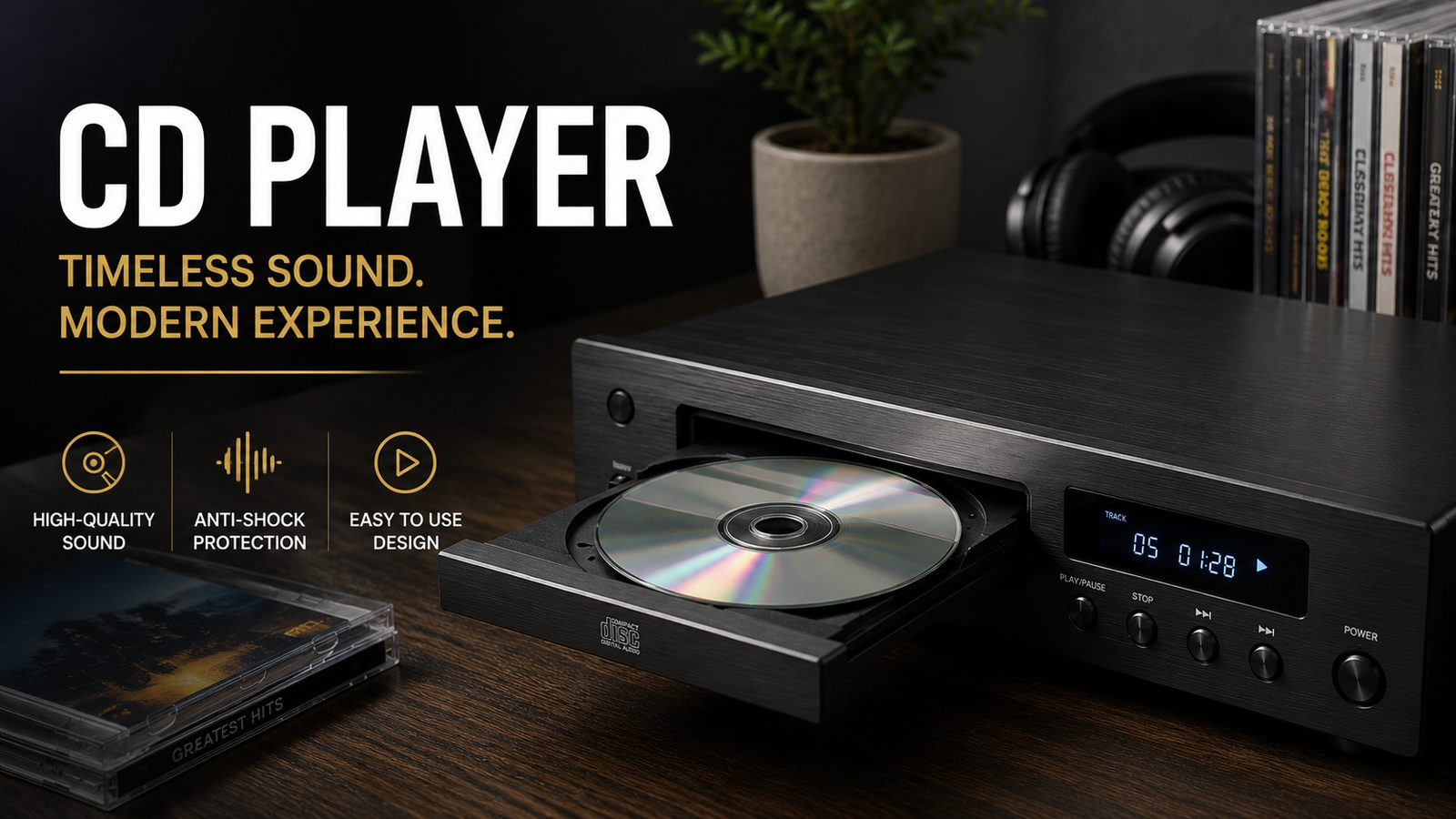
CD Player Buying Guide: How to Choose the Right One
Buying a CD player may seem simple at first, but the right choice depends on far more than price. Sound quality, connectivity, compatibility, build quality, and intended use all play an important role. Whether you’re rediscovering a treasured music collection, building a home hi-fi system, or looking for a portable option, understanding these factors can help you make a smarter purchase.
This CD Player Buying Guide explains everything you need to know before investing in a CD player. You’ll learn about the different types of players, the features that matter most, common mistakes to avoid, and how to choose a model that fits both your listening habits and your budget.
Key Takeaways
- Choose a CD player based on where and how you plan to listen.
- Audio quality depends on both the player and the rest of your sound system.
- Modern connectivity options make it easier to integrate CD players into today’s home entertainment setups.
- Build quality and disc compatibility are just as important as extra features.
- Understanding key specifications helps you buy with confidence and avoid unnecessary spending.
Main Article
Why Buy a CD Player Today?
Although music streaming dominates the market, CDs remain a favorite among music enthusiasts who appreciate consistent audio quality and physical ownership of their collections.
Many listeners still value CDs because they offer:
- Reliable playback without internet access
- High-quality digital audio
- Permanent ownership of music
- Album artwork and liner notes
- Long-term collection value
For collectors and audiophiles, CDs continue to deliver an enjoyable listening experience that many streaming platforms cannot fully replicate.
Types of CD Players
Choosing the right type is the first step in this CD Player Buying Guide.
Home CD Players
Designed for home stereo systems, these models focus on sound quality and durability.
Best for:
- Living rooms
- Dedicated listening spaces
- Hi-fi enthusiasts
Advantages include:
- Better digital-to-analog converters (DACs)
- Stable playback
- High-quality audio outputs
- Long service life
Portable CD Players
Portable models are lightweight and battery-powered, making them ideal for travel or commuting.
Suitable for:
- Students
- Travelers
- Casual listeners
Many include anti-skip protection to reduce interruptions while walking.
Boombox CD Players
These all-in-one systems combine speakers, CD playback, radio, and sometimes Bluetooth.
Ideal for:
- Bedrooms
- Kitchens
- Small offices
Car CD Players
Although less common in newer vehicles, many aftermarket car stereos still include CD playback alongside Bluetooth and USB connectivity.
Professional CD Players
Designed for DJs, broadcasters, and commercial environments, these players prioritize reliability and advanced playback controls.
Important Features to Consider
Not every feature is essential for every buyer. Focus on the ones that match your listening habits.
Sound Quality
Excellent sound begins with a quality DAC.
Look for:
- Clear audio reproduction
- Low distortion
- Wide dynamic range
- Accurate channel separation
If you’re using premium speakers or headphones, investing in a better DAC is worthwhile.
Disc Compatibility
Some players support more than standard audio CDs.
Common formats include:
| Format | Supported by Many Players |
|---|---|
| Audio CD | Yes |
| CD-R | Usually |
| CD-RW | Often |
| MP3 CD | Some models |
| WMA CD | Selected models |
Always verify compatibility before purchasing.
Connectivity Options
Modern CD players often include several connection choices.
Popular outputs include:
- RCA analog outputs
- Optical digital output
- Coaxial digital output
- USB ports
- Bluetooth
- Headphone jack
These options determine how easily the player integrates with your existing audio equipment.
Build Quality
A well-built CD player typically lasts longer and performs more consistently.
Signs of good construction include:
- Solid chassis
- Stable disc tray
- Quiet operation
- Durable buttons
- Reliable internal components
Display and Controls
Easy-to-read displays improve the overall experience.
Useful features include:
- Track information
- Remaining playback time
- Folder navigation
- Large control buttons
- Remote control compatibility
CD Player vs DVD Player
Some buyers wonder whether a DVD player can replace a dedicated CD player.
| Feature | CD Player | DVD Player |
|---|---|---|
| Audio Optimization | Excellent | Good |
| Music Playback | Excellent | Good |
| Video Playback | No | Yes |
| Hi-Fi Features | Extensive | Limited |
| Audiophile Focus | Yes | Usually No |
If music is your priority, a dedicated CD player generally offers better audio performance.
CD Player vs Streaming Services
Streaming platforms provide convenience, while CDs offer consistency and ownership.
Streaming Advantages
- Millions of songs
- Instant access
- Personalized playlists
- Multi-device compatibility
CD Advantages
- No subscription fees
- Stable audio quality
- Permanent ownership
- No internet required
- Tangible music collection
Many music enthusiasts enjoy using both formats depending on the situation.
Should You Buy a Single Disc or Multi-Disc Player?
Single Disc Players
Best for:
- Simplicity
- Better build quality
- Audiophile listening
Multi-Disc Changers
Ideal if you:
- Own hundreds of CDs
- Prefer uninterrupted playback
- Frequently host gatherings
Choose based on your listening habits rather than the number of discs alone.
Budget Considerations
Prices vary significantly depending on features and build quality.
| Budget | What to Expect |
|---|---|
| Under $100 | Basic portable players and entry-level models |
| $100–300 | Better audio quality and additional connectivity |
| $300–700 | High-quality home players with premium components |
| $700+ | Audiophile-grade construction and exceptional sound |
More expensive doesn’t always mean better for your needs. Buy according to your listening priorities.
Features Worth Paying For
Some upgrades genuinely improve the listening experience.
Consider paying extra for:
- High-quality DAC
- Optical digital output
- USB playback
- Bluetooth connectivity
- Quiet transport mechanism
- Premium construction
- Remote control
- Display with detailed information
These features provide long-term value for many users.
Features You May Not Need
Avoid paying for extras you’ll rarely use.
Examples include:
- Multiple unused audio outputs
- Complex programming features
- Professional broadcast functions
- Oversized disc changers if you mostly play one album at a time
Buying only what you’ll use often results in better value.
Common Buying Mistakes
Many first-time buyers focus solely on price.
Avoid these mistakes:
- Ignoring disc compatibility.
- Overlooking connection types.
- Buying more features than necessary.
- Choosing based only on appearance.
- Forgetting speaker compatibility.
- Ignoring warranty coverage.
- Reading too few customer reviews.
A little research can prevent costly disappointments.
Matching a CD Player to Your Needs
For Casual Listeners
Choose:
- Affordable home player
- Bluetooth support
- Simple controls
For Music Collectors
Look for:
- Excellent transport mechanism
- Reliable build quality
- Multiple playback formats
- Long-term durability
For Audiophiles
Prioritize:
- Premium DAC
- Optical or coaxial outputs
- High-end components
- Minimal vibration
- Accurate sound reproduction
For Families
Consider:
- Easy controls
- Durable construction
- Remote operation
- Multiple connectivity options
Maintenance Tips
Proper care extends the life of any CD player.
Follow these simple practices:
- Keep discs clean.
- Store CDs in protective cases.
- Avoid dust buildup.
- Place the player on a stable surface.
- Never force the disc tray.
- Clean vents regularly.
- Handle discs by their edges.
Routine maintenance helps maintain both sound quality and reliability.
Signs of a High-Quality CD Player
Before making your final decision, check whether the model offers:
- Smooth disc loading
- Quiet operation
- Fast track access
- Accurate playback
- Solid construction
- Good manufacturer reputation
- Reliable warranty
- Positive long-term user feedback
These characteristics often indicate better long-term performance.
How to Make the Final Decision
Before purchasing, ask yourself:
- Where will I use the CD player?
- What speakers or headphones will I connect?
- Do I need Bluetooth or USB support?
- What formats do I regularly play?
- How important is premium sound quality?
- What is my realistic budget?
Answering these questions will narrow your options and help you choose a player that fits your lifestyle rather than simply selecting the most expensive model.
Frequently Asked Questions
1. Is buying a CD player still worth it?
Yes. If you own a CD collection or value reliable, high-quality audio without subscriptions or internet access, a CD player remains a worthwhile investment.
2. What is the difference between a cheap and an expensive CD player?
Higher-end models typically offer better components, improved digital-to-analog conversion, stronger build quality, quieter operation, and more connection options.
3. Can a CD player connect to Bluetooth speakers?
Some modern CD players include built-in Bluetooth. Others require a Bluetooth transmitter or compatible audio receiver.
4. Do all CD players support MP3 CDs?
No. While many newer models support MP3 CDs, not every player does. Always check the product specifications before buying.
5. How long does a CD player usually last?
With proper care, a quality CD player can provide reliable performance for 10 years or more. Premium models often remain functional for much longer.
6. Does a better CD player improve sound quality?
Yes, especially when paired with quality speakers or headphones. Better internal components and DACs can produce clearer, more detailed audio.
7. Should I buy a portable or home CD player?
Choose a portable model if you need mobility. A home CD player is the better choice for superior sound quality and integration with a home audio system.
Conclusion
Choosing the right CD player is about finding the best match for your listening habits, budget, and audio setup. While streaming services offer unmatched convenience, CDs continue to provide dependable sound quality, physical ownership, and a rewarding listening experience for collectors and music enthusiasts alike.
By understanding the different types of players, evaluating essential features, and avoiding common buying mistakes, you can invest confidently in a model that delivers lasting value. Whether you’re purchasing your first player or upgrading an existing system, this CD Player Buying Guide gives you the knowledge needed to make an informed decision and enjoy your music collection for years to come.




Leave a Reply