

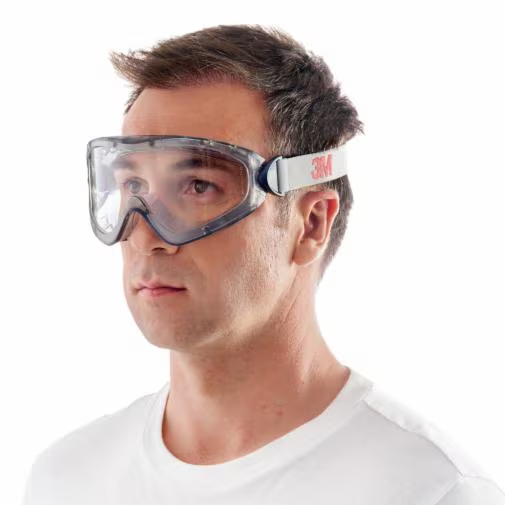
goggle: what it is and how it works explained
Introduction: Why something so simple matters more than you think
At first glance, a goggle might seem like a basic piece of equipment. Something you wear for swimming, skiing, or lab work without giving it much thought. But when you look closer, you realize there is more engineering, safety design, and science behind it than most people expect.
The keyword goggle often brings up different images depending on who you ask. For some, it means swimming protection. For others, it’s workplace safety gear. And for some, it even connects to sports, science labs, or extreme environments.
In this article, we break down what a goggle really is, how it works, and why it plays such an important role in protection, comfort, and performance.
What is a goggle?
A goggle is a type of protective eyewear designed to shield the eyes from water, dust, chemicals, wind, or impact. Unlike regular glasses, a goggle creates a sealed environment around the eyes, offering more complete protection.
The main purpose of a goggle is safety. Whether in sports, science, or industrial work, it acts as a barrier between the eyes and external hazards.
Common uses include:
- swimming and diving
- laboratory experiments
- construction sites
- skiing and snowboarding
- industrial workplaces
- medical environments
A goggle is not just eyewear; it is protective technology.
How a goggle works
Understanding how a goggle works helps explain why it is so effective.
A typical goggle functions through three key components:
1. Sealed frame design
The soft rubber or silicone seal creates a tight fit around the eyes. This prevents:
- water leakage
- dust entry
- air drafts
2. Impact-resistant lenses
The lenses of a goggle are made from durable materials such as polycarbonate, designed to resist:
- scratches
- impacts
- pressure changes
3. Adjustable strap system
The elastic strap ensures the goggle stays securely in place during movement.
Together, these elements create a protective system that adapts to different environments.
Types of goggle
There are several different types of goggle, each designed for specific use cases.
Swimming goggle
Used in pools and open water, swimming goggle helps prevent:
- chlorine irritation
- saltwater exposure
- blurry underwater vision
Safety goggle
Common in laboratories and construction sites, safety goggle protects against:
- chemicals
- flying debris
- dust particles
Ski goggle
Designed for cold environments, ski goggle protects against:
- wind
- snow glare
- UV rays
Industrial goggle
Used in factories and heavy-duty environments, industrial goggle offers high-impact resistance.
VR goggle (modern variation)
Although different in purpose, VR goggle uses similar design principles for immersive digital experiences.
Key materials used in a goggle
| Component | Material | Purpose |
|---|---|---|
| Lens | Polycarbonate | Impact resistance |
| Frame | Silicone/Rubber | Comfort and sealing |
| Strap | Elastic fabric | Adjustable fit |
| Coating | Anti-fog layer | Clear visibility |
These materials make a goggle durable and functional in extreme conditions.
Why a goggle is important
The importance of a goggle becomes clear when you consider eye safety.
Eyes are extremely sensitive. Even minor exposure to dust or chemicals can cause serious damage. A goggle helps prevent:
- eye irritation
- long-term vision damage
- accidental injuries
- exposure to harmful substances
In many industries, wearing a goggle is not optional—it is mandatory.
Benefits of using a goggle
There are several practical benefits of using a goggle in everyday and professional environments.
- improved eye protection
- better visibility in harsh conditions
- reduced risk of injury
- comfort during extended use
- compatibility with helmets or masks
- UV and glare protection (specific models)
A well-designed goggle improves both safety and performance.
How to use a goggle properly
Using a goggle correctly ensures maximum protection.
Follow these steps:
- adjust the strap securely but comfortably
- ensure a proper seal around the eyes
- clean lenses before use
- check for cracks or damage
- avoid touching inner lens surface
A poorly fitted goggle reduces effectiveness significantly.
Common mistakes when using a goggle
Even though a goggle is simple, users often make mistakes.
Common issues include:
- wearing loose straps
- ignoring fog buildup
- using damaged lenses
- not cleaning regularly
- choosing wrong type for activity
These mistakes can reduce the performance of a goggle.
Maintenance and care tips
Proper care extends the life of a goggle.
H4: Simple maintenance steps
- rinse after use (especially swimming goggle)
- store in protective case
- avoid direct sunlight exposure
- clean with soft cloth only
- do not use harsh chemicals
Good maintenance keeps a goggle clear and functional.
Choosing the right goggle
Selecting the right goggle depends on your needs.
Important factors include:
- purpose (sports, lab, industrial)
- fit and comfort
- lens type
- anti-fog features
- UV protection
- durability level
A high-quality goggle should balance comfort and protection.
Scientific and technical features of a goggle
Modern goggle designs include advanced features such as:
- anti-fog coatings
- scratch-resistant surfaces
- ventilation systems
- polarized lenses
- ergonomic sealing
- impact absorption layers
These features make a goggle suitable for extreme conditions.
Everyday scenarios where a goggle is used
You might encounter a goggle in many situations:
- swimming pools
- chemical labs
- construction zones
- snow sports
- emergency response work
- industrial factories
Each environment demands a specific type of goggle.
Safety standards and regulations
Many industries require certified goggle protection.
Standards ensure:
- impact resistance testing
- chemical protection levels
- durability requirements
- optical clarity checks
A certified goggle provides trusted safety performance.
Evolution of the goggle
The goggle has evolved significantly over time.
Early versions were simple glass shields. Today, they include:
- advanced polymers
- ergonomic design
- specialized coatings
- sport-specific engineering
This evolution has made the modern goggle far more effective.
Interesting facts about goggle design
- some goggle lenses are UV-rated up to 100% protection
- anti-fog technology uses hydrophilic coatings
- ski goggle designs reduce snow blindness risk
- swimming goggle pressure systems adapt underwater
- industrial goggle can withstand high-speed impact
These innovations show how advanced a goggle can be.
Conclusion: why the goggle matters more than it seems
A goggle may look like a simple accessory, but it plays a major role in safety, performance, and protection across many fields. Whether used in sports, science, or industry, it serves one clear purpose: protecting one of the most sensitive parts of the human body—the eyes.
From design to materials, from comfort to safety standards, every goggle is built with precision and purpose. Understanding how it works helps us appreciate why it is essential in so many environments.
So next time you see a goggle, remember—it’s not just equipment. It’s protection shaped by science, design, and real-world necessity.















Leave a Reply